
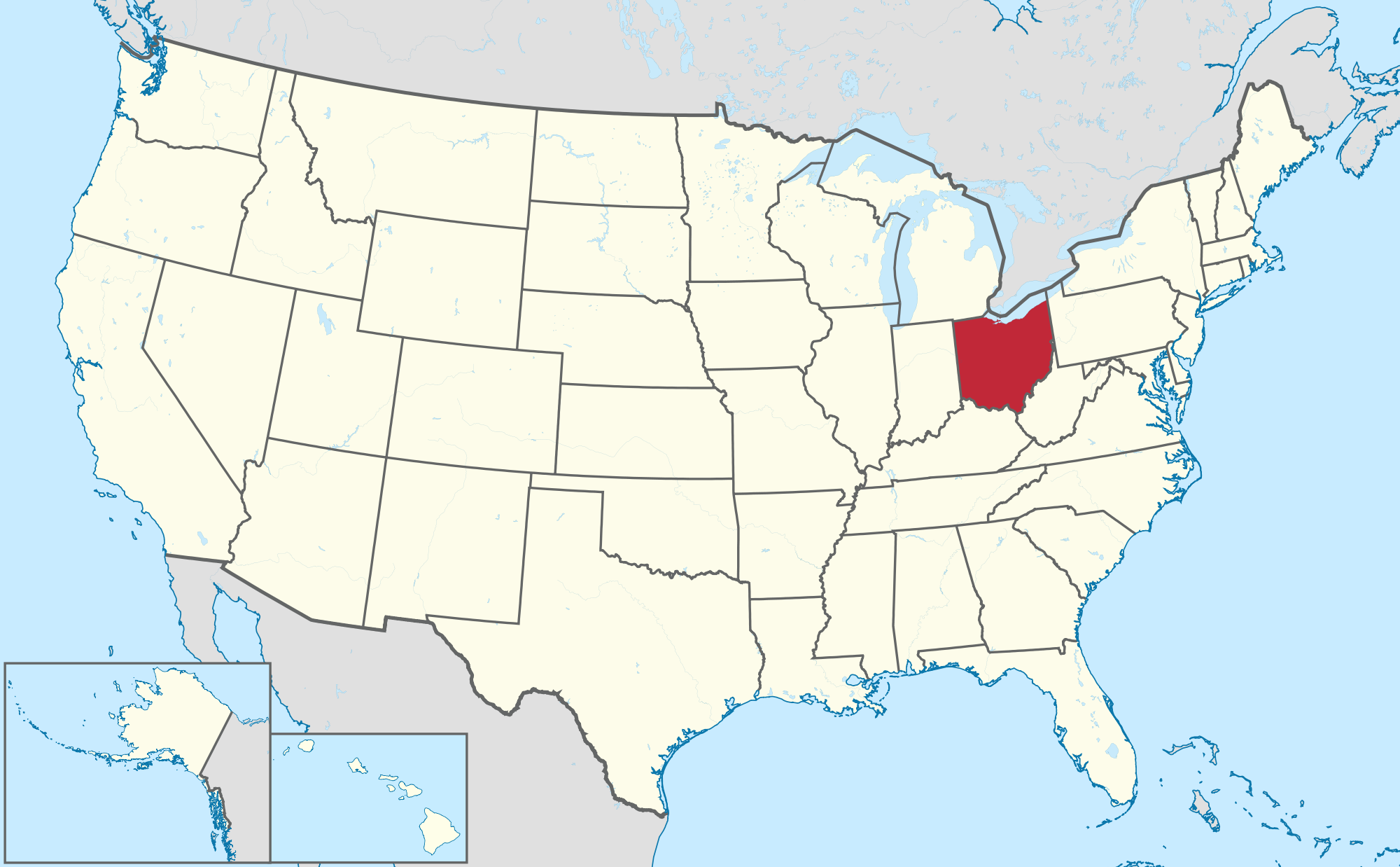

On February 19, 1803, President Thomas Jefferson signed an act of Congress that approved Ohio’s boundaries and constitution. This action might have been a bit hasty, however. Through one of the many American history quirks, it turns out that Congress had never passed a resolution formally admitting Ohio as the 17th state.
Ohio Statehood: A State Admission Oversight
The current custom of Congress declaring an official date of statehood did not begin until 1812, with Louisiana’s admission as the 18th state. Although no formal resolution of admission was required, when the oversight was discovered in 1953, Ohio congressman George H. Bender introduced a bill in Congress to admit Ohio to the Union retroactive to March 1, 1803.
At a special session at the old state capital in Chillicothe, the Ohio state legislature approved a new petition for statehood that was delivered to Washington, D.C. on horseback. On August 7, 1953 (the year of Ohio’s 150th anniversary), President Dwight D. Eisenhower signed an act that officially declared March 1, 1803, the date of Ohio’s admittance into the Union.
You may also enjoy…

Was North Dakota Statehood Not Official Until 2012? The Quirky Constitutional Mystery Explained
Dive into the fascinating story of North Dakota statehood and how it spent over 100 years in a constitutional gray area. Discover how this quirky oversight was resolved in 2012.

The Great Navy of Nebraska: Why The Only Triple-Landlocked State Has a Navy
Nebraska is the only triple-landlocked state in America—so why does it have a navy? Discover the quirky story of the Great Navy of the State of Nebraska and its surprising admirals.

Absaroka — the State that Never Was
Talk of secession was in the air. No, it wasn’t slavery in the days leading up to the Civil War, and the movement wasn’t fueled with weapons and rebellion. This time, secessionists planned to use the legitimate force of law, and they wouldn’t be forming their own country; they wanted to create a brand new…





Leave a Reply