
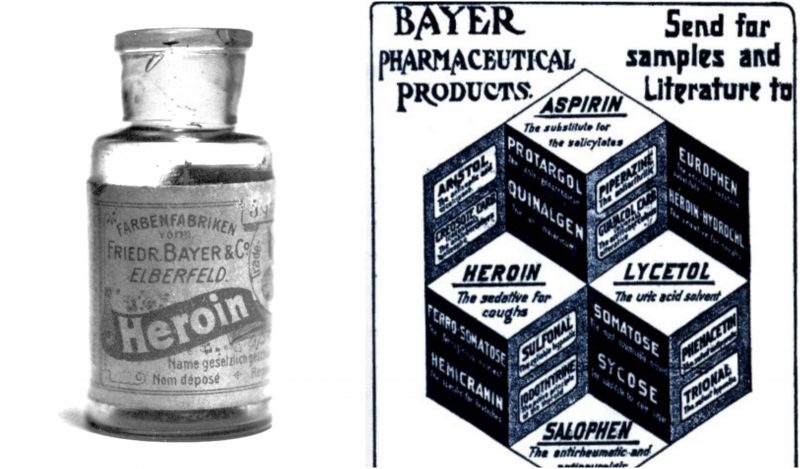

The closing years of the 19th century saw the introduction of two over-the-counter wonder drugs. These products, both manufactured by Bayer, boasted unprecedented results in treating pain and other ailments. They were promoted as being safe, effective, inexpensive, and readily available to purchase over the counter at any pharmacy.
We are familiar with both products, but their curious histories—and how they became central to the aspirin heroin trademark history—will likely surprise you. Both drugs, in their own way, became unexpected casualties of World War I.
Contents
When Bayer Turned Medicine Into Brands

The first of Bayer’s miracle drugs was introduced in 1895. Like today, society was dealing with an opioid epidemic. Morphine was widely used but highly addictive. Bayer developed an improved method of producing diacetylmorphine—a substance that proved extremely effective at treating pain.
Because of its powerful effects, Bayer gave it a bold name: Heroin. Yes, before it became a controlled substance, “Heroin” was a brand name. If you have ever wondered was heroin a trademark, the answer is yes—Bayer owned it.
The company marketed it as a “non-addictive alternative to morphine.” That claim aged about as well as a carton of milk left in the sun. Addiction rates quickly proved otherwise, but at the time, Heroin was sold legally and widely.
The Rise of Aspirin
Four years later, Bayer introduced another product that would prove far more enduring. Acetylsalicylic acid had existed before, but Bayer perfected a method to manufacture it efficiently and consistently.
They gave it a far more marketable name: Aspirin.
This marked the beginning of what we now recognize as the Bayer heroin aspirin history—a tale of two drugs, one that would become indispensable and another that would become infamous.
Aspirin quickly dominated the pain relief market. Competitors could produce the same compound, but they could not call it “Aspirin.” That distinction belonged solely to Bayer.
War, Chemistry, and a Plot Worthy of a Spy Novel
As World War I approached, Bayer faced an unexpected problem: a shortage of phenol, a key ingredient in producing Aspirin—and also in making explosives.
Enter Thomas Edison, who began producing phenol for his own needs and the U.S. military. German agents, hoping to disrupt American war readiness, created a shell company to purchase surplus phenol and redirect it to Bayer.
This scheme, known as the Great Phenol Plot, unraveled after investigative reporting exposed it. Public backlash forced Edison to withdraw, leaving Bayer scrambling.
How Aspirin Became a Generic Name
When the United States entered World War I in 1917, it seized German-owned assets, including Bayer’s American operations. This included something even more valuable than factories: trademarks.
As part of post-war agreements, Bayer lost its exclusive rights to the names “Aspirin” and “Heroin” in several countries, including the United States.
This answers another common question: why is aspirin not a trademark in the United States? The short answer is war, politics, and legal consequences that permanently changed brand ownership.
Once the trademark protections were gone, the name “aspirin” entered everyday language. It became what is known as a generic trademark aspirin—a brand name that becomes the common term for a product category.
Why This Story Still Matters Today
The strange journey of Aspirin and Heroin is not just a historical curiosity—it is a case study in branding, intellectual property, and how easily a company can lose control of its most valuable assets.
Modern Branding Lessons
Companies today are extremely cautious about how their brand names are used. Bayer’s experience showed that success can be a double-edged sword: if your product becomes too popular, your brand risks becoming generic.
That is why companies insist on phrases like “Kleenex tissues” or “Band-Aid brand bandages.” They are trying to avoid the fate of aspirin.
Trademark Protection Strategies
Modern companies aggressively defend their trademarks. They monitor usage, issue legal notices, and carefully control branding guidelines.
Unlike Bayer in the early 20th century, companies today understand that losing a trademark can mean losing a monopoly on a name—and a significant competitive advantage.
Brands That Avoided Genericization
Some companies have successfully avoided becoming generic terms, even when their products dominate the market.
Examples include Xerox (which insists on “photocopying” instead of “xeroxing”) and Google (which prefers “searching” instead of “googling” in formal contexts). Both companies actively work to prevent their trademarks from going the way of aspirin.
Ironically, Bayer still retains the Aspirin trademark in some countries, including Canada. So depending on where you are, aspirin may still technically be a brand name rather than a generic term.
Two Drugs, Two Legacies
Today, the legacy of these two products could not be more different. Heroin is tightly controlled and associated with addiction and abuse. Aspirin remains one of the most widely used and trusted medications in the world.
Yet both share a surprising origin story—one that sits at the intersection of chemistry, marketing, and global conflict.
The aspirin heroin trademark history is a reminder that even something as simple as a name can shape the destiny of a product—and sometimes, change the way the world speaks.
You may also enjoy…

The Tantalizing Tale of the Trademarked Tarzan Yell
Learn the complicated and interesting story of the Tarzan yell and how it came to be one of the most recognized sounds in the world.

Iconic Advertisements We Still Remember: From Burma-Shave and Brylcreem to Where’s The Beef
A fun, nostalgic tour through America’s most iconic advertisements, from Burma-Shave and Wildroot Cream-Oil to “Where’s the Beef?” and beyond.

The Surprising Origin of Famous Brand Names (And Why We’re Glad They Didn’t Choose Worse Ones)
Discover the surprising, quirky, and downright weird stories behind the famous brand names like Starbucks, LEGO, Pepsi, and more in this humorous and trivia-packed exploration of corporate naming blunders and brilliance.




Leave a Reply