

Let’s face it: sometimes it is hard to get out of bed in the morning. Some of us simply aren’t morning people. There are days when it’s going to take a little extra something to free you from the arms of Morpheus.
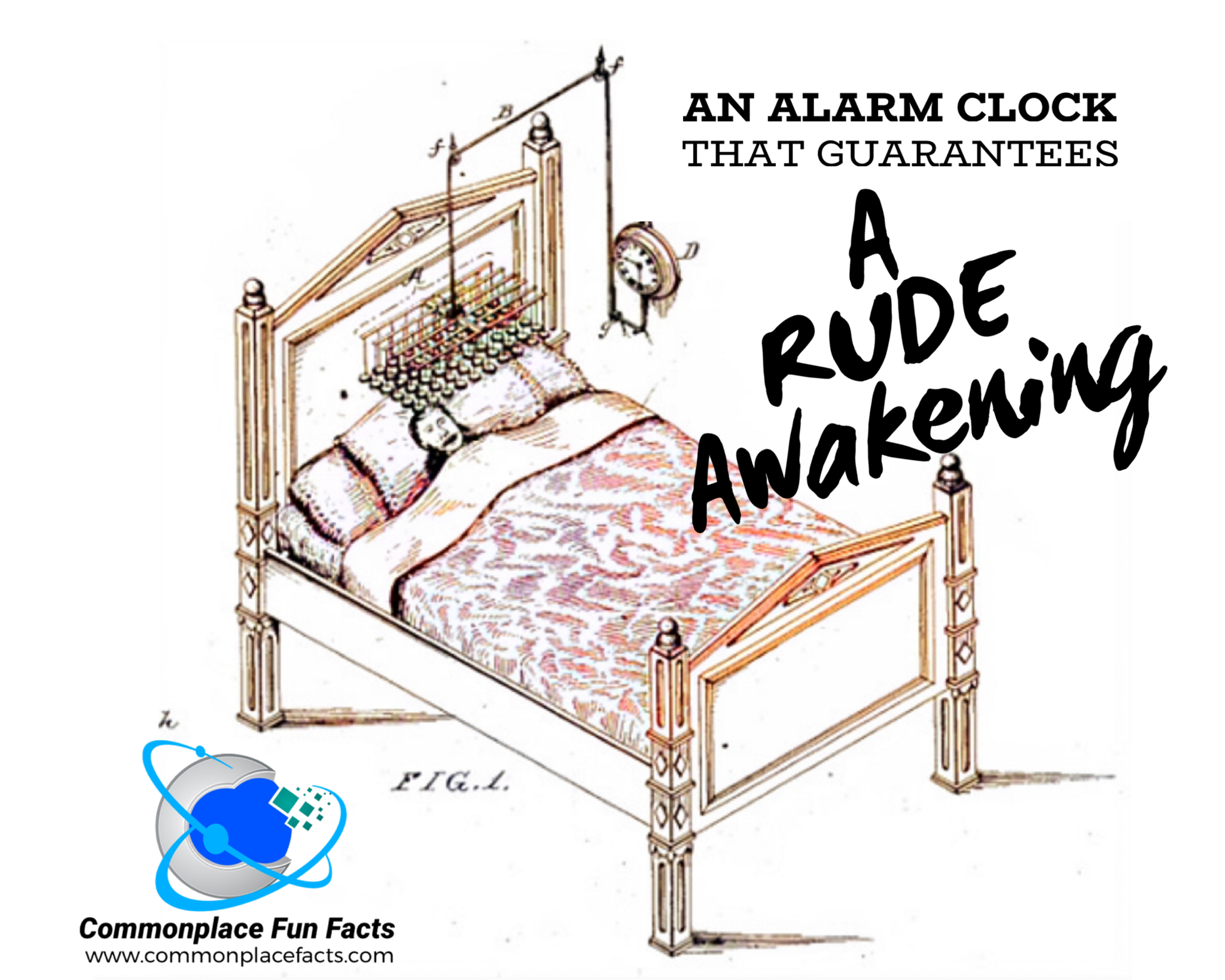
When those difficult mornings plague you, be thankful for such visionaries as Samuel S. Applegate. In 1882, he received a patent for a “Device For Waking Persons From Sleep.” We hear you asking, “Isn’t that just an alarm clock?” Oh no. Applegate’s technological breakthrough went well beyond dependence upon sound for wakefulness. He recognized that some of us need a slap in the face before we’ll get out of bed.
U.S. Patent No. 256,265 describes the workings of Applegate’s device. It consists of a set of small blocks made “of light wood, preferably cork” that automatically release and “fall into the sleeper’s face” when the alarm goes off.
The inventor went on to describe what he expected would happen when the blocks hit the sleeper’s face. The patent application notes that the blocks, upon impacting the sleeper’s face, would “cause pain.”
Although Applegate’s preferred material for the blocks was cork, the device allowed for progressively heavier material to be substituted if cork didn’t do the trick. There’s no such thing as hitting the snooze button for a few more minutes of respite after being pelted with a dozen crow bars or, for that matter, spring-loaded bear traps.
We have not, alas, been able to find any of Applegate’s devices for sale. If you are interested in blessing the heavy sleeper in your life as this year’s Christmas gift, you can use the schematics in the patent application to build your own. It is, truly, the gift that keeps on giving throughout the year.


James Dewar, the Thermos, and the Invention He Gave Away
James Dewar invented the vacuum flask that became the thermos—then never patented it. A story of science, trademarks, and missed fortunes.

When Sliced Bread Was Illegal for 47 Days: How America’s Favorite Convenience Became a Wartime Casualty
Discover the bizarre true story of America’s 1943 sliced bread ban. Learn how wartime rationing, price controls, and government policy meant sliced bread was illegal for 47 days — and why the public outrage brought it back.

The First Alarm Clock Only Rang at 4:00 A.M. — And It Changed How We Tell Time
In 1787, Levi Hutchins built the first alarm clock — but it could only ring at 4:00 a.m. Discover the quirky origins of the alarm clock, how it evolved from a single fixed-time bell to the customizable gadgets we rely on today, and what it says about humanity’s centuries-old war against sleep.




Leave a Reply