
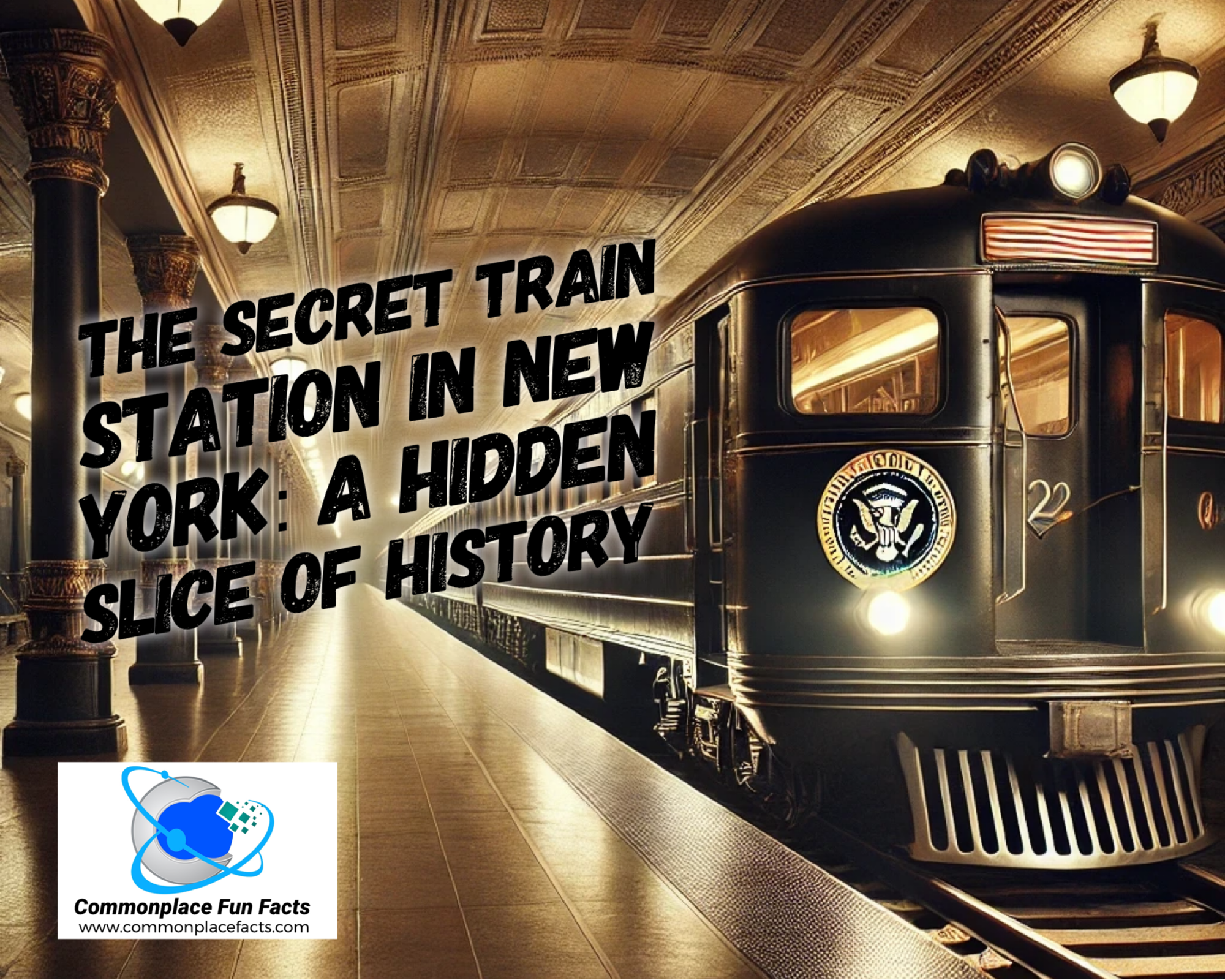

Hidden below one of New York City’s landmark locations is a secret treasure. No, we’re not talking about the world’s largest gold depository, although that is hidden below the streets of New York, as well. (You can read about it in this article, if you want.) The underground treasure is a secret train station in New York City that has its value not so much in money but in heritage. It is a hidden slice of history lurking beneath the hustle and bustle of Manhattan.
Let’s rewind the clock about 150 years, to a time when horses were still the height of transportation tech, and the idea of automobiles was as fanciful as teleportation. Railroads were the veins of America, pulsing with the energy of industrialization, and New York City was the heart of it all. Rail lines from the north funneled directly into the city, converging at the massive Grand Central Depot—a sprawling complex that occupied more than a dozen city blocks.
In the crowded real estate of Manhattan, space was as valuable as gold, so the New York Central Railroad had a brainstorm. Why not put the entire rail yard underground, freeing up those prime city blocks for something more profitable? As a result, 10 years and 85 million cubic feet of dirt later, Grand Central Terminal was born. And boy, was it grand.
Grand Central: More Than Just Trains
Opening its doors in 1913, Grand Central Terminal wasn’t just a station; it was a monument to the American Gilded Age, a period where tycoons ruled and luxury was the name of the game. It boasted more tracks and platforms than any other station in the world—a bragging right it still holds today. But Grand Central wasn’t just about trains. It was a hub of high society and opulence. Ever fancy playing a game of tennis in the ceiling of a train station? Back in the day, you could do just that, at a tennis club once managed by future President Donald Trump. Let’s not forget the 65-foot indoor ski slope that used to grace its halls. A ski slope, indoors, in a train station. Only in America, right?
As Grand Central thrived, the surrounding area transformed. The former rail yard blossomed into one of New York’s most prestigious neighborhoods. The headquarters of heavy hitters like Colgate-Palmolive, JP Morgan, MetLife, and Major League Baseball sprang up around the station, not to mention the iconic Waldorf Astoria hotel.
The Waldorf Astoria: A Hotel Fit for Presidents

The Waldorf Astoria wasn’t just any hotel—it was the hotel. For decades, it was the go-to residence for U.S. Presidents visiting New York. From Herbert Hoover to Barack Obama, every commander-in-chief laid their heads in the lavish Presidential Suite, a room that also welcomed the likes of the Kings of Jordan, Saudi Arabia, Spain, and Norway, the Queen of England, the Emperor of Japan, General Charles de Gaulle, and more.
While the rest of us would have to shell out between $4,000 and $8,000 per night for the privilege, Uncle Sam got a generous discount, courtesy of the American taxpayer. The suite, designed to mimic the style of the White House, was conveniently located about 500 feet above the Grand Central tracks that were buried more than a century ago. What’s most interesting is what lay directly beneath this opulent hotel—a secret platform, hidden from the public eye, yet integral to the security and privacy of America’s elite.
FDR’s Secret Station
Before the age of private jets and Air Force One, America’s richest and most powerful got around in style via private rail cars. These mobile mansions were hitched to the backs of public trains and came complete with dining rooms, kitchens, large bedrooms, and lounges. Power requires luxury travel, after all.

Franklin D. Roosevelt was a particularly avid user of these trains. Polio had left him with paralysis in the lower half of his body, but that didn’t stop him from serving an unprecedented four terms as President. However, he went to great lengths to keep his disability under wraps. Public appearances were meticulously choreographed, with the press in on the secret. Whenever Roosevelt was seen standing, he was always leaning on something or someone, giving the illusion of strength. He also had to take special precautions because of his disability.
When he needed to travel to New York, the usual arrival at Grand Central Terminal was far too public. Instead, his train would stop a third of a mile short of the terminal, at a small, secret platform directly beneath the Waldorf Astoria. From there, a special elevator would whisk him up into the hotel, away from prying eyes. The exact number of times FDR used this secret station remains a mystery, as it was all hush-hush. It’s believed that the platform has served many presidents and celebrities over the years.
The Mystery Lives On

Today, this secret platform and its accompanying elevator still exist. Much like the underground doomsday bunker hidden under another hotel, the secret is out, the platform’s current use is shrouded in mystery. Reports suggest that a rather inconspicuous door on 50th Street leads to the elevator down to the platform, but what lies behind it remains uncertain.
We do know, however, that the platform was put to use at least once in recent history. In 2003, while President George W. Bush was staying at the Waldorf Astoria for a United Nations General Assembly session, an idling Metro-North train was stationed on the secret platform, ready to whisk the President off Manhattan in case of emergency. While not officially confirmed, it’s likely that this procedure is repeated whenever a sitting president stays at the Waldorf Astoria. After all, in the world of high-stakes politics, it’s better to be safe (and secretive) than sorry.
The next time you’re strolling through the bustling streets of Midtown Manhattan, remember that beneath your feet lies a hidden slice of history—a reminder of a time when trains ruled the world, and secrecy was a matter of national security. And who knows? Maybe the next time a president visits the Big Apple, they’ll make a discreet stop at the Waldorf’s underground station, just as FDR did nearly a century ago.

The Sorrowful Presidency of Franklin Pierce
Franklin Pierce, the 14th U.S. president, faced personal tragedy and political setbacks. His one-term presidency was marred by the death of his son, his wife’s seclusion, and accusations of alcoholism. His support for divisive policies and his anti-abolitionist stance further diminished his popularity. Despite close friendships, Pierce’s legacy is one of misfortune and missteps.

The Disaster That Haunted An Unlikely Hero
The weather couldn’t have been better for travel. As Charlie made his way home by train, neither he nor his fellow passengers had any clue that they were headed toward an unspeakable tragedy that would go down in history as the terrible Stapleton rail crash. It was June 9, 1865. Passengers arriving from across the…

Does Your Name Define You? Aptronyms Provide Prophetic Nomenclature
Parents generally give a lot of consideration to the names they bestow upon their children. The choice of the right name is important in terms of carrying on family tradition or honoring another person. It is also important to consider whether the name will subject the child to ridicule by his or her peers. Sadly,…



Leave a Reply