
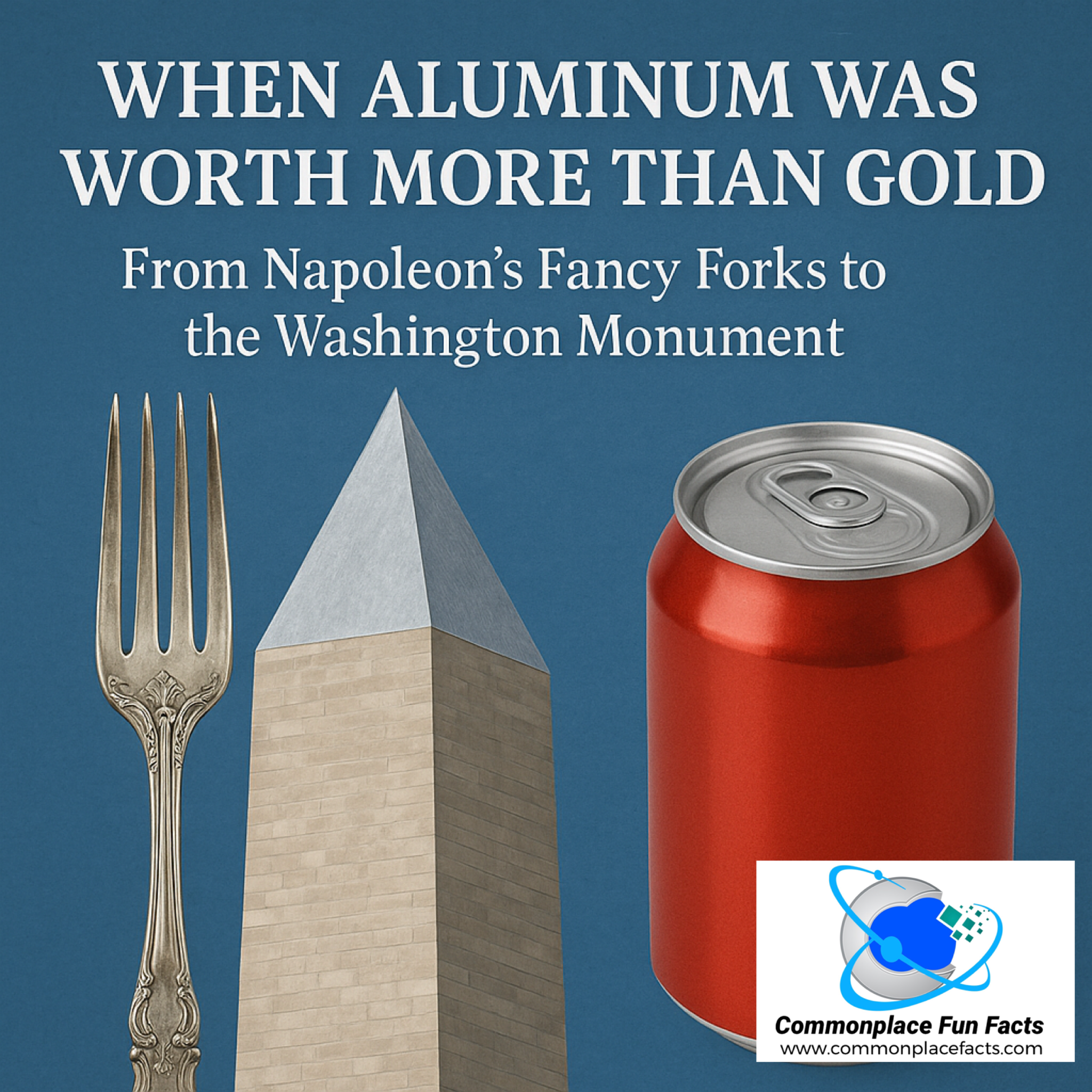

There was a time—not all that long ago—when aluminum (or aluminium, if you’re British or trying to impress dinner guests) was the uncontested heavyweight champion of fabulousness. Kings drooled over it. Engineers wept with patriotic pride. And in a move that could only come from a nation that once crowned an emperor in a bathrobe, the French put aluminum bars on display next to the crown jewels. Yes, that aluminum. The stuff currently clinging to your leftover pizza.
Contents
The Shiny Stuff of Dreams
Let’s rewind to the early 1800s, a time when scientists were just beginning to realize that if you zap things hard enough, eventually something useful falls out. Two chemists—Hans Christian Ørsted in Denmark and Friedrich Wöhler in Germany—managed to extract tiny amounts of aluminum from the naturally occurring mineral alum (you know, the stuff that turns cartoon characters into mouth-puckered lemons). Their success was miraculous. Not because they made a lot, but because they made any at all. Pure aluminum was rarer than an honest politician—and shinier, too.
Because it was light, non-rusting, and gleamed like moonlight on a bald pate, mineralogists instantly promoted aluminum to VIP status, calling it a precious metal on par with silver and platinum. By the 1850s, it cost more than gold—$550 a pound, or approximately the price of a kidney on the black market (not that we checked).
Napoleon’s Exclusive Silverware Club
Enter Napoleon III, France’s not-quite-Napoleon, (whose relative went on to help create the USA’s FBI). He was enchanted by the luster of this newfangled metal and famously commissioned a set of aluminum cutlery. But not for everybody. No, no—aluminum flatware was reserved for his most distinguished dinner guests. Lesser VIPs? They had to settle for boring old gold. Imagine being seated at a royal banquet and realizing your fork is made of mere gold. The horror.
To further dazzle the masses, France’s 1855 Exposition Universelle featured aluminum bars placed in glass cases alongside the crown jewels. They were treated not as scientific curiosities, but as glittering emblems of technological sorcery. This was bling with a PhD.
The Monumental Flex

Not to be outdone, the United States got in on the act. When capping off the Washington Monument in 1884, engineers wanted something spectacular—a gleaming cherry atop the patriotic sundae. The answer? A six-pound pyramid of aluminum. It was the largest single piece of aluminum ever cast at the time, and was considered so precious that it was displayed in Tiffany & Co.’s window before being installed. A single ounce of aluminum shavings from the cap could pay a day’s wages for every laborer who built the monument.
Today, kids hurl aluminum baseball bats at chain-link fences. Back then, it topped a national shrine. Context is everything.
Enter the Electrochemical Buzzkill
The reign of aluminum ended—not with a whimper, but with a college student and a battery. In 1886, 22-year-old Charles Martin Hall, working in a woodshed in Ohio, ran an electric current through a molten bath of aluminum oxide dissolved in cryolite. Zap! Suddenly, pure aluminum began collecting at the bottom of his tank like metallic fairy dust. The process was cheap, scalable, and about to turn the periodic table’s golden boy into the future of soda cans.
Meanwhile, across the Atlantic, French chemist Paul Héroult had stumbled upon the exact same method. The two men had independently discovered what would become known as the Hall–Héroult process. They didn’t just open the floodgates—they demolished the dam. Prices plummeted from hundreds of dollars per pound to mere cents. Aluminum went from being a rich man’s plaything to the Swiss Army knife of modern materials.
Hall of Fame
Hall, with his charming disregard for spelling conventions, also rebranded the metal. Though his patent used the international spelling “aluminium,” American advertising soon adopted the shorter “aluminum.” It sounded sleeker—more like “platinum,” less like something requiring monocles to pronounce.
By 1914, Hall was worth $30 million (around $650 million today) thanks to his company, Alcoa. At its peak, Alcoa produced 88,000 pounds of aluminum per day. That’s a lot of soda cans. And maybe a few monuments, if anyone still felt nostalgic.
From Royal to Recyclable
Aluminum’s fall from grace wasn’t so much a tragedy as it was a triumph of accessibility. It’s still miraculous: light, strong, corrosion-resistant, and abundant. But now we toss it in the recycling bin without a second thought. The Washington Monument’s cap remains in place, a quiet reminder that even the rarest materials can become, well, pedestrian.
So was aluminum better off when it was more precious than gold or when it became the go-to wrapper for last night’s meatloaf? That depends. If you’re Napoleon III, probably the former. If you’re a soccer mom packing lunch, we suspect you prefer the latter.
You may also enjoy…

The Hope Diamond: The Good Fortune and Bad Luck of the Most Expensive Item Ever Mailed
The Hope Diamond — source of legends of a famous curse — is the most expensive item ever sent through the mail. Learn the story and its fascinating history.

The Highest Paid Dog: Whose Bark is Worth the Most Bucks?
Which canine celebrity do you think is the highest paid dog in show business?

The Wizard of Oz Cast Salaries and the Surprising Payout Along the Yellow Brick Road
What The Wizard of Oz cast salaries? Find out how much each of the stars made for this movie classic prepare to be surprised about who earned the most.







Leave a Reply