
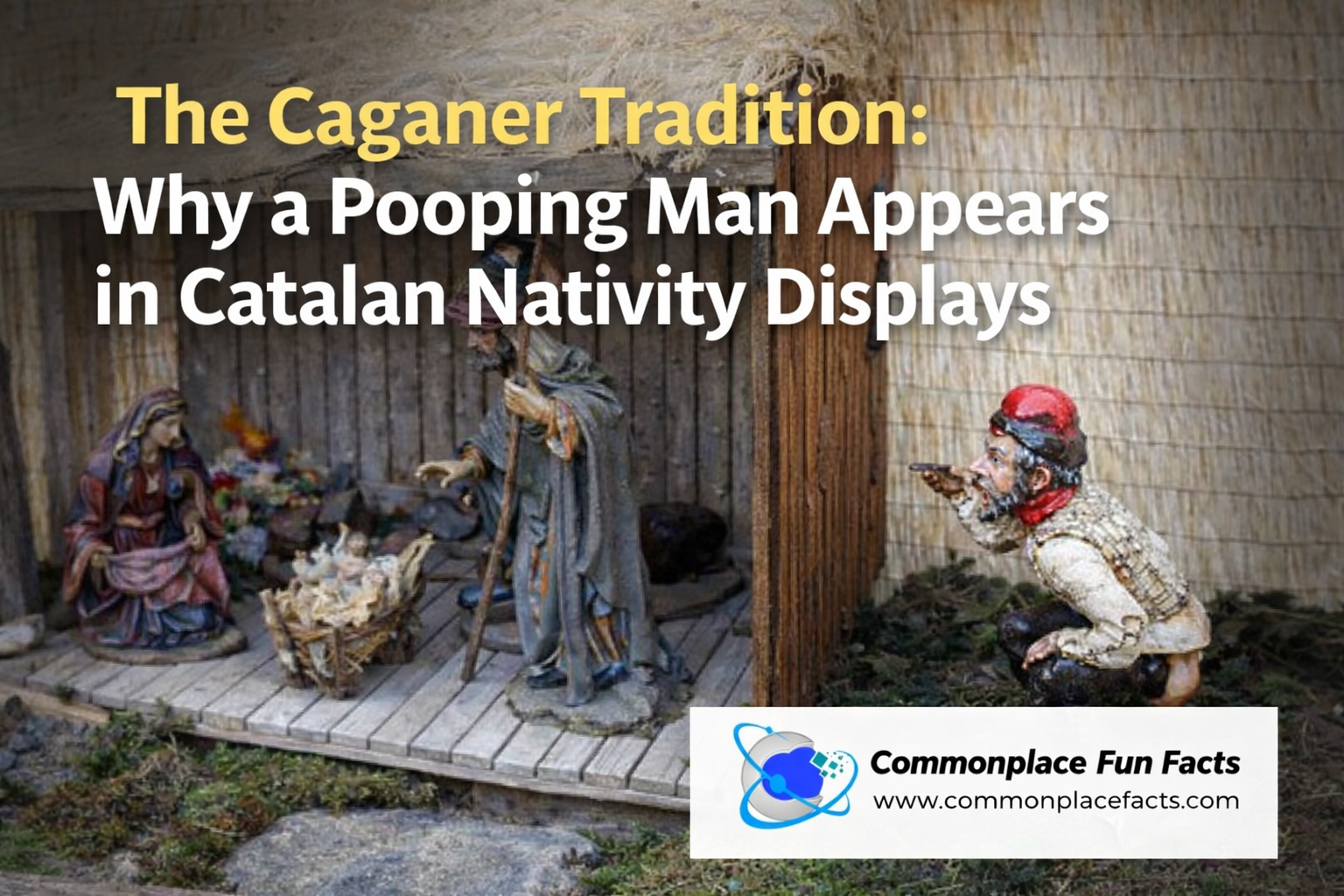

The Caganer: Why Is There a Pooping Man in a Nativity Scene?
Every Christmas season, nativity scenes quietly reappear in living rooms, churches, and front lawns across the globe. They bring with them the usual cast of characters: baby Jesus in a manger, Mary and Joseph looking reverent, shepherds hovering nearby, wise men traveling with excellent timing, and an assortment of livestock who seem remarkably calm considering the circumstances.
What most people do not expect to find—tucked discreetly behind a stable, crouched behind a shrub, or strategically positioned near a tiny painted hillside—is a man with his trousers down, fully committed to a biological process.
Welcome to Catalonia.
In northeastern Spain and parts of southwestern France, the nativity scene sometimes includes a small figurine known as the Caganer—which translates, without euphemism, to “the pooper.” Yes, Christmas tradition has layers.
Contents
What Is the Caganer?
The Caganer is a small figurine traditionally placed somewhere in the background of a Catalan nativity scene. He is almost always depicted squatting, trousers lowered, wearing the traditional Catalan red cap known as a barretina. His expression is typically serene. He has accepted his role.
Unlike Mary or the angels, he is not front and center. Finding him often becomes a game—children scan elaborate nativity displays searching for the discreetly positioned figure. Think “Where’s Waldo?” but seasonally theological.
How Old Is the Caganer Tradition?

The exact origin of the Caganer is somewhat unclear, which is historian language for “people have been debating this politely for years.” Most scholars trace the custom back at least 200 years, with written references appearing in the 18th century.
Given that Catalan nativity scenes—called pessebres—are often elaborate, detailed miniatures of village life, adding one more villager engaged in a very natural activity may not have seemed especially shocking at the time. Modern sensibilities sometimes forget that pre-industrial life involved considerably fewer doors and much more realism.
Why Is the Caganer in the Nativity Scene?
Ah, the theological and sociological suspense. Several theories attempt to explain the presence of a pooping man at the birth of Christ. None are universally accepted, which makes the whole thing delightfully scholarly.
- A symbol of fertility and prosperity. One popular explanation holds that the Caganer is fertilizing the earth, symbolizing abundance and good fortune for the coming year. Agriculture, after all, is stubbornly practical about these matters.
- An emblem of humility. Another theory suggests he represents the humbling reality of the human condition. Kings, shepherds, and wise men alike share certain unavoidable biological truths.
- A reminder of earthy realism. Some argue that the figure reinforces the idea that Christ entered the real world—mud, livestock, and all. If the Incarnation means anything, it means proximity to humanity in its entirety.
- Or simply Catalan humor. There is always the possibility that at some point, someone thought it would be funny—and the idea stuck. Traditions have been built on less.
Human cultures regularly mix the sacred and the ordinary. Medieval manuscripts included marginal drawings that would make modern editors clutch their pearls. The Caganer may simply be another example of that longstanding impulse: reverence without sterilization.
Does the Church Approve?
The Roman Catholic Church has not exactly issued a glowing endorsement of the Caganer. However, in deeply Catholic Catalonia, the practice has been widely tolerated. When something has been part of the local Christmas landscape for centuries, it earns a certain durable legitimacy.
In other words, official enthusiasm may be limited, but eradication has not been forthcoming. The Caganer persists.
Modern Twists on the Caganer
Contemporary versions of the Caganer have expanded beyond the traditional peasant figure. Today, you can find celebrity Caganers, political leader Caganers, fictional character Caganers, and just about anyone else rendered in crouching form. It is a form of equal-opportunity satire. Fame does not protect one from festive humility.
This evolution suggests that the tradition is alive rather than merely preserved. The Caganer has become part folk humor, part social commentary, part Christmas scavenger hunt.
Catalonian children also have a festive tradition that involves pummling a pooping piece of a tree, so if you’re in the region during the holidays, be prepared for plenty of bathroom humor.
A Nativity Scene with Layers
The presence of the Caganer does not diminish the nativity story for those who cherish it. Instead, it adds a distinctively Catalan layer—one that acknowledges that holiness arrives in the middle of ordinary life, not in sanitized abstraction.
Christmas traditions around the world range from solemn to whimsical. The Catalan Caganer firmly occupies the latter category, while still nudging observers toward an oddly profound conclusion: the divine narrative unfolds in a world populated by very human creatures.
And occasionally, one of them is behind the barn.
You may also enjoy…

When Should You Take Down Christmas Decorations? Apparently, It Depends on Bears, Badgers, and Rodents With Commitment Issues
When should you take down Christmas decorations—Twelfth Night or Candlemas? Discover the surprising history behind holiday traditions, woodland folklore, Groundhog Day, and the long debate over when Christmas really ends.

Rudolph the Red-Nosed Reindeer: How a Department Store Mascot Became Christmas Canon
Rudolph the red-nosed reindeer feels ancient, but he was invented in 1939 by a department store. Here’s how a glowing nose became Christmas canon.

Yes, Virginia, There Is a Santa Claus (And in 1897 He Was Still Under Construction)
The true story behind “Yes, Virginia, There Is a Santa Claus”—how an 1897 letter, a newspaper editor, and a still-evolving Santa became a lasting Christmas tradition.





Leave a Reply