
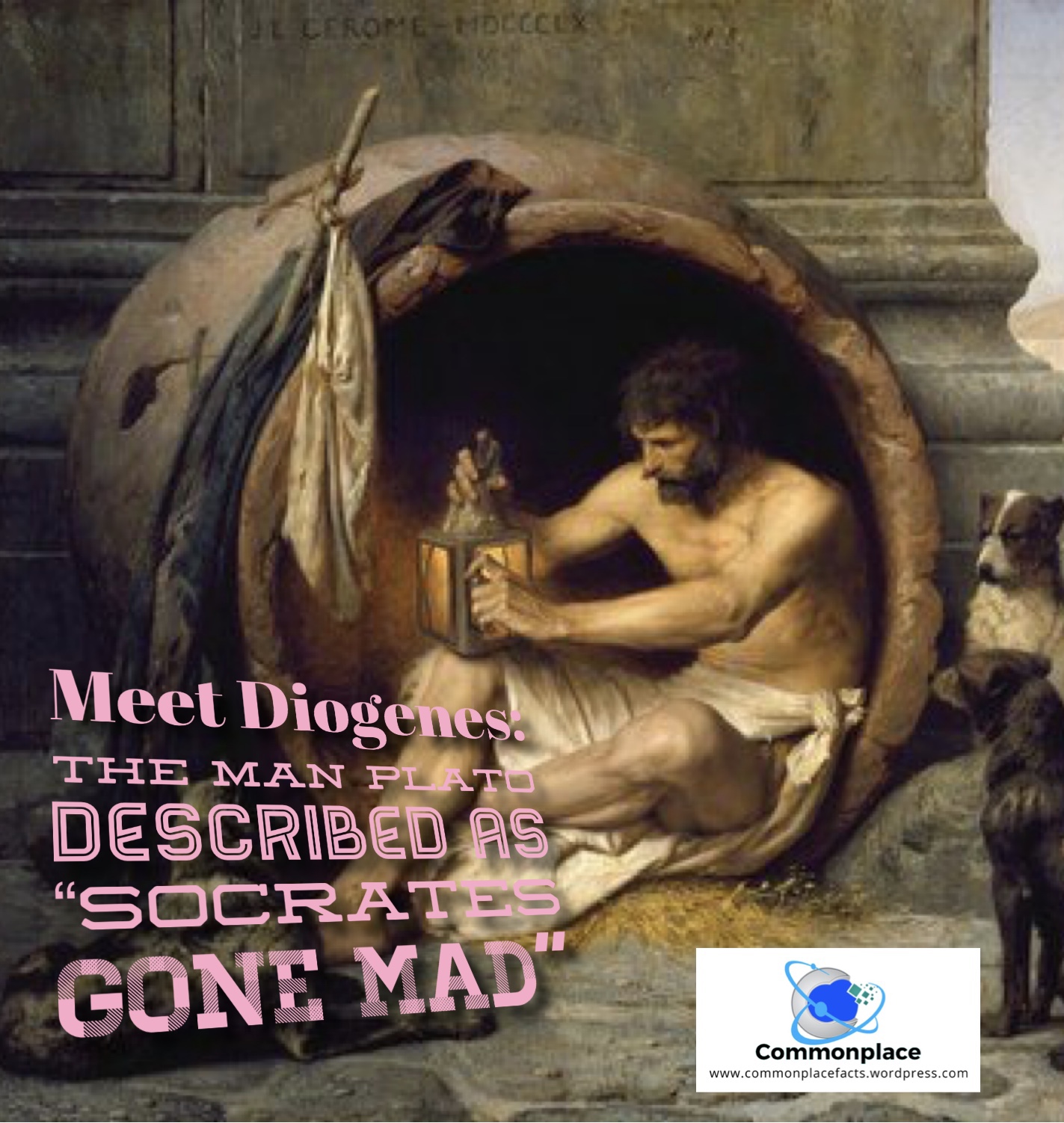

Diogenes (c. 412 BC – 323 BC) was a Greek philosopher and one of the founders of Cynic philosophy. He urged his followers to live as simply as possible. He may also have been more than a wee bit out of his mind.

Diogenes claimed a wine barrel as his home. Aside from that barrel, the only things he owned were his cloak and staff. At one time, he also owned a bowl, but after seeing a child drinking water with his hands, he got rid of the bowl in an effort to embrace simpler living.
Alexander the Great asked Diogenes if there was anything he could do for the philosopher. Diogenes responded, “Stop blocking the sunlight.”
Diogenes could often be seen going from statue to statue in Athens, begging the stone likenesses for money. He said he did that so he would learn not to be disappointed if his begging brought him nothing.
One of his practices, which some found to be charming, was the habit of walking down the street backward. Another practice, which most people found to be less charming, was his habit of relieving himself in public.
On one occasion, he overheard Plato lecturing at his academy where he defined man as a “featherless biped.” Diogenes quickly ran out and plucked a chicken. He returned to Plato and shouted “Behold! I’ve brought you a man!” Plato was forced to amend his definition of man to be a “featherless biped with broad flat nails.”
Perhaps it was Plato who best summed up Diogenes, when he called him, “A Socrates gone mad.”

Heraclitus Hated Everyone—and Built a Philosophy Around It
Who was Heraclitus? Meet the ancient Greek philosopher who believed everything changes, distrusted most people, wrote in riddles, and somehow became one of philosophy’s most quoted—and misunderstood—figures.

Milo of Croton: The Fantastic Life of Muscles, Glory, and a Tree That Fought Back
Discover the legendary strength and bizarre death of Milo of Croton—ancient Greece’s strongest man who conquered Olympic games but lost a fight to a tree.

Did Ancient People See Blue? The Mystery of the Missing Color
Ancient cultures lacked a word for blue. Did ancient people see blue? Explore the science of color perception, language, and why blue was the last color to be named.






Leave a Reply