
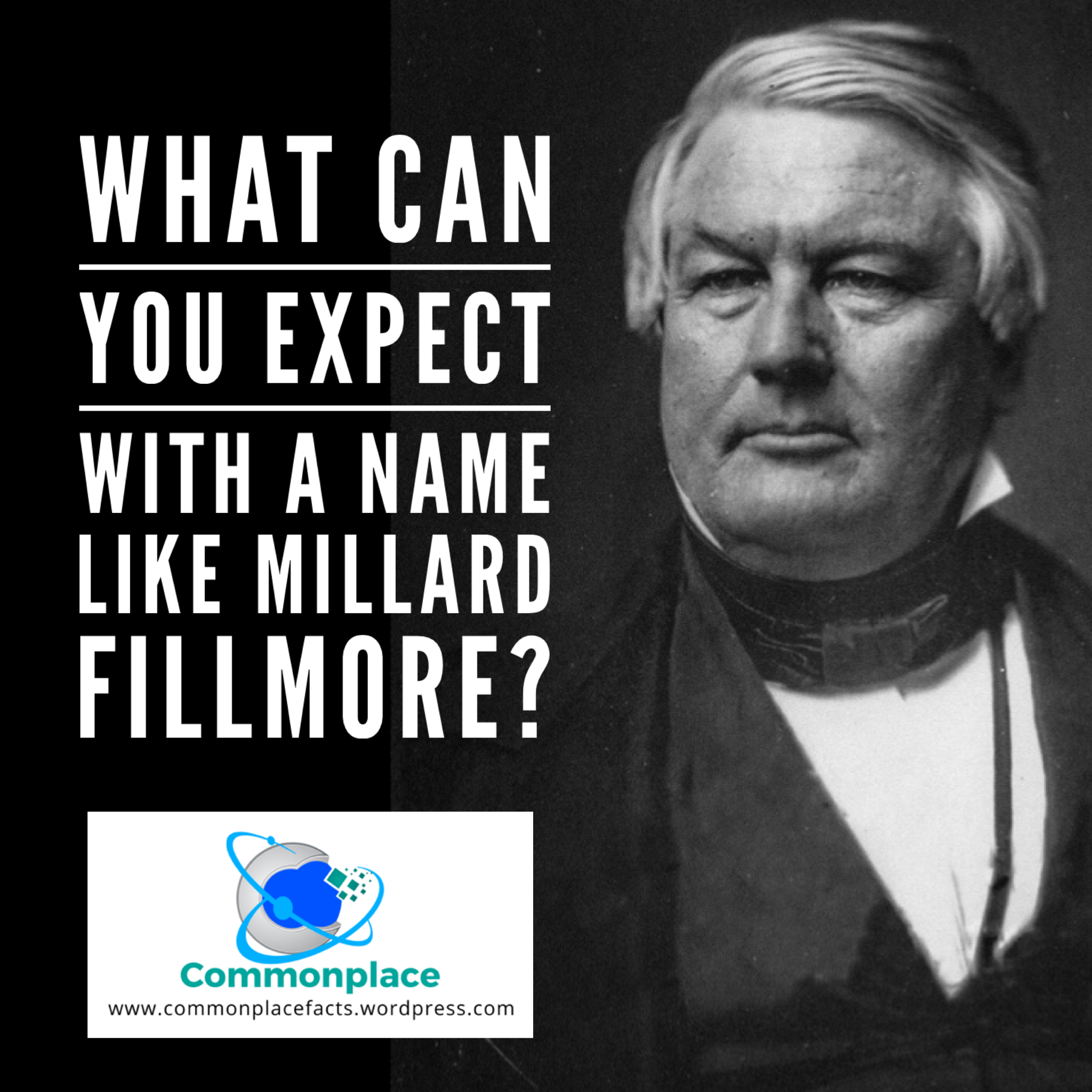

Some people seem destined for greatness on the basis of their names, alone. Lucius Quintus Cincinnatus Lamar, for example, may have achieved success as secretary of the interior and associate justice of the Supreme Court simply because he had one of the coolest names in American history.
On the other side of the scale is poor Millard Fillmore. Born January 7, 1800, Fillmore came from a poor family. He claimed that his father owned only three books: a Bible, hymnal, and almanac. Despite this, the future president became an ardent bibliophile and always carried a dictionary with him so he could improve his vocabulary.
Fillmore rose through New York government, serving as the state’s comptroller and then getting elected to the House of Representatives. He served as a congressman from 1837 to 1843. Although nominated for another term, he declined the honor and returned to private life.
His plans for leaving government changed when the Whig Party nominated him to be Zachary Taylor’s running mate in 1848. The Taylor/Fillmore ticket would prove to be the last hoorah for the Whig Party. When Fillmore took the oath as the 12th Vice President of the United States, most concluded that he would slip into obscurity, as was the destiny of most vice presidents. Again, fate intervened when Taylor died unexpectedly on July 9, 1850, making Millard Fillmore the president of the United States.
The circumstances surrounding Fillmore’s ascendency to the White House seemed to be a mockery. By succeeding a deceased president, he was immediately dubbed an “accidental president.” Even though there would have to be an unlucky thirteenth president, it was just plain cruel that the dubious distinction fell upon someone named Millard Fillmore.

The Fillmore Administration is not often recalled. Those who do dwell upon it have difficulty finding anything noteworthy or positive to say about his brief tenure as the nation’s chief executive. Almost every time modern historians rank the U.S. presidents in order of greatness, Fillmore’s name appears near the bottom of the list. Even the White House’s official website calls him “uninspiring,” and in 1988 a Yale history professor quipped that “to discuss…Millard Fillmore is to overrate [him].”
It should be noted that the man whose father owned only three books compensated for this with his devotion to the printed page. As president, he and First Lady Abigail founded the first permanent White House library. In December 1851, when a fire broke out at the Library of Congress, Fillmore raced from the White House to help fight the fire. He then advocated for and signed a bill to fund the replacement of all the books that had been destroyed.
Despite Fillmore’s dedication toward preserving the Library of Congress, he failed to win many supporters during his administration. At the 1852 Whig convention in Baltimore, the party passed him over and gave the nomination to General Winfield Scott. Fillmore turned the keys to the White House over to Democrat Franklin Pierce after the Whig Party was sounded defeated in the 1852 elections.
Fillmore returned to his law practice in Buffalo, but he wanted to be able to vindicate his name by showing he could get to the White House in his own right. In January 1855 he began seeking the support of the Know-Nothing Party. This unfortunately-named party’s platform was centered on being anti-Catholic and anti-immigrant. Fillmore endorsed this platform with a public letter that bemoaned “the corrupting influence which the contest for the foreign vote is exciting upon our election.”
Although winning the party’s nomination for the 1856 election, he failed to excite the electorate. He was unable to carry his own state and managed to take only the state of Maryland. He garnered just 22% of the popular vote.
Notable efforts have arisen over the years to preserve the memory of the 13th president. The Millard Fillmore Presidential Site in Aurora, New York maintains the only surviving home, other than the White House, in which Fillmore resided.
In 1963 the Millard Fillmore Society was established. The organization sponsored activities, such as an annual birthday party (January 7), a national essay contest on the theme “What would America be today if there had been no Millard Fillmore?” and the publication of a magazine, Milestones With Millard. Despite its noble intentions, the society appears to have faded into obscurity, just like the man whose name it sought to enshrine.
In a cruel twist of fate, the thing many people most associate with Fillmore isn’t even true. On December 28, 1917, columnist H.L. Mencken wrote a tongue-in-cheek article entitled “A Neglected Anniversary” in which he lampooned the history of the bathtub. Toward the end of his column, he wrote:
But it was the example of President Millard Fillmore that, even more than the grudging medical approval, gave the bathtub recognition and respectability in the United States. While he was still Vice-President, in March, 1850, he visited Cincinnati on a stumping tour, and inspected the original Thompson tub. Thompson himself was now dead, but his bathroom was preserved by the gentlemen who had bought his house from the estate. Fillmore was entertained in this house and, according to Chamberlain, his biographer, took a bath in the tub. Experiencing no ill effects, he became an ardent advocate of the new invention, and on succeeding to the Presidency at Taylor’s death, July 9, 1850, he instructed his secretary of war, Gen. Charles M. Conrad, to invite tenders for the construction of a bathtub in the White House.
So many people believed the column to be actual history that Mencken was forced to write two additional columns in which he pointed out that the first column was a hoax. Unfortunately, the myth remains believed by many people, and numerous websites and presidential history books continue to proclaim that Fillmore installed the White House’s first bathtub.
Fillmore’s inglorious defeat in the 1856 election convinced him to withdraw from politics. He retired to his New York home and enjoyed a relatively quiet existence. He suffered a stroke and later died on March 8, 1874. His final words, upon being offered a spoonful of soup from his doctor, are as memorable as his name: “This nourishment is palatable.”

50 Fun Facts About Presidents and Politicians That Sound Made Up (But Aren’t)
Discover 50 surprising fun facts about presidents and politicians that sound unbelievable—but are completely true. From duels to pet raccoons, history is stranger than fiction.

From Zero Stars to 50: The History of the American Flag
Explore the surprising history of the American flag—from chaotic early designs to the modern Stars and Stripes. Discover odd layouts, forgotten variations, and how the flag we know today finally took shape.

The Surprising History of the Presidential Seal: Why the Eagle Faces the Olive Branch
Discover the surprising history of the Presidential Seal, why Truman changed the eagle’s direction, and Churchill’s famous “swivel” remark about peace, war, and American symbolism.





Leave a Reply