
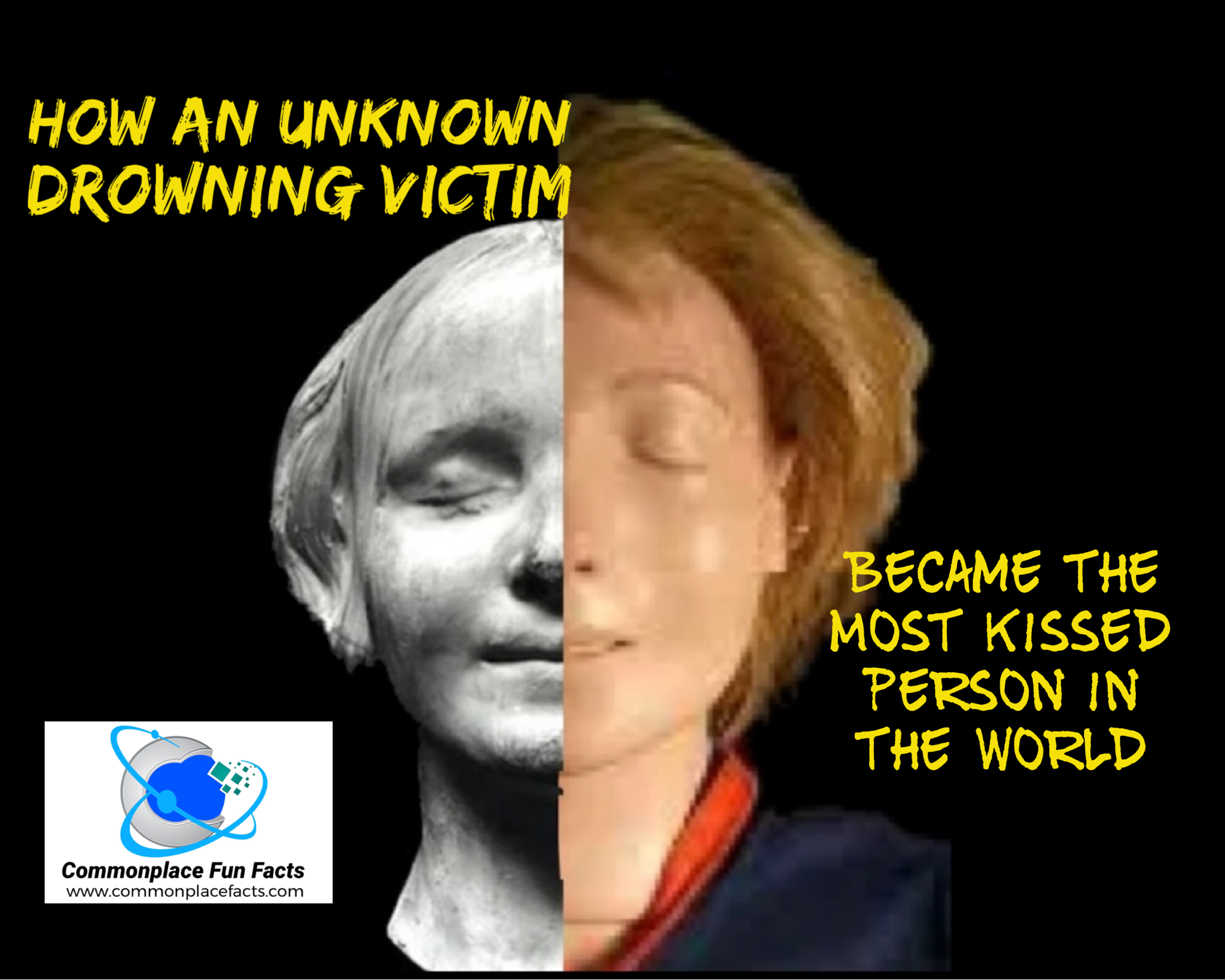

The young girl’s body was dragged out of the Seine River. Police investigators found no signs of trauma or a struggle. The utter absence of bruises and cuts led them to the conclusion that this was just one more tragic case of suicide.
Sadly, suicide investigations were not new to the Paris police. As many as 200 people took their lives each year by throwing themselves into the muddy waters of the Seine. Suicides were so common, in fact, that Paris had a special division of law enforcement known as the River Police.
Not only were there no signs of a struggle on the body, but there was also no identification. In the late 1800s, there was no way of running fingerprints or DNA through a national database. The primary way of identifying an unknown body was to put the corpse on display in the morgue window. Frequently, a passerby would recognize the deceased, allowing the police to make contact with the next of kin and arrange for a proper burial.
Despite being placed on display, no one came forward to identify or claim the young girl. Perhaps that is some indication of the loneliness and despair that led her to take her life in the first place. She became known as “L’Inconnue de la Seine (the Unknown Woman of the Seine).”
More than a century later, her true name remains a mystery. She is far from unknown, however. The pathologist who conducted the autopsy had a plaster “death mask” made of her face. The serenity that had apparently eluded her in life was quite evident on her face in death.

The company chosen by the pathologist to preserve her serene expression was the Lorenzi model makers. It turns out the pathologist was not the only one who was taken by the surprising beauty of this anonymous victim of the Seine. Lorenzi made copies of the death mask, offering them to the public. Collectors snatched them up, declaring that the mysterious half smile and beautiful features made the girl the “Drowned Mona Lisa.” Today, Lorenzi still offers reproductions of the death mask for sale.
The anonymous girl has achieved immortality in another way. Some have declared that her lips have been kissed by more people than any others in the world. There is a good chance that you are one of those people.
In the late 1950s, cardio-pulmonary resuscitation (CPR) had been recognized as one of the best ways to save victims of cardiac arrest, choking, or other emergencies that interfered with the heart and/or breathing. Archer Gordon, a member of the American Heart Association’s CPR Committee was looking for a good tool to assist in teaching CPR. He reached out to a Norwegian toymaker by the name of Åsmund Laerdal.
Laerdal created a life-sized doll with metallic spring ribs and a rubber face. The doll’s design would only allow air to flow into the lungs when the neck was placed in the right position and the nose was pinched shut. This revolutionary device allowed people to practice CPR without putting live volunteers through the painful — and awkward — ordeal of having someone practice on them.

As part of the finishing touches on his creation, Laerdal gave some thought to the face. He had seen a reproduction of “L’Inconnue de la Seine” on the wall of a relative’s house. It struck him as an appropriate choice. When the Laerdal company rolled out its first CPR manikins in 1960, “L’Inconnue de la Seine” became the face “Rescue Annie.”
Making the CPR manikin changed the course of the Laerdal company from toys to medical devices, as described on its website, where Rescue Annie is still available for purchase. The company estimates that 300 million people around the world have been trained in CPR, most of them with the help of Rescue Annie. One of those people, it seems, was Michael Jackson, who included the refrain “Annie are you okay?” in the song “Smooth Criminal” after he was inspired by his own CPR training. It is a question also used in CPR training when trainees check for a response in the patient.
It seems strangely appropriate that the unknown drowning victim who died more than a century ago has played a role in saving countless people from drowning. CPR training — generally taught with Rescue Annie — is mandatory for most lifeguards.
If you have received CPR training, you are familiar with Rescue Annie. You were probably too preoccupied with the gravity of what you were learning to give much thought to the face that was looking back at you. Perhaps when you renew your CPR certification or get trained for the first time, you will take a moment and honor the memory of the anonymous girl from the Seine. Let her story of despairing in life inspire you to save a life.

Can You Be Shocked Back to Life After Flatlining? The Truth About Defibrillators and Cardiac Arrest
Can You Be Shocked Back to Life After Flatlining? Find out the truth behind the myth.

Monica Meyer: The Strange Death of the Mayor Who Drowned in Raw Sewage
Discover the tragic and bizarre true story of Monica Meyer, the mayor who met a shocking fate in a sewage tank. A strange death but true political incident that still baffles today.

The Woman Who Saved Hitler’s Life—and Changed the Course of History
In 1910, Adolf Hitler nearly ended his life. One woman’s intervention changed everything—altering the 20th century and shaping history’s darkest chapter.




Leave a Reply