
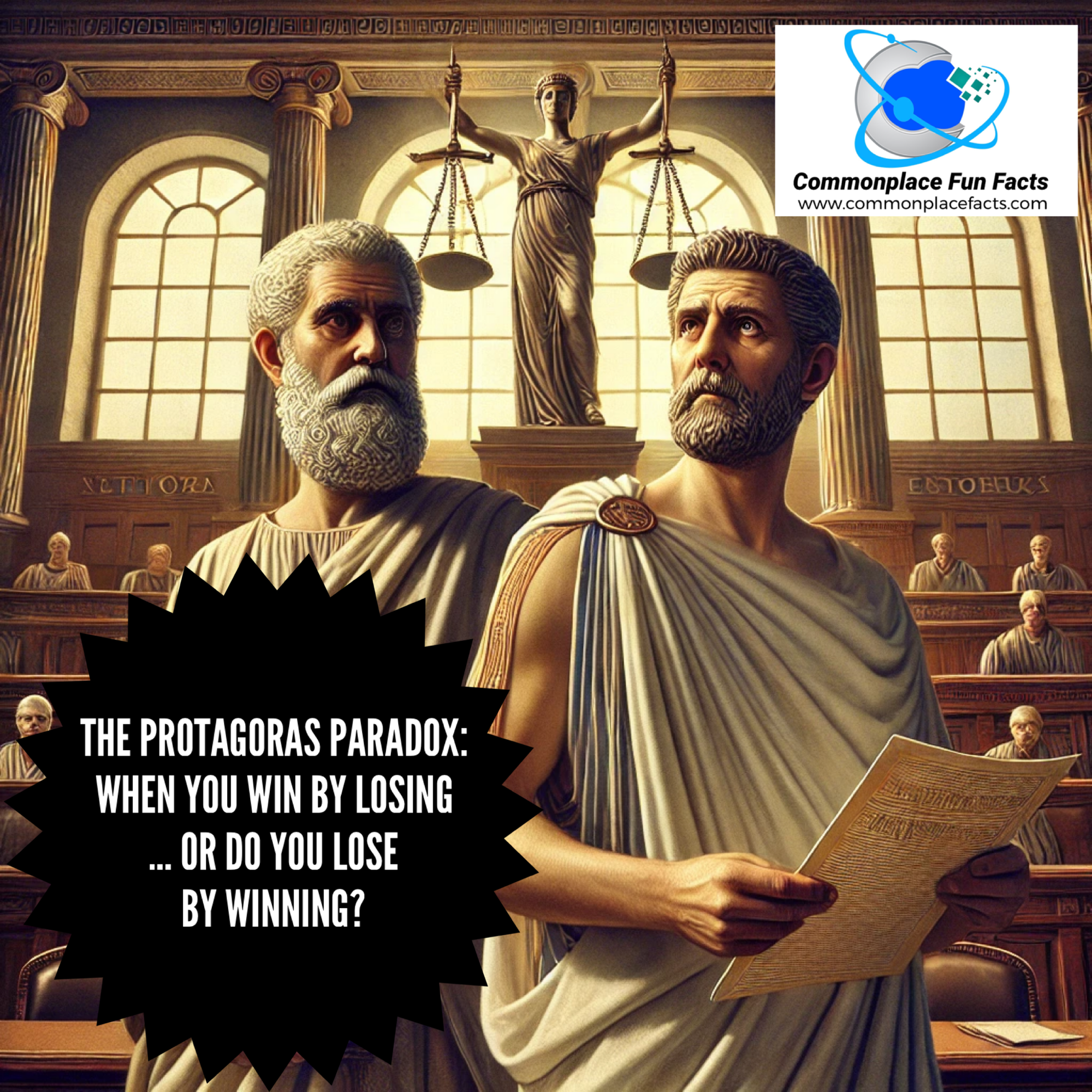

The Protagoras Paradox of the Court: Protagoras Messes With Legal History
An act of charity by one of the fathers of modern thought led to one of the greatest paradoxes of legal and philosophical history.

Protagoras was one of the early great thinkers of Ancient Greece. Plato names him as the creator of the role of professional sophist and credits him with coining the phrase, “Man is the measure of all things.”
Protagoras saw promise in a pupil named Euathlus and agreed to oversee his education to become a lawyer. Recognizing that Euathlus did not have ready means to pay for his education, but believing the future for this bright young man was promising, Protagoras agreed that Euathlus would not have to pay for his education until he won his first case.
Years passed and Euathlus decided not to go into the practice of law, after all. Protagoras demanded payment, and Euathlus refused, pointing out that he was only obligated to pay after winning by his first case — something that had not occurred, due to his decision not to practice law. Left with no other option, Protagoras sued to recover the money.
Thus was born the Paradox of the Court.
According to Protagoras, he was entitled to the money no matter which way the court ruled. If the court found in his favor, Euathlus would be obligated to pay him the money. If, on the other hand, the court ruled against him, it would have handed Euathulus his first legal win, thus triggering his obligations under the contract.
Euathlus also saw the lawsuit as a win-win scenario, but for him, not for his mentor. If the court ruled in his favor, he reasoned, he would have legal backing for his position that he did not have to pay Protagoras. Conversely, if the court ruled against him, he would still be in the position of having not won his first case, and therefore would not be contractually obligated to pay.
While the facts surrounding the creation of this paradox are not in dispute, the resolution of the case has been lost to history.
How would you resolve it?
You may also enjoy…

The Birthday Paradox Explained: Why 23 People Are Enough to Defy Common Sense
In a room of 23 people, odds are that two of them share the same birthday. Find out why the Birthday Paradox defies common sense.

The Trolley Problem and Other Confounding Moral Dilemmas That Make Us Question Who We Really Are
Explore the trolley problem and other famous moral dilemmas in an engaging, accessible deep dive that examines how people make ethical decisions, why our choices shift in different scenarios, and what these thought experiments reveal about human nature.

Schrödinger’s Cat: Explained at the Fifth Grade Level (With Extra Nerd Sauce)
Discover Schrödinger’s Cat—the famous thought experiment where a cat is both alive and dead. A funny, kid-friendly explainer with nerdy pop culture twists.





Leave a Reply to sopantoothCancel reply