
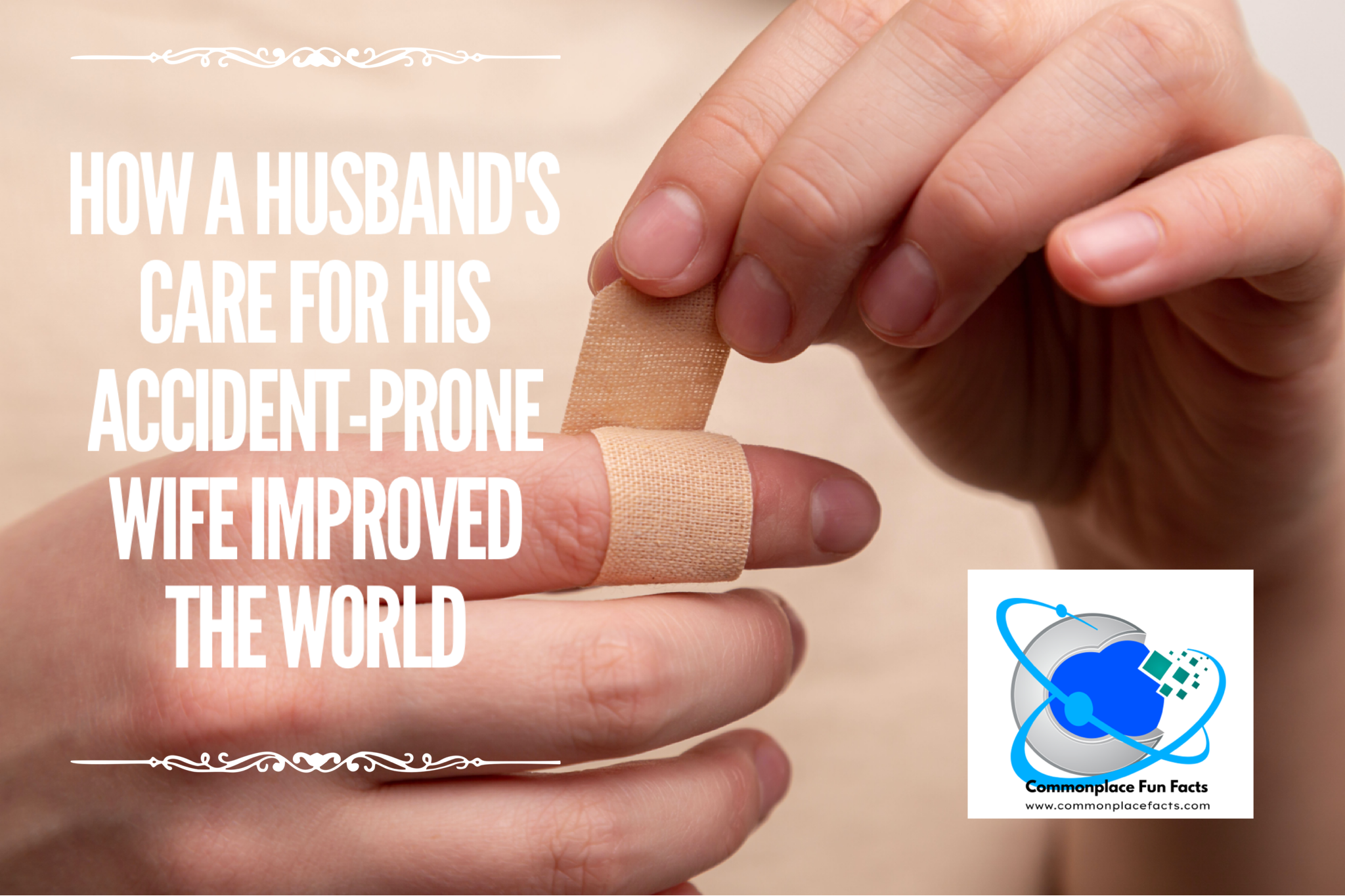

They say necessity is the mother of invention, but in this case, it was the wife of invention—specifically, one who couldn’t cook a meal without adding a minor injury to the menu. And that’s how we got Band-Aids: not from a lab, not from a think tank, but from one deeply devoted husband who just wanted to keep his wife from bleeding all over dinner.
Contents
Meet the Dicksons: Love, Bandages, and Domestic Mayhem

Earle and Josephine Dickson were your classic early 20th-century couple: she brought the energy, he brought the gauze. Married bliss was occasionally interrupted by the sight of blood—usually Josephine’s—thanks to a kitchen skill set that emphasized enthusiasm over safety. While Josephine had a flair for slicing vegetables (and occasionally herself), Earle was the methodical type who preferred problems with cleaner outcomes.
Earle worked as a cotton buyer for Johnson & Johnson. So while he wasn’t exactly a battlefield medic, he had access to medical supplies—and, more importantly, a motivation stronger than corporate ambition: spousal preservation.
The Bandage Struggles of Yesteryear
Let’s travel back to the 1920s, when treating a paper cut involved unrolling gauze, snipping surgical tape, and whispering prayers that you didn’t glue yourself shut in the process. Pre-cut bandages weren’t a thing. Wound care was a DIY disaster. If you were bleeding, you basically had two options: perform minor surgery on yourself or bleed stylishly into your apron.
And if you needed to bandage something by yourself? Good luck. Unless your injury was conveniently located on your friendliest finger, assistance was required. This deeply inconvenient situation was exactly what prompted Earle to get creative.
Domestic Engineering: How Earle Saved the Day (and the Finger)

Earle started tinkering with the supplies he had lying around—gauze, surgical tape, and a healthy dose of husbandly concern. His idea? Pre-stick a little square of gauze onto a piece of tape, then cover the whole thing with crinoline so it didn’t stick to itself. The result? The first-ever DIY-friendly, injury-sized adhesive bandage.
He rolled his creation back up like a tiny first-aid burrito, and voilà: Josephine could now treat her wounds without help, tears, or tourniquets. No muss, no fuss—just snip, stick, and get back to dinner.
From Kitchen Catastrophes to Corporate Gold: The Band-Aid Goes Big

Eventually, Earle shared his prototype with colleagues at Johnson & Johnson. They took one look and said, “Eh, might work.” Initial excitement was lukewarm. In 1920, the BAND-AID® hit the market—and promptly flopped. They made just $3,000 that first year. To be fair, this was the same decade that a guy survived going over Niagara Falls in a barrel but ended up dying after slipping on an orange peel, so obviously people had a different set of priorities about safety than we do.
Still, Johnson & Johnson stuck with it. Enter: the Boy Scouts. Someone had the brilliant idea to give free Band-Aids to troop leaders nationwide. The scouts came home covered in more Band-Aids than merit badges, and their mothers collectively swooned. Sales took off, and by 1924, Band-Aids were being mass-produced, sterilized, pre-cut, and slathered across minor injuries everywhere.
How the Band-Aid Took Over the World
Once the Band-Aid caught on, there was no stopping it. It became a household staple, joined military kits, and found its way into classrooms, hospitals, and purses everywhere. Eventually, Johnson & Johnson began producing them in various shapes and materials: waterproof, skin-toned, breathable, and even kid-friendly versions featuring every cartoon character known to man.
The brand became so iconic that “Band-Aid” is now used interchangeably with “adhesive bandage”—despite J&J gently reminding us that BAND-AID® is a registered trademark, thank you very much.
The Man Behind the Miracle Strip
As for Earle Dickson, his efforts didn’t go unnoticed. Johnson & Johnson promoted him all the way up to Vice President and gave him a seat on the board of directors. Not bad for a guy who started out trying to keep his wife from losing a finger to a mandoline slicer.
Earle remained with the company until his death in 1961, and his legacy lives on—both in corporate success and the billions of Band-Aids produced since his first prototype. That’s a lot of minor injuries soothed, one tiny strip at a time.
Why Band-Aids Still Reign Supreme
Let’s face it—Band-Aids endure because they work. They’re simple, fast, and require zero instructions. Cut yourself? Slap one on. Papercut? Covered. Invisible emotional wound? Okay, it may not help that, but wearing a Band-Aid covered with superheroes has to make you feel at least a little bit more heroic.
They’ve also wormed their way into our cultural consciousness. “Put a Band-Aid on it” is practically shorthand for “let’s fix this quickly and not talk about it again.” That’s brand power.
From Strip to Smart Tech: What’s Next?
Modern Band-Aids are getting tech-savvy. Some are now equipped with sensors that monitor wounds, detect infections, and even dispense medication. It’s the kind of thing that would’ve made Earle Dickson’s head spin—and Josephine’s kitchen injuries a little less dramatic.
And yes, Band-Aids still rake in billions annually. You have your choice of clear, neon, OURTONE (for darker complexions)—you name it. They’re everywhere, proving that even a century later, there’s still no substitute for good old adhesive affection.
In 2023, Johnson & Johnson created the consumer health corporation Kenvue as a spin-off to manage the Band-Aid products.
The Takeaway: Love Hurts… but Only a Little
The story of the Band-Aid isn’t just about medical innovation. It’s about love, empathy, and the kind of everyday brilliance that happens when someone sees a problem, rolls up their sleeves, and grabs the surgical tape. Earle Dickson didn’t set out to change the world. He just wanted to help his wife stop bleeding on the casserole.
And in doing so, he gave the world a product that’s patched up fingers, knees, and hearts for more than 100 years. Not bad for a husband just trying to survive dinner prep.
- BAND-AID® Brand is a registered trademark of Kenzie
You may also enjoy…

Philo T. Farnsworth: The Teenage Genius Inventor of the Television
Philo T. Farnsworth, a brilliant young inventor of the television, changed the world with his inventions. Find out more about him here.

The Inventor of the Donut Hole: Why Hanson Gregory is Remembered for Inventing Nothing
Who invented the donut hole? Read about the big debate that determined whether Hanson Gregory has the distinction of inventing nothing.

Chindogu: The World of Weird, Funny, and (Un)Useless Inventions
Learn about the fun and fascinating practice of Chindogu — (un)useless inventions you won’t believe!




Leave a Reply to Herald StaffCancel reply