
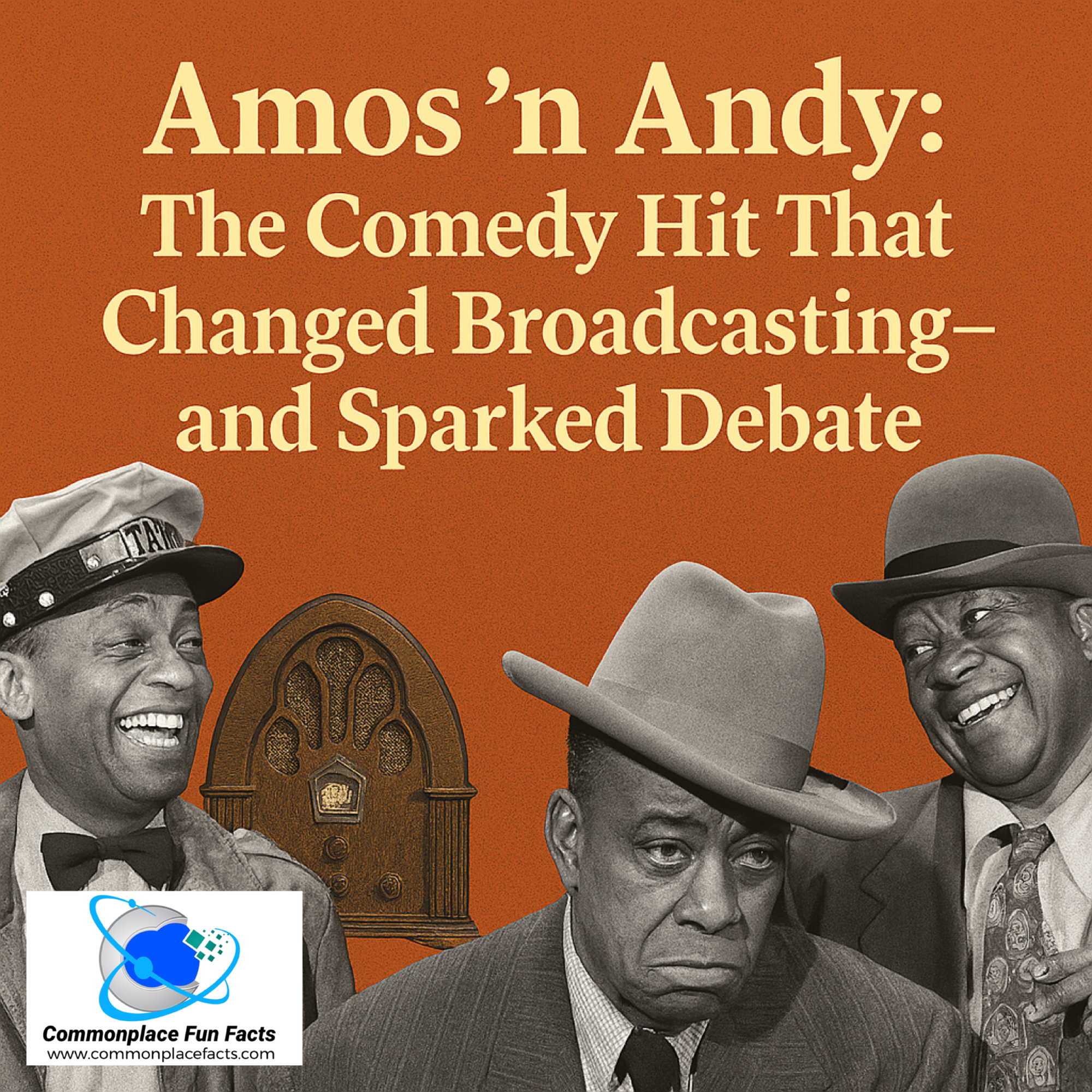

Before sitcoms came with laugh tracks, streaming options, and hashtags, there was Amos ’n’ Andy —a show that brought millions of Americans together around their radios, later their televisions, and shaped the conversations around the watercooler for decades. Whether you know it as a pioneering comedy classic or as a touchstone in conversations about race relations, one thing is certain: Amos ’n’ Andy was unlike anything else in its time—and its influence is still felt today.
Contents
From Free Meals to Syndication: The Road to Amos and Andy
Before Amos ’n’ Andy became a household name—or a hot topic in media studies classes—its creators were just two vaudeville performers trying to turn a meal ticket into a microphone gig. Freeman Gosden and Charles Correll met in 1920 in Durham, North Carolina, both familiar with minstrel traditions and both with just enough radio experience to be dangerous (and unpaid).
By 1925, they landed a spot on Chicago’s WQJ, which soon led to regular appearances on another station, WEBH. Compensation? A free dinner. Still, they hoped radio exposure might land them on stage. That dream took a step closer to reality when they sold a few of their comedy scripts to bandleader Paul Ash, which opened the door to WGN, the Chicago Tribune’s flagship station. Suddenly, they were full-time broadcasters with a steady income and even a recording deal from the Victor Talking Machine Company. Not too shabby for guys working for appetizers the year before.
WGN had just struck gold with the daily comic strip The Gumps, and station exec Ben McCanna thought a serialized radio version might ride the same wave. Gosden and Correll, however, weren’t sold. They weren’t keen on playing female characters—something required for adapting the strip—and they didn’t want to jeopardize their growing brand. If the show flopped, they figured, minstrel-style characters with exaggerated dialects might offer just enough disguise to quietly go back to Plan A.
So instead of The Gumps, they pitched something new: a series about “a couple of colored characters.” The result was Sam ’n’ Henry, which premiered on January 12, 1926. It was an instant sensation across the Midwest. In fact, it became so popular that Gosden and Correll proposed something radical—syndicating the show on phonograph records, a move that would have made it the first nationally distributed radio program. WGN, however, wasn’t interested. So the duo packed up their bits, walked out, and aired their final show for WGN on January 29, 1928.
The show kept going without them—WGN owned the characters, after all—but the magic had already moved. WMAQ, the station run by the Chicago Daily News, hired Gosden, Correll, and their announcer Bill Hay, offering better pay and full support for their syndication ambitions.
Needing new names for their lead characters, Gosden and Correll reportedly took inspiration from a real-life elevator ride, where two elderly men greeted each other with a cheerful, “Hello, Amos!” “Hey there, Andy!” And thus, Amos ’n’ Andy was born. The new show launched on March 19, 1928, pre-recorded on 78-rpm discs at Marsh Laboratories under the guidance of audio innovator Orlando R. Marsh.
During its early years, the show broadcast from exotic locales like the El Mirador Hotel in Palm Springs. Over the first decade, Gosden and Correll voiced more than 170 different male characters, each with a distinctive persona. Their storytelling style included serialized plots and cliffhangers that kept audiences coming back every night like it was the Downton Abbey of its day—but with more zoot suits.
It wasn’t just a success—it was historic. Amos ’n’ Andy became the first radio program to be syndicated in the United States. By the end of the show’s initial syndicated run in 1929, more than 70 stations carried recorded episodes. And all of that came from a duo who once worked for dinner.
From Ham Sandwiches to Harlem: The Story Within the Show

Long before Netflix was asking if you were still watching, Amos ’n’ Andy was giving America episodic cliffhangers built around two dreamers trying to make it big in the big city. The fictional tale began on a farm near Atlanta, Georgia, where Amos Jones and Andy Brown decided they’d had enough of rural life and were ready to chase their fortune in Chicago. Armed with $24, four ham-and-cheese sandwiches, and the kind of optimism typically reserved for lottery ticket buyers, they hopped on a train and headed north.
After a few tough weeks in a rooming house on State Street, the duo launched the Fresh Air Taxi Company—so named because their first car had no windshield. Instead of fixing the problem, they turned it into a feature. That kind of entrepreneurial spin soon earned them more than just fares: in 1930, the Louis Marx and Company released a tin wind-up toy version of their cab, complete with Amos and Andy in the front seat. A limited, autographed edition was even sent as a gift to U.S. leaders, including President Herbert Hoover.
By then, the show had expanded its empire: there was a book, All About Amos ‘n’ Andy and Their Creators (1929), a comic strip syndicated by the Chicago Daily Press, and enough catchphrases to keep barbershop conversation going for months. And while the comedy kept audiences tuning in, it was the characters—and their ever-growing universe—that truly gave the show its staying power.
Characters, Cliffhangers, and Cab Confessions
Amos was honest and hardworking—especially after marrying Ruby Taylor in 1935. Andy, on the other hand, was more of a lovable schemer: confident, gullible, and not always great at follow-through. Then there was George “Kingfish” Stevens, the leader of the Mystic Knights of the Sea lodge and a master of get-rich-quick schemes that usually dragged Andy (and occasionally Amos) into a mess.
Supporting characters rounded out the neighborhood, including:
- Brother Crawford – a long-suffering family man with a work ethic to match Amos’s
- Henry Van Porter – a status-conscious real estate and insurance salesman
- Algonquin J. Calhoun – a delightfully shady lawyer introduced in 1949
- Lightning Jefferson – the slow-moving handyman whose nickname was pure irony
- Frederick Montgomery Gwindell – a tough, fast-talking newspaperman
- William Lewis Taylor – Ruby’s educated and articulate father
In the early years, Gosden voiced Amos and Kingfish while Correll played Andy—meaning most of the show’s scenes involved either Andy and Amos or Andy and Kingfish, but rarely Amos and Kingfish together. The female characters, like Sapphire (Kingfish’s wife), Madame Queen, and Ruby Taylor, didn’t appear vocally at first. Their presence was usually inferred through conversations. When Madame Queen finally took the stand in 1931 by suing Andy for breach-of-promise when he broke their engagement, it marked only the second time a woman’s voice was heard on the show—and yes, it was still Gosden doing the honors.
Beginning in 1935, actual actresses began to voice female characters, and by 1943, as the show transitioned into a weekly sitcom, additional male actors joined the cast. Still, Gosden and Correll continued voicing Amos, Andy, and Kingfish all the way until the show wrapped its radio run in 1960. On television, the roles of Sapphire and her mother were played by Ernestine Wade and Amanda Randolph, both of whom had voiced the characters on the radio.
Moving Up (and Out): National Reach and Narrative Drama
With its growing audience in 1928, Amos ’n’ Andy caught the attention of sponsors, and in August 1929, Pepsodent brought the show to the NBC Blue Network. But the Blue Network didn’t reach the West Coast, leading to a minor uprising of listener complaints. NBC responded by giving the show a coast-to-coast debut on November 28, 1929, through its Pacific Orange Network. It was official: America couldn’t get enough of these characters.
Behind the scenes, Gosden and Correll were now splitting a $100,000 annual salary—with announcer Bill Hay included as an equal partner. And in the world of the show, Amos, Andy, and Kingfish moved to Harlem, bringing their fictional misadventures in step with real-life Great Migration trends. NBC even issued orders not to interrupt the broadcast unless there was a national emergency. True story.
By 1931, the show wasn’t just a hit—it was the hit. With more than 40 million nightly listeners, the show had a reach that modern podcasters can only dream of. Families gathered around radios. Streets emptied. And in an astonishing twist of cultural priority, some movie theaters actually paused their screenings to broadcast the show over the loudspeakers so audiences wouldn’t miss an episode.
From Laughter to Gasps: The Show’s Dramatic Turns
While it started as a comedy, the show occasionally leaned into pure drama. The story arc involving Andy and Harlem beautician Madame Queen gripped the nation. In a particularly intense plotline, Ruby (Amos’s fiancée) nearly died of pneumonia. Later that year, Amos was interrogated in connection with a murder, until network pressure led to the story being recast as a dream. (The “It was all a dream” twist—not just for Dallas or St. Elsewhere.)
As the years passed, the show evolved. While early episodes used more overt minstrel-style humor, later episodes focused on well-developed character arcs and storylines that combined humor, pathos, and social commentary. Gosden and Correll were praised for creating emotionally resonant drama through layered plots—often planting seeds for future episodes months in advance, a storytelling structure still used today in serial television.
Along the way, Gosden and Correll created innovative ways of doing the show. One such example was their pioneering use of mic distance and angle to give listeners a sense of space and realism. You didn’t just hear the characters—you felt like you were eavesdropping at the Fresh Air Taxi Company.
A Lasting Formula
Very few original recordings from the early days survive, but many of the scripts do—and they’ve been vital to historians studying the show’s evolution. By 1935, the show moved from NBC’s Blue Network to the Red Network, eventually relocating production to Hollywood. After years with Pepsodent, the show switched to Campbell’s Soup in 1938, and transitioned to CBS in 1939, adding yet another chapter to its ever-expanding broadcast journey.
And that’s just the first few decades of Amos ’n’ Andy. Whether you see it as entertainment, a historical artifact, or a bit of both, the show remains one of the most influential series in American broadcasting history. And with enough plot twists, dramatic turns, and characters to fill a 1940s taxi cab, it’s worth revisiting to hear what all the fuss was about.
Whether you were a farmer in Iowa or a flapper in Manhattan, you knew who Amos, Andy, and Kingfish were. The show became one of the first true national media phenomena—and it did it all through the magic of radio.
The Big Screen Experiment: Check and Double Check
In 1930, the show made the leap to film with Check and Double Check, produced by RKO Pictures. The movie featured Gosden and Correll reprising their roles, and even included a performance by Duke Ellington and his Cotton Club Orchestra. The film was a commercial success and gave fans a visual glimpse of their favorite audio personalities, further cementing the show’s cultural footprint.
The Television Era: A New Medium, A Historic Cast

In 1951, Amos ’n’ Andy debuted on CBS television with an entirely new cast—and made history once again. This time, the characters were portrayed by Black actors, including Alvin Childress as Amos, Spencer Williams as Andy, and Tim Moore as the ever-scheming Kingfish. It was the first network television show in the United States to feature an all-Black cast in lead roles.
The show maintained the comedic tone of the radio program, blending sitcom-style stories with sharp performances and memorable characters.
Controversy and Criticism: The Backlash Builds
For all its popularity, Amos ’n’ Andy was no stranger to controversy. The first sustained protest came in December 1930, when Bishop W. J. Walls of the African Methodist Episcopal Zion Church penned a sharply worded editorial in Abbott’s Monthly. He took aim at the show’s portrayal of lower-class characters, describing the dialogue as “crude, repetitious, and moronic.” It didn’t take long for that spark to ignite a wider protest.
The Pittsburgh Courier, then the second-largest African-American newspaper in the U.S., took up the cause. Under publisher Robert L. Vann, the paper led a six-month campaign in 1931 urging readers to speak out. Over 700,000 African-Americans signed petitions submitted to the Federal Radio Commission, voicing concern over the show’s use of stereotypes. And yet, this was not a universally shared perspective. While the Courier criticized the show, the Chicago Defender—another leading Black newspaper—took the opposite view, praising the program for its humor and even featuring Gosden and Correll as honored guests at a community event later that year.
The arrival of the television version in 1951 brought renewed scrutiny. This time, the charge was led by the NAACP, which quickly mounted a public campaign arguing that the show misrepresented African Americans and reinforced negative stereotypes. In a detailed bulletin, the organization asserted that the show portrayed every Black character as “either a clown or a crook,” and criticized depictions of Black doctors, lawyers, and women as offensive caricatures. The NAACP called for the show’s removal from the air, and their campaign gained traction.
Despite the controversy, the TV series remained popular with audiences, ranking #13 in the 1951–52 Nielsen ratings and still landing at #25 the following year. But advertiser support began to waver. Blatz Beer, the show’s sponsor, ended its backing in mid-1953. CBS, meanwhile, had made the interesting choice of premiering the series during the NAACP’s national convention—possibly not the best-timed programming decision in television history.
Ultimately, CBS pulled the series from syndication in 1966, under pressure from the NAACP and the growing civil rights movement. This marked the first time a network voluntarily removed a show from its rerun schedule over social and cultural concerns. The series was also dropped from the Australian Broadcasting Corporation, where it had aired for nearly a decade. In the U.S., the show wouldn’t return to television in any regular form for another 46 years.
By the time the show ended its original production run, 65 episodes had aired. Another 13 episodes—initially planned for the 1953–54 CBS season—were instead released as syndicated reruns. In 1954–55, yet another 13 episodes were created for syndication. These later installments focused heavily on Kingfish, as the series had been tentatively rebranded as The Adventures of Kingfish, though they ultimately aired under the original title.
The Lives Behind the Laughter
So what became of the people who brought these characters to life?
- Freeman Gosden continued to work in broadcasting and passed away in 1982. He was inducted into the National Association of Broadcasters Hall of Fame.
- Charles Correll died in 1972, also honored for his pioneering role in radio comedy.
- Alvin Childress, known as the soft-spoken and thoughtful Amos of television, found work more difficult to come by post-show but continued acting in stage and screen roles.
- Spencer Williams, who had already directed films before the TV show, stepped away from the limelight after its end.
- Tim Moore, beloved for his portrayal of Kingfish, became an iconic figure in early television and remained a favorite among fans of vintage comedy.
A Lasting Legacy
Few shows have had the kind of cultural footprint that Amos ’n’ Andy left. It was one of the earliest examples of a multimedia franchise, running for decades across multiple formats. It also helped pave the way—albeit unevenly—for future programming that would offer more diverse voices and stories.
Today, the show is studied, debated, and—thanks to surviving recordings—still available to watch and listen. Some view it as a brilliant example of early American comedy. Others see it as a reflection of the era’s limitations. Many agree it’s both.
In the summer of 1968, CBS launched a new documentary series titled Of Black America, with narration by a rising star named Bill Cosby. The premiere episode included a brief segment on racial stereotypes in vintage entertainment. Right there, alongside other film and television relics, were clips from Amos ’n’ Andy, now presented not as comedy, but as commentary.
Fast-forward to 1983, and the show got its own postmortem. A one-hour documentary titled Amos ’n’ Andy: Anatomy of a Controversy aired in syndication, later finding a second life on PBS and eventually online. The film traced the show’s journey from radio phenomenon to television lightning rod. It featured interviews with surviving cast members and well-known Black television stars like Redd Foxx and Marla Gibbs, who offered a more nuanced take than many expected.
Foxx and Gibbs both emphasized how groundbreaking it was at the time to have Black actors in lead roles on a major television network. They acknowledged the controversy but also pushed back on the idea that the show was purely harmful, expressing disagreement with the NAACP’s efforts to remove it from the air entirely. The documentary even included scenes from the long-shelved episode “Kingfish Buys a Lot,” which hadn’t been seen publicly since CBS pulled the series in 1966.
Then came another voice from a surprising corner: Harvard professor Henry Louis Gates Jr. In a 2012 American Heritage article titled Growing Up Colored, Gates wrote, “And everybody loved Amos ‘n Andy – I don’t care what people say today… Nobody was likely to confuse them with the colored people we knew.” It was a rare and candid reflection that captured the complicated relationship many viewers—especially African Americans—had with the show.
So was it pioneering? Problematic? Both? The answer continues to depend on who’s watching, when, and with what context. What’s clear is that Amos ’n’ Andy didn’t just vanish when it went off the air. It evolved into a conversation—one that’s still being had decades later.
What do you think? If you have never experienced Amos ‘n’ Andy, we encourage you to listen to the radio episodes, watch the television series, and form your own opinion. Love it, question it, laugh with it, or learn from it—Amos ’n’ Andy remains a part of broadcast history worth knowing.
Sometimes the best way to understand the past is to tune in and let it speak for itself.
You may also enjoy…

“Air Raid” — The Radio Drama That Inspired “The War of the Worlds”
Learn about “Air Raid” — the Old Time Radio drama that inspired “The War of the Worlds.”

The Wit and Wisdom of Fred Allen
Fred Allen (1894-1956) was one of the most brilliant comedians of all time. The fact that he is not better known today is one of the great travesties of the ages. After getting his start in Vaudeville, he went into radio and dominated the airwaves for nearly twenty years. His success is remarkable, given that…

How Jack Benny Nearly Became One of the Marx Brothers – A Forgotten Comedy Connection
Did you know Jack Benny nearly joined the Marx Brothers? Discover the untold story of how paused ambitions and parental intervention shaped a comedy legend.





Leave a Reply