
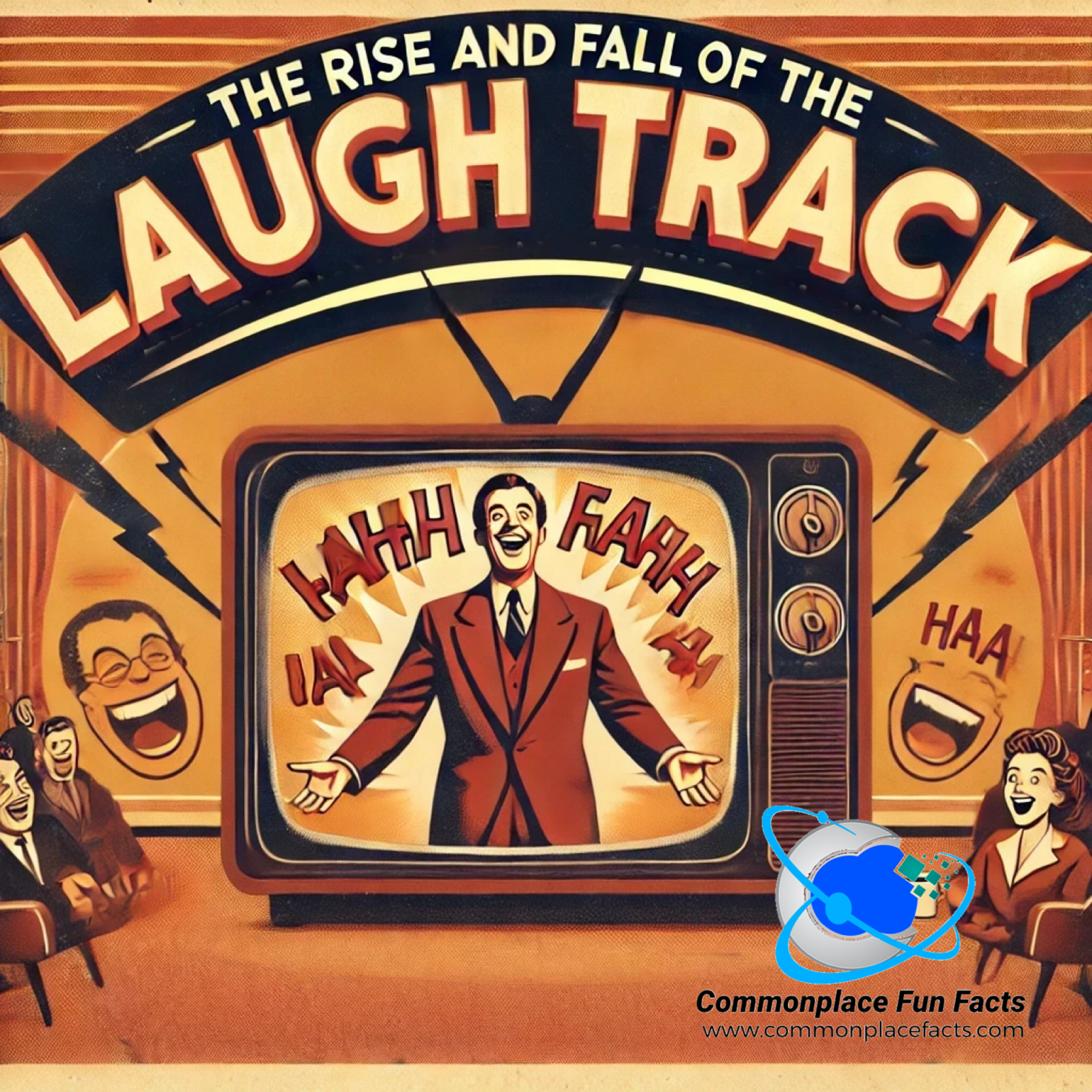

There are bad ideas, and then there are really bad ideas. Then there are the really bad ideas that sort of turned out to have a glimmer of redeeming value, even though no one will ever admit to being a fan.
No, this is not an article about going to a high school dance with this writer. Instead, let’s discuss another example of awkward repulsiveness: the laugh track. Also known as canned laughter, it has been called one of the 100 worst ideas of the 20th century, the single greatest affront to public intelligence, and an abomination. Despite this, it has haunted television for decades, cropping up in everything from I Love Lucy to M*A*S*H, making it seem like studio audiences were either mainlining nitrous oxide or being actively tickled by unseen tormentors.
But if the laugh track is so widely loathed, how did it survive for so long? Who invented this bizarre practice? And why, mercifully, has it all but disappeared? Get ready to laugh, clap, and groan on cue as we dive into the fascinating history of television’s most infamous gimmick.
Contents
Fake It Till You Make It: The Ancient Origins of Fake Laughter
While the laugh track is a relatively modern nuisance, the idea of using artificial laughter and applause to manipulate audiences goes back centuries. The Romans, ever the innovators, saw Emperor Nero stuffing theaters with 5,000 soldiers ordered to cheer at his performances. In 16th-century France, playwright Jean Daurat handed out free tickets in exchange for enthusiastic clapping. By the 19th century, entire industries of professional audience members, known as claquers, had emerged, with different specialists for laughing, crying, gasping, and demanding encores. Because nothing says “authentic audience response” like a room full of professional reactors.
Was Bing Crosby the Father of the Laugh Track?
Fast-forward to the 20th century, when radio inherited theater’s use of live audiences to make broadcasts feel more communal. When they started to be pre-recorded, however, audience reaction became a bit of a problem.

Among the first to make use of pre-recorded programming was none other than America’s favorite crooner, Bing Crosby. Now, Crosby was a man who valued efficiency—he had a primetime radio show that aired at the same local time on both the East and West Coasts, and the idea of performing the exact same show twice in one night didn’t sit well with him. After all, why belt out “White Christmas” twice when you could record it once and spend the evening golfing?
In a move that would revolutionize broadcasting, Crosby began pre-recording his shows using Magnetophon technology. This not only saved his vocal cords but also allowed for a bit of Hollywood magic: multiple takes, edited together into one seamless performance. The result? The best version of the show possible, with all the awkward flubs and less-than-stellar moments neatly edited out.
Of course, as with any technological breakthrough, there were a few hiccups. Sometimes, the audience’s reaction didn’t land quite as expected—a joke that should have gotten a hearty chuckle instead received the same polite response one might give when a coworker tells a really bad dad joke. Worse, with multiple takes stitched together, laughter or applause occasionally got cut off mid-chortle. It turns out that a laugh with a hard stop is just… unsettling.
Sound engineer Jack Mullen and Crosby put their heads together and came up with a simple but brilliant fix: pre-recorded audience reactions. If the audience wasn’t laughing when they were supposed to, well, no problem—they had a stash of laughs ready to go. And where, you might ask, did those first artificial giggles come from?
According to Mullen, it all started with hillbilly comic Bob Burns, who had once performed on Crosby’s show and, in a moment of unscripted inspiration, let loose with some very off-color folksy farm jokes. These jokes—scandalous at the time, though probably G-rated by today’s standards—had the audience in stitches. (Read this article about the “scandalous” skit that earned Mae West a lifetime ban from NBC.) But since they were just a bit too risqué for 1940s radio, scriptwriter Bill Morrow had an idea: instead of throwing away the recording, why not save those uproarious laughs for future use? A few weeks later, when a decidedly less funny show needed a boost, the “salvaged laughs” made their debut—and just like that, the laugh track was born.
What started as a simple patch job quickly became an industry staple. At first, laugh tracks were used sparingly, just to smooth out awkward silences or cover up choppy edits. But soon, radio producers realized they could sprinkle in laughter wherever they pleased—whether an audience was present or not. Before long, entire shows were airing with laughter that had been meticulously engineered in a studio rather than recorded from a live crowd.
The Mad Genius Behind the Laugh Track: Charles Douglass
Although America’s favorite crooner can be credited with introducing the practice of canned laughter, the true villain of our story is Charles Douglass. He was a sound engineer at CBS, and in the early 1950s, he decided that the only thing funnier than a joke was pressing a button that forced people to laugh at it.
Born in 1910 in Tonopah, Nevada, Douglass was an electrical engineering graduate from the University of Nevada. After moving to Los Angeles, he landed a job at CBS as a sound mixer, working on live radio broadcasts. But before he could leave his mark on television history, World War II intervened, and Uncle Sam had other plans for him.
Recognizing his technical acumen, the U.S. Navy sent Douglass to MIT and Bowdoin College for advanced training in radar technology. He spent the war developing shipborne radar systems, which, while undoubtedly useful, were significantly less amusing than his future career in manufactured laughter. After the war, Douglass returned to CBS, transitioning from radio to television, where he encountered one of the great dilemmas of early sitcoms: audiences who refused to laugh on cue.
The Quest for the Perfect Laugh
Television in the 1950s was still finding its rhythm, and live studio audiences were unpredictable at best. Sometimes they didn’t laugh at jokes that should have landed. Other times, they laughed too loudly or at the wrong moments, drowning out dialogue. And worst of all, multiple takes of the same scene would result in diminished audience enthusiasm—the first time a joke was hilarious, but by the third or fourth go-around, the crowd had the collective energy of a deflated balloon.
For Douglass, the solution was simple: why rely on fickle, real-life humans when you could just press a button? Sifting through CBS’s vast archive of recorded broadcasts, he isolated and compiled snippets of laughter, applause, and audience reactions, creating a bank of reusable responses. At first, he used these tracks sparingly to “sweeten” an episode—filling in awkward silences or replacing subdued audience reactions.
But it didn’t take long for TV executives to realize the power of canned laughter. Why settle for any level of unpredictability when you could guarantee the perfect laugh, every time? According to legend, comedian Milton Berle, while reviewing an episode in post-production, complained that a joke hadn’t received enough laughs. When Douglass inserted an artificial chuckle, Berle quipped, “See? I told you it was funny.”
And just like that, pre-recorded laugh tracks went from a minor production tool to a staple of television comedy.
The Birth of the Laugh Box
Of course, manually splicing audience laughter into shows was a tedious process. By the early 1950s, Douglass decided that if he was going to shape the collective sense of humor of an entire generation, he needed better equipment. In 1953, after two years of tinkering, he unveiled the Laugh Box.
This contraption—part soundboard, part secret weapon—resembled a small piano. Each key triggered a different type of laughter or applause, with over 320 sound bites stored on tape reels wrapped around 32 motorized drums. The setup allowed Douglass to mix and match reactions in real time, like a maestro conducting an invisible (and highly enthusiastic) audience.
For a man whose career was built on artificial laughter, Douglass took secrecy very seriously. The inner workings of the Laugh Box were a closely guarded secret. The keys were unlabeled, known only to Douglass himself, and the machine was always padlocked when not in use. When it was time to change the reels, he would wheel the device behind a curtain to prevent prying eyes from seeing its internal mechanisms.
And the laughs themselves? A mystery. While it’s widely believed that some came from live performances, such as French mime Marcel Marceau or segments from The Red Skelton Show, Douglass never publicly revealed his sources.
The Monopoly on Manufactured Laughter
With his Laugh Box in high demand, Douglass quickly became the go-to guy for sitcoms. In 1954, he left CBS to start his own company, Northridge Electronics, and before long, he was handling laugh tracks for nearly every major television network. At one point, he was working on 20 of the top 40 television shows simultaneously.
CBS, naturally, wasn’t thrilled about losing their in-house laugh guru. They argued that since he had developed the Laugh Box while working for them, they owned the rights to it. But Douglass successfully proved that he had built it on his own time and retained full control of his invention.
By the 1960s, the Laugh Box had evolved from a subtle enhancement tool to an industry-wide crutch. Instead of merely filling in gaps, it was now being used to replace entire audience reactions. Sitcoms like The Munsters and Bewitched, which were filmed without live audiences, relied entirely on Douglass’s handiwork. Even shows with real studio audiences had their reactions “enhanced” to ensure every joke landed with machine-calibrated precision.
Not all television creators were on board with the rise of artificial laughter. A 1954 Variety article revealed that two CBS shows, Life with Father and That’s My Boy, had been canceled because sponsors didn’t want to be associated with fake audience reactions. Some, like M*A*S*H producer Larry Gelbart, fought to minimize the use of canned laughter in their shows. Others, however, embraced it wholeheartedly—because if TV history has taught us anything, it’s that executives will always double down on a trend until audiences rebel.
The Beginning of the End
For decades, the Laugh Box reigned supreme, but as with all technological marvels, its time eventually passed. By the 1970s, sitcoms started shifting back toward live audiences, and by the 1980s, competitors like Carol Pratt’s Sound One company were offering more sophisticated alternatives. As television comedy evolved, the need for artificial laughter waned.
Charles Douglass, however, remained the undisputed king of the laugh track for most of his career. In recognition of his contributions (or, depending on your perspective, his crimes against comedy), he received a lifetime achievement Emmy from the Academy of Television Arts & Sciences. His son, Robert Douglass, carried on the family legacy, racking up 11 Emmys of his own for adding audience reactions to shows like Cheers and even major events like the Academy Awards and the Super Bowl.
Charles Douglass passed away in 2003 at the age of 93, having profoundly shaped television comedy—whether audiences liked it or not. His influence lingers, as traces of his original laugh tracks still crop up in modern reruns.
I Love Lucy and the Myth of DeDe Ball’s Laughter

No discussion of laugh tracks would be complete without addressing one of television’s most persistent urban legends—the idea that the laughs in canned laughter originated from the live audience of I Love Lucy, and that Lucille Ball’s mother, DeDe Ball, could be distinctly heard among them. Like most good myths, this one has just enough truth to make it plausible, but reality, as always, is a little more complicated.
DeDe Ball was a devoted presence at her daughter’s show tapings and had a particularly recognizable laugh. In fact, long-time fans of I Love Lucy swear they can hear her signature “uh-oh” in various episodes, adding a touch of authenticity to the live audience experience. Desi Arnaz himself acknowledged that CBS occasionally recycled laughter from I Love Lucy’s audience for other productions, fueling speculation that those giggles and guffaws became the foundation for canned laughter as we know it.
However, the idea that I Love Lucy’s laughs were stored away and systematically inserted into sitcoms for decades is more legend than fact. While it’s possible that some of I Love Lucy’s audience reactions made their way into Charles Douglass’ recorded laugh collection, it was not the definitive source of the laugh track empire.
If you want a “truth is stranger than fiction” chapter from Lucille Ball’s life, be sure to read this article about the time Lucy helped discover a World War II spy ring.
The Downfall of the Laugh Track
As television comedy evolved, laugh tracks started to feel increasingly outdated. By the 2000s, television had largely moved past the need for fake laughter. Mockumentary-style comedies like The Office and Parks and Recreation found ways to let audiences react naturally. Traditional sitcoms that still used studio audiences, like The Big Bang Theory, no longer relied on artificial laughs. Instead, when a scene had to be filmed without a studio audience, it would be shown to a live audience so the audience reaction could be recorded and inserted into the scene.
Did the Laugh Track Actually Work?
Despite being universally mocked, laugh tracks did serve a purpose. Psychological studies have shown that people really do find jokes funnier when they hear laughter—even if they know it’s fake. A 2019 study at University College London found that pre-recorded laughter increased perceived humor, with spontaneous laughs being more effective than forced ones. So, in a way, laugh tracks were less about tricking viewers and more about guiding their emotional responses. That said, when the laughter drowns out the jokes, the whole thing collapses under its own artificiality.
The Legacy of Forced Laughter
Ultimately, the laugh track was a product of its time—a relic of an era when television was still figuring out how to manufacture comedy for mass consumption. And while it may never fully disappear, its dominance has finally faded. Today’s audiences don’t need to be told when to laugh. Instead, we probably need something to help us know what portions of political speeches are supposed to be taken seriously.
You may also enjoy…

Abbott and Costello’s Who’s On First — The Greatest Comedy Routine in History
Learn about Abbott and Costello’s classic skit Who’s On First — the greatest comedy routine of all time!

Lucille Ball: Mistress of Comedy and Counter-Espionage
How Did Lucille Ball Break Up a World War II Spy Ring? Lucille Ball (1911-1989) was not only one of the undisputed geniuses of comedy, starring in I Love Lucy, Life With Lucy, and more than 80 motion pictures, but she also played an unplanned and unscripted role in counter-espionage. In 1942 Lucy was driving…

Philo T. Farnsworth: The Teenage Genius Inventor of the Television
Philo T. Farnsworth, a brilliant young inventor of the television, changed the world with his inventions. Find out more about him here.




Leave a Reply