
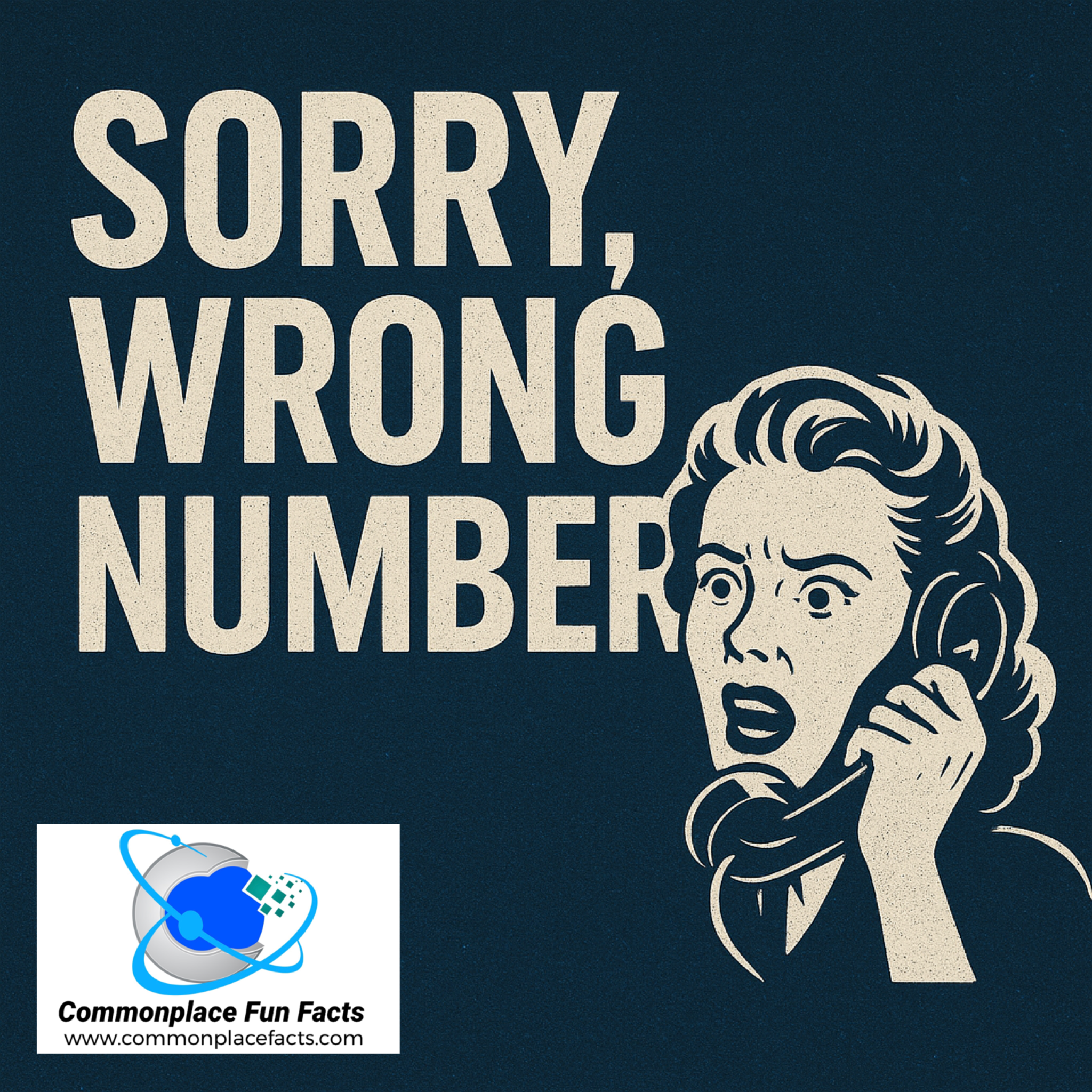

“Sorry Wrong Number” — The Greatest Single Radio Script Ever
Imagine being home alone, tucked into bed with nothing but a phone and a fragile grip on composure, when an accidentally overheard phone call hands you a front-row seat to a murder plot. The victim? You.

That is the nerve-fraying premise of “Sorry, Wrong Number”, the landmark 1943 radio thriller from Suspense that turned Agnes Moorehead into the patron saint of panic and convinced a generation that telephones were less “helpful utility” and more “doom delivery system.”
Make sure your doors are locked, your phone battery is charged, and join us as we explore the radio show that made America afraid to pick up the phone.
Contents
What Happens: A Tight, Terrifying Half Hour
The tale was written by Lucille Fletcher and unfolds in real time. Mrs. Elbert Stevenson—a wealthy, imperious invalid—attempts to make a phone call, but accidentally overhears another. It is a conversation between two men, scheduling a murder for precisely 11:15 p.m. They time the dastardly deed to coincide with a passing train, knowing that it will help cover any unwanted screams. They also discuss that the act should be quick; the victim’s husband doesn’t want her to suffer. That’s when the call drops, leaving Mrs. Stevenson to take in this unsettling news.
The entire drama is constructed from fragmented calls, dropped connections, and the mounting dread of a woman who cannot get anyone to take her seriously.

Horrified by what she has overheard, Mrs. Stevenson uses her phone to try to prevent the crime. She calls operators, police, and anyone who will pick up, pleading for action as the clock races forward. Unfortunately, she doesn’t have any information that is at all helpful. She doesn’t know the identity of the intended victim or anything about the killers. The police tell her they just can’t do anything with this information — unless, of course, she has reason to think that she is the target.
The suggestion strikes Mrs. Stevenson cold. Of course it wouldn’t be her! Her husband adores her, after all. Why on earth would he want anything to happen to her? Admittedly, she does live near the railroad tracks. And, come to think of it, there is a train that goes right by her home at precisely 11:15. But no… it just couldn’t be her!
Over the next several minutes, realization descends upon the helpless woman. Her increasingly frantic attempts to call for help are met with disbelieving ears or unanswered rings. The final, ice-cold twist arrives when she hears someone in her house, climbing the stairs. Her screams are drowned out by a train, passing by the home precisely on schedule.
The episode ends as the train passes, and we hear the sound of the final call made by Mrs. Stephenson. A police officer answers the call, but it isn’t Mrs. Stephenson who responds. Instead, it is the gruff voice of her killer, saying, “Sorry, wrong number.”
Agnes Moorehead’s Tour de Force
First broadcast on Suspense on May 25, 1943, Moorehead played Mrs. Stevenson with operatic intensity—without ever leaving a bedroom or sharing a scene partner. She returned to the role repeatedly over nearly two decades, a testament to both the part and her performance. Contemporary accounts note she even kept the same script copy and would rehearse herself into a lather before each live broadcast.
How Listeners Reacted (and Why It Kept Coming Back)
“Sorry, Wrong Number” was performed live twice on its premiere night—once for the East Coast and once for the West Coast. Unfortunately, an actor flubbed the last line in the East Coast version, creating a lot of confusion and complaints from listeners. The show proved to be so popular that Suspense brought it back again and again. Official broadcast logs show repeat performances on August 21, 1943; February 24, 1944; September 6, 1945; November 18, 1948; September 15, 1952; October 20, 1957; and February 14, 1960. In 2014, the Library of Congress added the 1943 broadcast to the National Recording Registry for its cultural and aesthetic significance.
It is not just a crowd-pleaser; it is a blueprint. Fletcher’s script demonstrates everything sound can do: the tick-tock tyranny of time, the psychological pressure of unanswered rings, and the way a listener’s imagination supplies visuals far more terrifying than any set designer could build on a modest radio budget.
From Airwaves to Film Noir, and Why It Still Works
Success on the air led to success on the screen. Fletcher adapted her own play for the 1948 Paramount feature directed by Anatole Litvak and produced with Hal B. Wallis. Barbara Stanwyck—no stranger to high-voltage roles—took the lead as Leona Stevenson opposite Burt Lancaster and earned an Academy Award nomination for Best Actress. The film expands the radio original with flashbacks and additional characters but preserves the core conceit: a woman, a phone, and a steadily advancing catastrophe.
Fletcher famously described the piece as an “experiment in sound,” and it shows. The drama weaponizes ordinary noises—dialing clicks, switchboard chatter, a train rumble—into story beats. Meanwhile, Moorehead’s escalating desperation supplies the emotional soundtrack. Even knowing the ending does not blunt it; the suspense comes from how quickly institutions shrug off her fear and how thoroughly the world can fail someone who needs help right now.
Suspense: The Show That Made It Possible
Launched on CBS in 1942 and running (with a brief hour-long experiment in 1948) through 1962, Suspense became for radio’s thriller genre what Amos ‘n’ Andy became for comedy. It cultivated Hollywood-level polish, lured top stars, and opened with the chilling whisper of “The Man in Black.” Over 900 episodes later, its legacy is a master class in how to build fear with microphones, music cues, and silence. Several elements that defined the series—Bernard Herrmann’s music, William Spier’s direction, and a stable of marquee guests—converged to make nights like May 25, 1943, possible.
Where to Hear It Today
Both the East Coast and West Coast premiere recordings survive and are widely accessible through reputable archives. If you want the full goosebumps experience, listen with the lights low and your phone across the room. You will thank us later.
A Few Extra Rings on the Line
- The line that launched a thousand homages: The story format—one isolated protagonist and a chorus of voices by phone—seeded countless later thrillers in radio, TV, and film.
- AT&T was not amused: Contemporary commentary notes the phone company disliked the depiction of feckless operators. It did not stop the show.
- High Praise: Orson Welles didn’t hold back his views on “Sorry, Wrong Number”, calling it “the greatest single radio script ever written.”
Conclusion: Why We Still Lean Toward the Receiver
There are fancier thrillers and gorier shockers, yet “Sorry, Wrong Number” keeps its grip because it understands something timeless. Fear is not a masked intruder. Fear is the helpless minute before anyone believes you. Fletcher captured it. Moorehead broadcast it. Suspense amplified it. The signal still carries.
You may also enjoy…

Amos ‘n’ Andy: The Comedy Hit That Changed Broadcasting—and Sparked Debate
Discover the legacy of Amos ‘n’ Andy, the groundbreaking radio and television show that captivated millions. Explore its origins, impact, cast, controversy, and lasting influence on American media.

How Hundreds of Mazda Infotainment Systems Got Nuked by One Radio Station
In 2022, a KUOW 94.9 HD Radio signal bricked Mazda infotainment systems across Seattle. Learn how a simple data error caused chaos for drivers.

“Air Raid” — The Radio Drama That Inspired “The War of the Worlds”
Learn about “Air Raid” — the Old Time Radio drama that inspired “The War of the Worlds.”




Leave a Reply to Commonplace Fun FactsCancel reply