
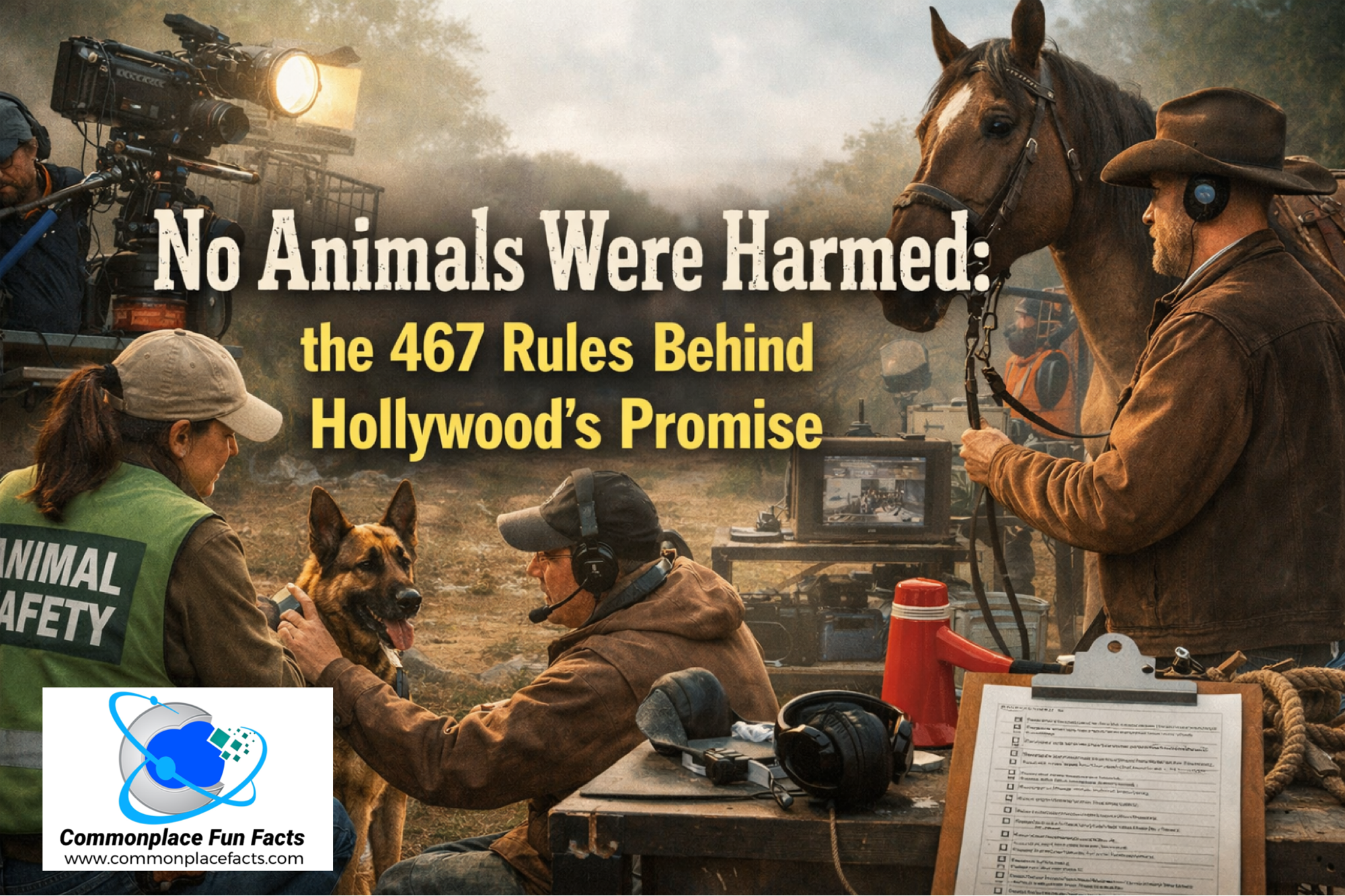

If you have ever left your dog, cat, bird, goldfish, or gerbil in someone else’s care, you almost certainly left instructions.
At the low end, those instructions sound casual and confident. “There’s food in the blue container. He eats twice a day. He’ll be fine.”
At the high end, they sound less like instructions and more like a field manual. Exact feeding times. Exact amounts. Medication schedules. Emergency contacts. A reminder that the food scoop is not interchangeable with the measuring cup. Notes about preferred walking routes, disliked neighbors, and the absolute prohibition on letting him chase squirrels “because that’s how we ended up at the emergency vet last time.”
You may have felt slightly embarrassed by how detailed those instructions were. You may even have apologized for them. “Sorry, I know this is a lot, I just want to make sure everything goes smoothly.”
If so, take comfort.

You are an amateur.
Because if you are a filmmaker who wants to put an animal on screen—even briefly, even in the background, even if the animal’s primary job is to stand there looking judgmental—you are signing up for a level of instruction that makes your color-coded feeding chart look charmingly naïve.
The rules governing animal actors are not a page. Or ten pages. Or even a slim booklet that says “be kind and don’t do anything reckless.”
They are a 115-page document containing 467 separate rules, sub-rules, advisories, conditions, exceptions, and clarifications. They specify how animals arrive on set, how long they may work, how they rest, what they eat, how they are housed, how scenes must be staged, what must be simulated, what must never be attempted, and what happens if someone decides to improvise.
They account for weather, noise, smells, boredom, stress, transport, lighting, surfaces, aircraft, vehicles, crowds, and the fact that at some point in film history, someone absolutely tried something that made all of this necessary.
And all of it exists for one reason: so that, when the credits roll and a familiar sentence appears, it actually means something.
No animals were harmed in the making of this film.
That line is not a vibe. It is a certification. And earning it requires following the most elaborate pet-sitting instructions ever written.
Contents
The Most Reassuring Sentence in Hollywood
Movies ask us to believe a lot of things.
They ask us to believe that a billionaire vigilante can solve crime by dressing like a bat. That explosions in space make noise. That a heartfelt speech in an airport can repair a relationship that required three screenwriters and a test audience to break.
But there is one thing modern audiences are oddly particular about.
The dog.

Specifically, whether the dog was okay.
That’s why, somewhere deep in the end credits—nestled between catering acknowledgments and a visual effects company called something like “Quantum Ferret”—you’ll often find one of the most soothing sentences in popular culture:
No animals were harmed in the making of this film.
It functions as a kind of moral receipt. You watched the chase scene. You saw the protagonist shoot thirty bad guys without once reloading his six-shooter. You witnessed massive economic catastrophe when the train derailed and crashed into a bank. You calmly file all of that death and destruction under the mental category of “Entertainment.”
And yet, you saw the horse trip over a hamster and fall. You flinched. And now the industry would like you to know that everything is alright. You may relax. The horse is fine. The hamster survived. Even their fleas are basking in celebrity status after their movie debut.
Most people assume the words “no animals were harmed” are intended merely as polite assurance. A vibe. A cinematic pinky promise.
It is not.
It is backed by a regulatory structure of remarkable intensity—one that involves on-set monitors, pre-production reviews, veterinary oversight, weather protocols, transport rules, rest schedules, simulated violence requirements, and enough numbered subsections to convince you that at some point, someone tried something extremely ill-advised with a llama.
Why Hollywood Needed This Sentence in the First Place
For much of early film history, animal safety was governed by a single guiding principle: does it look good on camera?
Animals were used because they added realism, danger, or emotional leverage. How that realism was achieved was… flexible. If something went wrong, it was often written off as an unfortunate byproduct of the art.
To be fair, this blasé attitude toward safety wasn’t limited to animals. Early Hollywood was broadly committed to the idea that danger was acceptable as long as it photographed well. That mindset is why we have stories about the industrial-strength hazards endured during the filming of The Wizard of Oz, and why at least one John Wayne production managed to kill off nearly half its cast—albeit on a much slower, more radioactive timeline.
Eventually, audiences stopped finding that acceptable—particularly as it relates to animals.
The moment that finally forced Hollywood to confront animal welfare came in 1939 with the release of Jesse James. In one of the film’s most dramatic scenes, a horse is shown plunging over a cliff during a chase. What audiences were not told—and what later came out through eyewitness accounts—was that the stunt was not simulated. The horse was deliberately tripped with a concealed wire, sent tumbling an estimated seventy feet, and killed in the process. The shot made it into the final cut. So did the public outrage. Viewers were willing to suspend disbelief for outlaws and gunfights, but not for real cruelty captured in the name of spectacle. The backlash was swift enough that Hollywood studios invited the American Humane Society to step in, setting in motion the oversight system that would eventually grow into today’s exhaustive rules. One horse, one scene, and one very permanent lesson: some realism costs too much.
Over time, that system hardened into formal oversight. What began as advocacy evolved into guidelines. And what began as guidelines evolved into a document so comprehensive that it now opens with the reminder that all applicable federal, state, and local laws still apply and may override it if they are more stringent, because the rules themselves already give the strong impression of having been crafted by Congress.
The result was the American Humane Society’s Guidelines for the Safe Use of Animals in Filmed Media. Informally, it is known as the NAWH (No Animals Were Harmed) guidelines. (See the full 115-page document here.)
This is how Hollywood expresses remorse: with lots and lots of pages.
The Phrase That Is Legally Louder Than It Looks
The phrase “No animals were harmed” is not decorative language. It is a certification tied to compliance.
According to the NAWH guidelines, American Humane Society representatives must witness animal action in order to properly document its use (Rule 1-22). Productions are required to provide Certified Animal Safety Representatives with adequate placement during filming so they can observe all animal activity (Rule 1-22a), and in some cases, this includes access to monitors or production radios (Rule 1-22b).

This is not self-reporting. This is surveillance.
The certification is also conditional. If a problem arises and an American Humane representative calls out an “Unauthorized Shot,” production must stop and fix the issue before filming continues (Rule 1-23). Failure to do so places the production at risk of liability and of losing eligibility for the end-credit certification.
That one phrase—“Unauthorized Shot”—has the power to freeze a multimillion-dollar operation mid-chaos. Not because an actor walked off set. Not because the director lost the light. But because a goat was about to be inconvenienced in a way the binder does not allow.
Meet the People Whose Job Is to Ruin Everyone’s Day (For the Right Reasons)
Every film set has a hierarchy, but when animals are involved, an additional authority enters the picture.
The NAWH guidelines are explicit: Certified Animal Safety Representatives are present for animal safety, act as the animal’s voice, and must be consulted and included in all safety meetings relevant to animal action (Rule 1-25). They are not optional observers. They are part of the safety team.
Handlers, meanwhile, must be properly trained, licensed, and experienced with the specific species being used (Rule 1-2a, Rule 1-2b). A sufficient number of handlers must be present to protect cast, crew, and animals, as determined or agreed to by the Certified Animal Safety Representative (Rule 1-36).
Animal action may not be changed casually. Any changes must be communicated to the American Humane Society as soon as they occur (Rule 1-24). The animal does not care that the director had a better idea. The binder does not care either.
Once animals are on set, timing matters. Productions are required to proceed in a timely manner because, as the guidelines note with understated menace, most accidents and misbehavior occur when animals get tired of waiting for filming to begin (Rule 1-26).
Boredom, it turns out, is a safety risk.
The Rules, or: How Deep This Rabbit Hole Goes
The NAWH guidelines begin with general principles and then rapidly descend into specifics that suggest a long institutional memory of mistakes.
Animals must be transported safely and humanely and allowed adequate time to rest and acclimate after travel before beginning work (Rule 1-4, Rule 1-4.1). Animals may not be left unattended or in the care of inexperienced individuals (Rule 1-6). Alcohol is prohibited around animals at all times (Rule 1-7), ending several potential method-acting experiments before they begin.

Only animals in appropriate physical and behavioral condition may be used (Rule 1-8). Animals that are underweight, overweight, ill, or otherwise unfit must be removed, and American Humane Society representatives may remove animals that are not properly trained or conditioned for the required action (Rule 1-9a).
Dangerous scenes trigger an immediate preference for simulation. American Humane Society strongly encourages the use of CGI, animatronics, fake animals, or other substitutes when scenes depict dangerous action (Rule 1-17). If dead animals or animal parts are used, documentation must prove the animals were not killed for the production (Rule 1-18), and once filming is complete, those materials must be disposed of properly and sanitarily (Rule 1-19).
Animal fights are categorically prohibited. All animal fights, hunting scenes, fishing scenes, and scenes depicting the death of an animal must be simulated (Rule 1-28.1). No real animal fight may be disguised as simulated through the use of muzzles (Rule 1-28.1a), a rule that exists entirely because someone, somewhere, absolutely tried that.
Predator-prey relationships must either be trained and conditioned or simulated (Rule 1-28.2). Animals may not be placed under stress to attract the attention of another animal (Rule 1-28.2a). If an animal appears fatigued or stressed, rest periods must be provided, and animals deemed unfit will be removed (Rule 1-29, Rule 1-30).
Environmental conditions are monitored continuously. Animals may not be allowed to become overheated, hypothermic, or otherwise endangered (Rule 1-31). Severe weather—thunderstorms, lightning, hail, tornadoes, blizzards—can trigger removal of animals from set entirely (Rule 1-27).
Set conduct changes when animals are present. Sets must be closed, personnel minimized, and noise reduced (Rule 8-213, Rule 8-214). After the director calls “Cut,” cast and crew are expected to remain still and quiet until animals are secured and the handler verbally releases the set (Rule 8-212).
Personal pets are discouraged, and in many cases prohibited, because a film set is considered an industrial area with numerous hazards (Rule 3-6.1). If non-working animals are brought to set, they must be contained, restrained, supervised, and kept away from working animals (Rule 3-6.1b–c).
At this point, a pattern emerges.
The system assumes people will cut corners if allowed. It assumes schedules will tempt risk. It assumes someone will say, “Just one take,” and mean it.
And so the binder exists. Thick. Detailed. Unamused.
This is not sentimentality. This is enforced empathy, expressed in numbered paragraphs.
And somehow, improbably, it mostly works.
Fake Animals, Real Paperwork
One of the great misconceptions about animal safety in movies is that it means animals simply don’t appear in dangerous scenes.
They do. Constantly.

The difference is that the danger is an illusion, and the illusion is exhaustively documented.
The American Humane Society guidelines strongly encourage the use of substitutes whenever a scene calls for dangerous animal action (Rule 1-17). That includes CGI, animatronics, puppets, fake animals, dead animals sourced from approved vendors, or animal parts that were not killed for the production (Rule 1-18).
And here’s the key point: even pretending to endanger an animal requires receipts.
If a production uses a fake animal, a prop carcass, or computer-generated imagery, it must be documented. Photographs. Vendor information. Proof of origin. In some cases, the name of the technician or company supplying the illusion (Rule 1-17).
If dead animals or animal parts are used—say, purchased from a food supplier or taxidermist—the production must demonstrate that those animals were destroyed in the normal course of operations and not for the sake of the movie (Rule 1-18). After filming, those materials must be disposed of properly and sanitarily, in accordance with local law (Rule 1-19).
This is the moment where you realize the system is not merely about kindness. It’s about traceability.
The audience may see a dramatic scene involving peril, sacrifice, or carnage. What American Humane Society sees is a paper trail proving that the peril was fake, the sacrifice was simulated, and the carnage came with an invoice.
The Rules That Sound Made Up (But Very Much Are Not)
Some rules in the NAWH Guidelines are exactly what you’d expect. Don’t overwork animals. Don’t expose them to extreme heat or cold. Don’t put them in danger for the sake of a better shot.
And then there are the rules that read like the punchline to a joke you didn’t know Hollywood once told itself.

These are the rules that only make sense once you accept a fundamental truth: every single one of them exists because someone, somewhere, once did the thing the rule now forbids.
Take birds, for example.
Bird actors are protected from cigarette smoke and strong scents because of their highly sensitive respiratory systems (Rule 8-214 in combination with Rule 3-3). That means no smoking, no heavy perfumes, and no casual wafting of whatever cologne an actor just discovered at duty-free. Somewhere in film history, a bird made its displeasure known, and the binder remembered.
Reptiles and amphibians have their own quirks. Direct contact with salamanders is prohibited (Rule 8-277). Not discouraged. Prohibited. If you don’t already know why, congratulations on never having been responsible for a salamander. Their skin absorbs things. Including whatever is on your hands. Including regret.
Cats and dogs, meanwhile, are not permitted to work while in heat (Rules 8-15.1 and 8-9.1). This is framed as a welfare issue, but it also neatly avoids the logistical nightmare of trying to run a production schedule around an animal whose priorities have abruptly shifted.
Sadly, the same rule does not apply to human actors, casting agents, or producers.
Primates are where the rulebook really starts to feel like it’s anticipating chaos.
Apes are not permitted to work after sundown, and monkeys have an earlier cutoff, generally no later than 9:00 p.m. Their total workday—including travel time—is capped at eight hours (Rules 8-250–8-254, species-dependent). Human actors, by comparison, can be worked for up to twelve hours, which is Hollywood’s way of quietly acknowledging that unions exist for people, but bedtime exists for monkeys.
Housing rules can get oddly specific. Bird crates may not be stacked unless it is ensured that birds will not be able to defecate on one another (Rule 8-23). This is not a metaphor. This is a rule that required field testing.
Similarly, primate enclosures must be designed to prevent the transfer of waste between cages (Rule 8-251). The guideline does not elaborate, which suggests that elaboration was attempted once and everyone agreed never to discuss it again.
Wildlife rules are refreshingly blunt. Wild animals are not to be handled, corralled, chased, frightened, or manipulated for filming purposes (Rule 1-16d). And in case that wasn’t clear enough, the guidelines escalate to all caps:
NEVER TOUCH OR HANDLE WILDLIFE (Rule 1-16e).
Not because the animal might bite—though it might—but because wild animals are not trained performers, are protected by law, and tend to respond poorly to being treated like extras.
Then there are the rules that feel like they exist solely to stop human enthusiasm.
No nails, tacks, screws, or sharp objects may be used for training or cueing animals (Rule 1-37). Electric stimulation devices such as collars, prods, or similar tools are prohibited, except in narrowly defined circumstances where prior approval is granted and supervision is constant (Rule 1-38).
Animals may not be startled into reaction shots using anything more than minimal visual or noise cues (Rule 1-39). The phrase “least amount of noise” does a lot of work here, and you can almost hear it being added after a meeting that went very badly.
And finally, there are the rules that only reveal their importance when you picture the alternative.
Once the director calls “Cut,” cast and crew are instructed not to resume activity until animals are secured and the handler verbally releases the set (Rule 8-212). Everyone freezes. No wandering. No resetting lights. No casual conversations. Because the dog does not care that you are on a schedule.
Out of context, these rules sound eccentric. Overprotective. Almost comically specific.
In context, they sound like experience.
They sound like a system that has seen every shortcut, every “it’ll be fine,” every well-meaning disaster, and responded the only way large organizations ever do.
By writing it down.
Reality Television: The Loophole That Isn’t One
If scripted film is tightly controlled, reality television is where the guidelines quietly brace themselves.
Reality programming often involves private pets, inexperienced handlers, unpredictable environments, and humans whose stress levels are already spiking because someone just flipped a table or cried in a confessional. All of that stress transfers directly to animals.
The guidelines acknowledge this problem explicitly. While American Humane Society does not condone the use of private pets for film and television work, it recognizes that reality programming often does exactly that (Chapter 3A).
The response is not leniency. It’s more oversight.
American Humane Society recommends that productions use more than one Certified Animal Safety Representative to monitor animals both on and off camera in reality programming (Rule 3A Advisory). Animals should be selected for calm, socialized temperaments, and owners should not be expected to suddenly become competent trainers just because a camera is pointed at them (Rule 3A Advisory).
Untrained animals are not to be expected to perform unnatural behaviors, participate in stunts, or tolerate chaotic production environments without conditioning (Rule 3A-3, Rule 3A-4).
In other words, reality TV does not escape the rules. It simply activates the parts of the rulebook written by people who have seen exactly how bad an unsupervised “it’ll be fine” can get.
When Things Still Go Wrong
At this point, it’s tempting to believe the system is airtight.
It isn’t.
The guidelines are extensive, but they are not magic. They rely on access, observation, honesty, and enforcement. American Humane Society representatives must be present to document animal action (Rule 1-22), but they do not own the sets. They do not control every camera angle. They cannot undo harm after it occurs.

When violations happen, they are investigated. When animals are injured or become ill, they must receive immediate veterinary care and be removed from work until cleared (Rule 1-33). American Humane Society staff may accompany animals to veterinary facilities and remain until a diagnosis is made (Rule 1-33d).
Violations of animal welfare laws must be reported to local law enforcement (Rule 1-33a-d).
And yet, history shows that some incidents have been downplayed, disputed, or discovered after the fact. Oversight reduces harm. It does not eliminate risk. A system designed to prevent abuse must still operate within an industry famous for speed, money, and pressure.
The existence of rules does not guarantee perfection. It guarantees accountability.
Why This System Exists at All
It is easy to mock the sheer scale of the guidelines.
Four hundred sixty-seven rules. Subsections. Advisories. Footnotes noting where federal, state, or local law may apply more strictly. Entire chapters devoted to aircraft, weather, wildlife, rodeo events, and the precise circumstances under which a person may or may not stand still after someone yells “Cut.”
But systems like this do not emerge accidentally.
They emerge because someone was hurt. Or frightened. Or pushed too far. And because the public eventually decided that “that’s just how movies are made” was not an acceptable explanation.
This is what institutionalized empathy looks like. It is not poetic. It is not elegant. It is administrative.
It assumes people will take shortcuts if allowed. It assumes schedules will tempt bad decisions. It assumes someone will argue for “just one more take.”
So the binder exists to say no.
The Sentence That Earned Its Place
Which brings us back to the end credits.
That quiet sentence—the one most people read in passing—is not a flourish. It is the visible tip of a system designed to ensure that animals are not props, collateral damage, or afterthoughts.
No animals were harmed in the making of this film.
It means the animals were monitored. It means scenes were staged, simulated, or rewritten. It means someone stopped filming when conditions weren’t right. It means boredom, heat, stress, noise, and risk were treated as safety issues rather than inconveniences.
It means that somewhere along the way, someone followed the instructions.
You can sit back and watch John Wick kill 77 people in one movie in retaliation for someone killing his dog and take comfort in the fact that the canine actor wasn’t inconvenienced in the slightest.
And if you’ve ever worried that you were being a little too much when you left a detailed list for the person watching your dog, you can relax.
Hollywood has you beat.
You may also enjoy…

The Highest Paid Dog: Whose Bark is Worth the Most Bucks?
Which canine celebrity do you think is the highest paid dog in show business?

Doggie Hamlet Brought to You By Your Tax Dollars
“There are more things in heaven and earth, Horatio, than are dreamt of in your philosophy.” (“Hamlet”, Act I, Scene 5) When Shakespeare wrote those immortal words, one wonders if even he could have imagined some of the strangeness that would take place in his name. Consider, for example, “Doggie Hamlet,” a theatrical production featuring…

Hollywood Before the Hays Code: The Party Before the Chaperone
Discover Pre-Hays Code Hollywood (1929–1934), when movies flaunted sex, crime, and scandal before censorship took hold. Explore the films, stars, and controversies that made this era unforgettable.





Leave a Reply to ScottCancel reply