
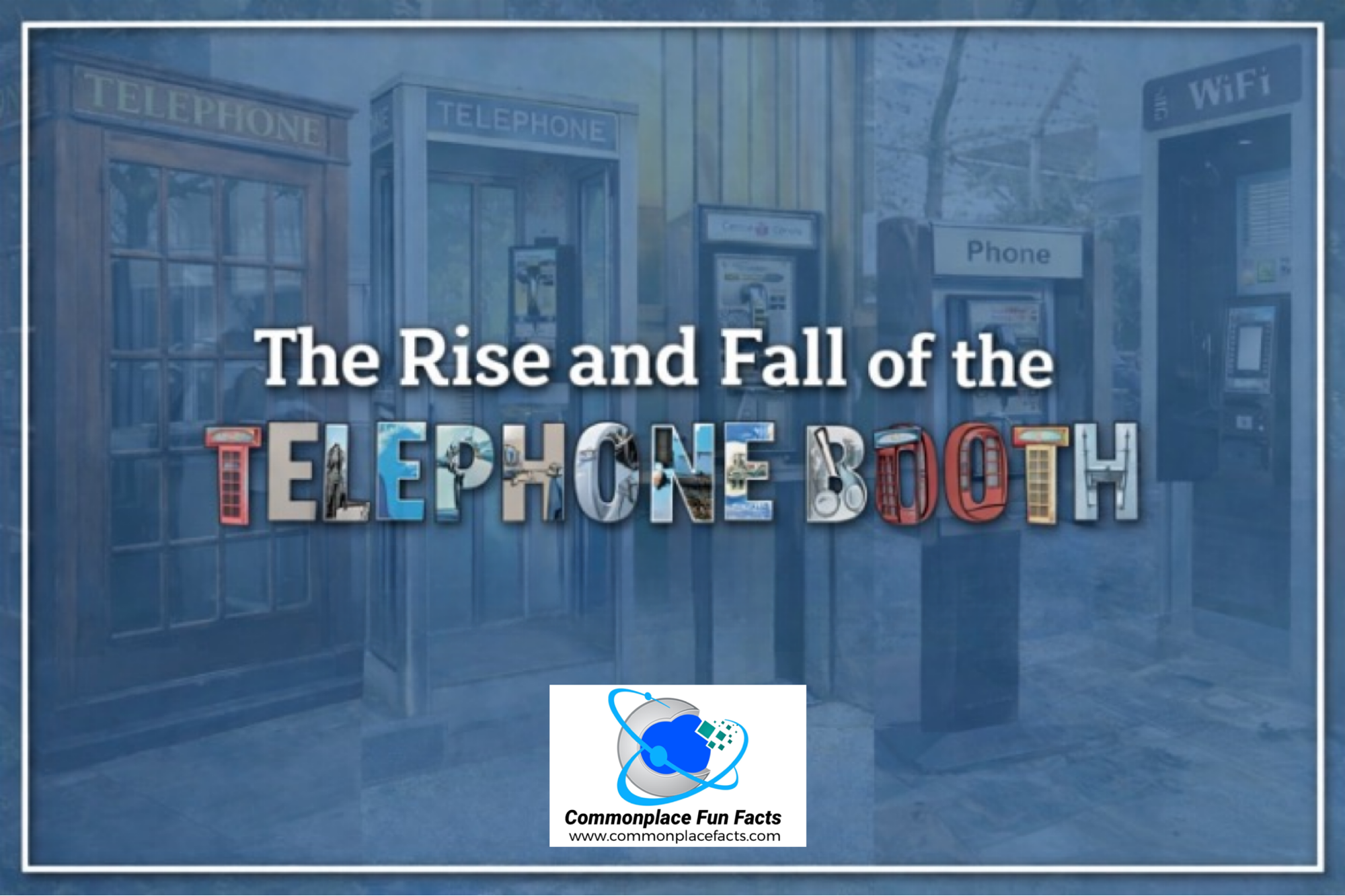

There was a time when the telephone booth was one of the most important little structures in modern life. It stood on street corners, in airports, in train stations, outside drugstores, inside restaurants, near gas stations, and in all the other places where humanity reliably found itself needing to say, “I’m running late,” “Send help,” or “I miss you and can’t wait to see you!”
For much of the 20th century, the telephone booth was not a quaint curiosity. It was essential infrastructure. It was the place where stranded motorists called for help, teenagers negotiated rides, businesspeople closed deals, and entire movie plots got moving. It was also, for a very long stretch of time, a machine specifically designed to extract coins from the pockets of anxious people in a hurry.
Today, of course, the telephone booth occupies a very different role. It is a relic, a nostalgic prop, a tourist photo opportunity, a piece of urban archaeology, and occasionally an emergency backup. In some places it has been repurposed into a Wi-Fi kiosk, a tiny library, or a place to house a defibrillator, which is not exactly what Alexander Graham Bell had in mind, but history is full of improvisation.
The story of the telephone booth is really the story of how public communication changed from something shared and visible to something private and carried in your pocket. It is also a reminder that entire industries can flourish for decades and then vanish so thoroughly that younger generations look at the surviving remnants the way archaeologists look at ceremonial tools from a lost civilization.
Contents
Before the Booth Came the Phone

The telephone arrived in the late 19th century, and almost immediately people found uses for it that went well beyond private homes. Early telephones were expensive, and many ordinary people did not have one. Businesses, hotels, railroad depots, and stores were far more likely to have access. If someone needed to make a call, the earliest solution was simple: put a phone in a public place and let people use it.
This arrangement worked, up to a point. The problem was that a public telephone sitting out in the open did not provide much privacy. Human beings, being what they are, tend to speak into telephones either far too softly or as if the person on the other end is standing on the moon. The result was predictable. Calls made in public places were noisy, awkward, and about as confidential as conducting personal business on social media.
The enclosed booth solved that problem. By the early 20th century, telephone companies and public facilities began using booths and enclosed kiosks that gave callers a measure of privacy and reduced the general racket. Early versions were often wooden, sometimes rather handsome, and looked less like sleek modern communication devices and more like something that should contain either a clerk or a séance.
Why Telephone Booths Became So Important
Once telephones became more widespread, the need for public access only grew. Having a phone at home was useful. Having one available when you were away from home was indispensable. For decades, there was no practical substitute. If you were out in the world and needed to contact someone, you found a payphone. That was the system.

At their height, public pay telephones were everywhere in the United States. The classic booth or payphone enclosure became a familiar part of the American landscape. Some were fully enclosed booths with folding doors. Others were semi-enclosed payphone stations mounted along walls or in rows in airports and bus terminals. Either way, they served the same purpose: they provided immediate communication for people who did not have a private phone within reach.
This mattered more than it may seem today. It was how travelers called ahead. It was how people handled emergencies. It was how parents kept in touch with children, how workers notified bosses, how students called home, and how people managed ordinary life when they were not sitting in their own living rooms. The phone booth was the connective tissue between fixed telephones and a mobile population.
The Golden Age of the Payphone
The true heyday of the payphone ran through much of the 20th century and into the 1990s. In the United States, payphones and booths became a standard part of public infrastructure, and the numbers were enormous. By 1999, there were more than 2.1 million payphones in service nationwide. That is not a niche technology. That is an entire civilization of little metal boxes waiting for quarters.

The design of booths and kiosks changed over time. Early wooden booths gave way to more durable and standardized metal-and-glass designs. Mid-century booths became especially iconic, with aluminum frames and glass panels that seemed simultaneously futuristic and vaguely vulnerable. They offered privacy, but only the sort of privacy that came with three transparent walls and a door that never seemed fully convinced of its own purpose.
Telephone booths also became cultural symbols. Superman famously used them for his rapid costume changes, a detail that made perfect sense in an era of roomy booths and becomes steadily funnier the more modern and cramped payphone enclosures became. In Britain, the red telephone kiosk became an icon in its own right. In the United States, the booth was less ornamental but just as familiar. It was woven into cityscapes, television, movies, journalism, and daily routine.
How They Worked

The basic premise was simple enough. You lifted the receiver, inserted the required amount of money, dialed the number, and the system either connected the call or informed you, often in tones of bureaucratic disappointment, that more money would be required. Local calls were once famously inexpensive, with the nickel becoming the classic symbol of the payphone era. Over time the cost rose, and by the late 20th century the quarter had become the familiar standard for a local call in many places.
Long-distance calls were more complicated. Rates varied by time, distance, and duration, because the telephone system had a gift for making simple human contact sound like a railroad freight schedule. Operator-assisted calls, collect calls, third-number billing, and calling cards all developed as ways to make the payphone more flexible. By the later decades of the century, many payphones could also handle credit card calls and prepaid phone cards, which briefly flourished as one of those transitional technologies that now seem impossibly specific to a vanished era.
When the Booth Was a Business
It is tempting to think of telephone booths as merely a public service. They were that, but they were also a business, and for a long time a very good one. Every booth was a tiny revenue-generating machine planted in a place where people would eventually need it. Busy locations could produce a steady stream of coins all day long, and multiplied across cities, highways, terminals, campuses, and shopping districts, that added up to serious money.
Federal communications data from the 2000s still show payphone revenue categories generating well over a billion dollars across reporting carriers and other payphone providers. Even by that point, the industry was already in decline, which gives some sense of just how substantial the payphone economy had been in its stronger years. A technology does not cover the country in more than two million units unless somebody is making money from it.
The business model had a certain mechanical elegance. People needed access to communication. The booth supplied it. The customer fed in coins, and the operator of the phone received revenue one call at a time. It was capitalism in its purest metal-box form.
How the Money Was Collected

The collection of all of those coins had a system. Inside the payphone was a locked coin box designed to hold the cash deposited by callers. The money did not simply sit there in a cheerful little pile waiting for mischief. The boxes were built to be tamper-resistant because the telephone company had correctly identified a universal truth: if you place a container full of money on a public sidewalk, someone will eventually attempt to become inventive.
Collection was handled by employees assigned to coin routes. They would unlock the housing, remove the sealed coin box, replace it with an empty one, and transport the full boxes for counting and processing. It was routine work, but it involved security, logistics, and the cheerful knowledge that one was effectively traveling around town collecting industrial quantities of nickels, dimes, and quarters from steel confessionals.
The network itself also controlled what happened to the deposited coins. On certain kinds of calls, the system could signal that the coins should be collected or returned. That meant the phone was not just a coin slot with a wire attached. It was part of a broader operating system that had to know whether the call had gone through, whether more money was needed, or whether the customer should get the coins back and stalk away in irritation.
Why People Used Them So Much

Telephone booths were not popular because people found them glamorous. They were popular because they were necessary. Public telephones solved problems that could not be solved any other way. They were especially important for travelers, people without home telephones, those caught in emergencies, and anyone who simply happened to be out when they needed to make contact.
They also served an important social function in an era before everyone could be reached instantly. Calling somebody required effort. Being reachable required location. There were gaps in communication, which meant people had to plan more carefully. The payphone bridged that gap. It let people check in from the road, call a taxi, report a breakdown, confirm plans, or let relatives know they had arrived safely. It was not constant connectivity, but it was accessible connectivity, and that was enough to make it indispensable.
The Long, Uneventful Assassination by the Cell Phone
The downfall of the telephone booth was not caused by scandal, sabotage, or some grand regulatory betrayal. It was caused by the mobile phone, which quietly and efficiently made the payphone unnecessary. Once large numbers of people carried their own telephones, the logic of public payphones began to collapse.
The change was brutal. At the peak in 1999, the United States had more than 2.1 million payphones in service. By the end of 2016, fewer than 100,000 remained. That is not decline so much as extinction by innovation.
Once usage dropped, the economics stopped working. Payphones still had to be maintained. They still had to be repaired after vandalism. They still required collection, network support, and physical space in valuable locations. The costs remained real while the customer base vanished into their own pockets. The booth had not become worse at being a booth. The world had simply moved on.
What Telephone Booths Are Used for Today
Today, surviving telephone booths and payphones occupy a much smaller and stranger niche. In a few places, they remain in service as actual public telephones, especially where regulations, local needs, or patchy cellular coverage still justify them. They can still be useful during emergencies, network outages, or in places where not everyone has reliable personal phone access.

Some cities replaced old payphones with digital kiosks that offer updated versions of the same public-service concept. New York City’s LinkNYC system, for example, replaced payphones with kiosks offering free Wi-Fi, free calls, device charging, and access to city services. This is, in a sense, the phone booth’s afterlife. It is the same civic instinct wearing a much more self-conscious outfit.
In Britain, large numbers of old red kiosks have been adopted and repurposed by local communities. Some have become miniature libraries. Some house defibrillators. Some are turned into art installations, coffee stands, or information points. When a technology becomes charming enough, society eventually tries to turn it into an Etsy collection.
In the United States, surviving booths and payphones are more often encountered as nostalgic objects than practical tools. They appear in museums, on movie sets, in retro-themed businesses, and in the occasional overlooked corner where they seem to be holding out on principle.
What the Booth Tells Us About the Way We Live Now
The history of the telephone booth is a neat little summary of modern technological life. First, a technology appears and seems miraculous. Then it spreads everywhere. Then it becomes so ordinary that nobody thinks about it. Then something smaller, faster, and more convenient arrives and wipes it out with astonishing speed. Finally, the old thing returns as decor.
At their height, telephone booths represented access, connection, and public utility. They were a shared resource that made modern life work. Today, communication is more personal, more constant, and less dependent on public infrastructure in that particular form. The convenience is undeniable. The romance is considerably reduced.
There was something oddly dramatic about stepping into a booth, closing the door, and making a call that mattered. It gave even the most mundane conversation a faint air of consequence. You were not casually tapping out a text while walking through a parking lot. You were entering a tiny chamber of purpose.
Now the booth is mostly gone, and perhaps that is inevitable. Technologies do not survive on nostalgia alone. Still, the next time you see one standing alone like a retired actor from a black-and-white film, it is worth remembering that it was once one of the most important objects in public life. People depended on it. Cities were built around it. Companies made fortunes from it. Entire generations knew exactly where the nearest one was.
That is not a bad run for a glass box full of coins and anxiety.
Are you old enough to remember the telephone booth? What role did it play in your life? Did you use it to let Mom know you had arrived at the park? Did you rely on it to connect with home while you were at Boot Camp? Did you ever use one as an impromptu changing room when villains threatened Metropolis? Let us know—and tell us whether there’s still room in our world for the now-elusive telephone booth.
You may also enjoy…

Barbed Wire Telephone: How Farmers Turned Fences Into Phone Lines
Discover how farmers in rural America turned fences into barbed wire telephone networks, connecting entire communities in the late 1800s with ingenuity, frugality, and a surprising bit of electrical know-how.

How Did a Measles Outbreak Lead to the Use of Telephone Numbers?
As events such as the COVID-19 outbreak affecting the ability to travel, many people are grateful for the option of picking up a phone, dialing a number, and being able to speak with people on the other side of the world. Surprising as it may seem, it was because of an infectious disease outbreak nearly…

How Scientists Turned a Live Cat Into a Telephone
A favorite children’s game is to make a telephone out of two tin cans and a piece of string. Hobbyists with more advanced skills can make a functioning telephone with a relatively-simple electronics kit. It takes true skill, however, to do what two scientists did in 1929 when the turned a living cat into a…





Leave a Reply to ScottCancel reply