


The English language is never static. The definitions, usages, and pronunciations change over time. (See “Words That No Longer Mean What They Used To”) If that weren’t complicated enough, it is impossible to compile an up-to-date comprehensive dictionary of all English words. Between 700 and 1,000 words are added to English every year.
On the flip side, English also discards words. Well, that may be a bit of an overstatement. That would suggest that there is more logic behind English than the facts justify. Shall we say, then, that English treats some words the same way we treat those ghastly sweaters Grandma gives us each year for Christmas? You don’t dare throw them out, but you’re not going to be caught dead wearing them.
Consider how much the language has changed since Samuel Johnson published his Dictionary of the English Language in 1755. One of the entries was the word “teen.” Today, we think of a teen as a person between the ages of 13 and 19 years. According to Johnson, the word means, “to vex, irritate, annoy, anger, enrage, inflict suffering upon, to afflict, harass, to injure, harm.” OK… Maybe that was a poor example. Essentially, the meaning is the same.
Others, though, have either fallen out of common use or have changed so much in their usage that their original definitions are surprising. Following are some words and definitions from the good ol’ days that may surprise and delight you:
- Betrump: To deceive, cheat; to elude, slip from
- Cony-catch: To swindle, cheat; to trick, dupe, deceive
- Crapulous: Suffering from excessive indulgence in food or drink
- Dowsabel: Applied generically to a sweetheart, “lady-love”
- Ear-rent: The figurative cost to a person of listening to trivial or incessant talk
- Flexanimous: Having a changeable mind
- Gazophylacium: A treasury or storehouse
- Grum: Sour, sullen, or ill-tempered
- Hugger–mugger: Concealment, secrecy; in secret, secretly, clandestinely.
- Jaunt: A short trip or excursion for pleasure
- Lucubrate: To work by lamplight; to study late at night
- Merry-go-sorry: A mixture of joy and sorrow
- Momist: A person who habitually finds fault; a harsh critic
- Obfuscate: To darken, to confuse, or to make unclear
- Obnubilate: To cloud, obscure, or darken
- Peacockize: To behave like a peacock; esp. to pose or strut ostentatiously
- Sillytonian: A silly or gullible person, esp. one considered as belonging to a notional sect of such people
- Slug-a-bed: One who lies long in bed through laziness
- Snout-fair: Having a fair countenance; fair-faced, comely, handsome
- Teen: To vex, irritate, annoy, anger, enrage / To inflict suffering upon; to afflict, harass; to injure, harm
- Wasteheart: Used to express grief, pity, regret, disappointment, or concern: “alas!” “woe is me!” Also wasteheart-a-day, wasteheart of me
- Whiffler: A person who precedes a procession, carrying a mace or staff as a symbol of authority

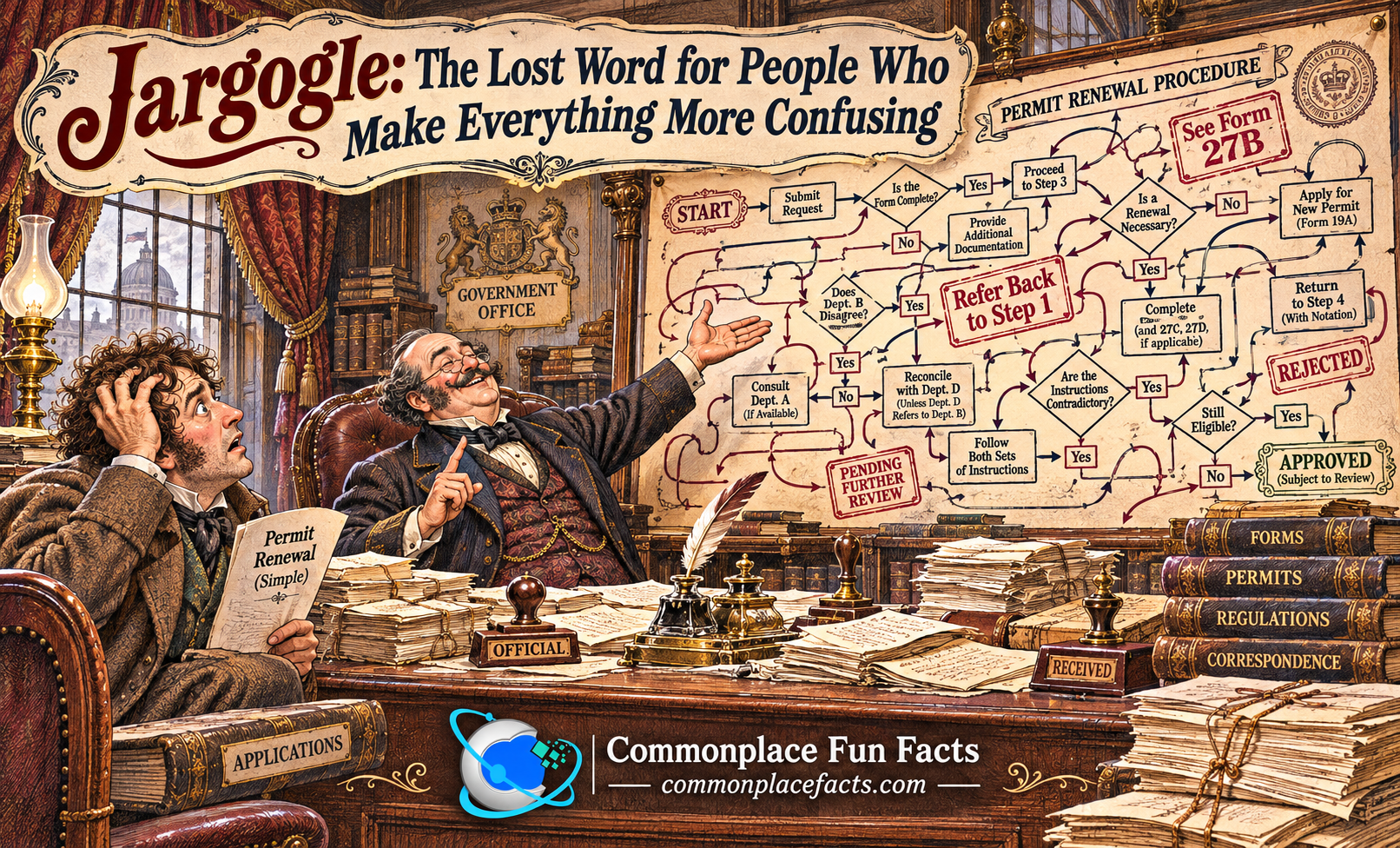
Jargogle: The Lost Word for People Who Make Everything More Confusing
Ever attended a meeting that left everyone more confused than when it started? There’s a forgotten English word for that: jargogle. Discover how John Locke used it in 1692 and why lawyers, bureaucrats, and committee members have kept its spirit alive ever since.

Gardyloo! The Scottish Word That Meant You Were About to Have a Very Bad Day
In eighteenth-century Edinburgh, hearing someone shout “Gardyloo!” meant you had seconds to get out of the way. Discover the forgotten Scottish word that warned pedestrians of an unpleasant delivery from the windows above—and why modern plumbing deserves considerably more appreciation.

5 Foreign Words English Should Steal Immediately
Discover five foreign words English should steal immediately, including terms for failed improvements, hiding at home, bored snacking, unwanted favors, and staying in bed.



Leave a Reply