

How Well Do You Know Gilligans Island?
Just sit right back and you’ll hear a tale,
A tale of a quirky show,
It started from a simple thought,
In a classroom long ago.
No rescue plan will ever work,
‘Til they repent, it’s true,
Each of the Seven Deadly Sins,
Will keep them all subdued.
It’s Gilligan, the Skipper too,
The Millionaire, his wife, as well,
The Movie Star, the Professor and Mary Ann,
All stranded in a literal hell.
What could be more wholesome than Gilligan’s Island? The 1964-1967 television sitcom that marooned seven wildly different characters on a deserted island, turning the everyday struggles of survival into a laugh fest. But behind the coconut radios and slapstick shenanigans lies a story as twisty as the S.S. Minnow’s fateful voyage.
A Byproduct of a Homework Assignment
Sherwood Schwartz, the creator of Gilligan’s Island, wasn’t just dreaming of palm trees and hammock naps when he came up with the show. He was a man on a mission to explore societal dynamics. It was all inspired by a college public speaking assignment. Schwartz’s professor challenged the students to imagine being stranded on a deserted island. What’s the one item you’d bring? Most of us would think practical and bring something handy such as matches, a Swiss Army knife, or, just for kicks, perhaps a boat? Schwartz thought bigger. What if you stranded seven people, each from a different walk of life, and forced them to live together? Welcome to Gilligan’s Island: part social experiment, part sitcom, all mixed together with a touch of theological contemplation.
Lost Pilot, Found Gold

The show we know and love today didn’t exactly come together on the first try. The original pilot, filmed on November 22, 1963, was almost as lost as the castaways themselves. Ginger and Mary Ann were secretaries named Ginger and Bunny—because why have a Hollywood bombshell and a wholesome farm girl when you can have two office workers instead? The Professor was less of a genius and more of a smug know-it-all, played by an entirely different actor. The famous “three-hour tour” was initially a “six-hour ride.” Let’s just say the first attempt wasn’t exactly Emmy material.
This pilot then vanished, perhaps in a shuffle of MGM’s archives or maybe tucked away in a dusty corner, never to be seen again—or so we thought. In the early ’90s, an employee at TBS stumbled upon it in Turner Entertainment’s vaults, like a forgotten treasure chest. The pilot finally aired in 1992, and fans got a glimpse of what could have been—a much less charming and distinctly weirder version of the island we all know.
Gilligan’s Dinosaur Adventure That Never Was
Let’s talk about what could have been the most bizarre twist in the history of television. As if the shenanigans of the series as we know it weren’t enough, one plan called for Gilligan to share his deserted island with a dinosaur. CBS executive Hunt Stromberg, Jr., after watching the pilot, suggested that the island would be much more exciting if Gilligan had a pet dinosaur. Picture it: Gilligan leading a brontosaurus around by a leash like a prehistoric Mr. Ed. Thankfully, the idea never made it past the suggestion stage, partly because the budget couldn’t stretch to include the animated creature, and partly because, well, it’s a ridiculous idea.
The Song That Explains It All
Even if you’ve never seen a full episode of Gilligan’s Island, chances are you can still sing the theme song. That’s no accident—Schwartz and composer George Wyle crafted “The Ballad of Gilligan’s Island” to be an earworm that stuck with you long after the credits rolled. In the world of TV theme songs, this one is a narrative genius. It sets up the premise, introduces the characters, and gives you everything you need to know in just over a minute. The Wellingtons, a folk trio who recorded the song, even guest-starred on the show as the Mosquitoes, a spoof of the Beatles. Talk about meta!
Close Calls and Cast Changes
Casting for Gilligan’s Island was almost as tumultuous as the waves that stranded the S.S. Minnow. Jerry Van Dyke nearly played Gilligan but decided to star in My Mother the Car instead—a decision he would probably regret as Gilligan’s Island became a cult classic while his show didn’t exactly stand the test of time. Dabney Coleman, who would later become known for his role in 9 to 5, bombed his audition to play the Professor. And Carroll O’Connor, who later became TV royalty as Archie Bunker, just missed out on being the Skipper.
“Gilligan’s Island is wherever you want it to be in your mind.”
— Bob Denver
The iconic role of Ginger the Movie Star almost went to Jayne Mansfield, but she turned it down. Raquel Welch auditioned for Mary Ann but didn’t quite make the cut. It’s hard to imagine anyone other than Dawn Wells and Tina Louise in those roles, but TV history is full of what-ifs, and Gilligan’s Island is no exception.
The Minnow’s Hidden Joke
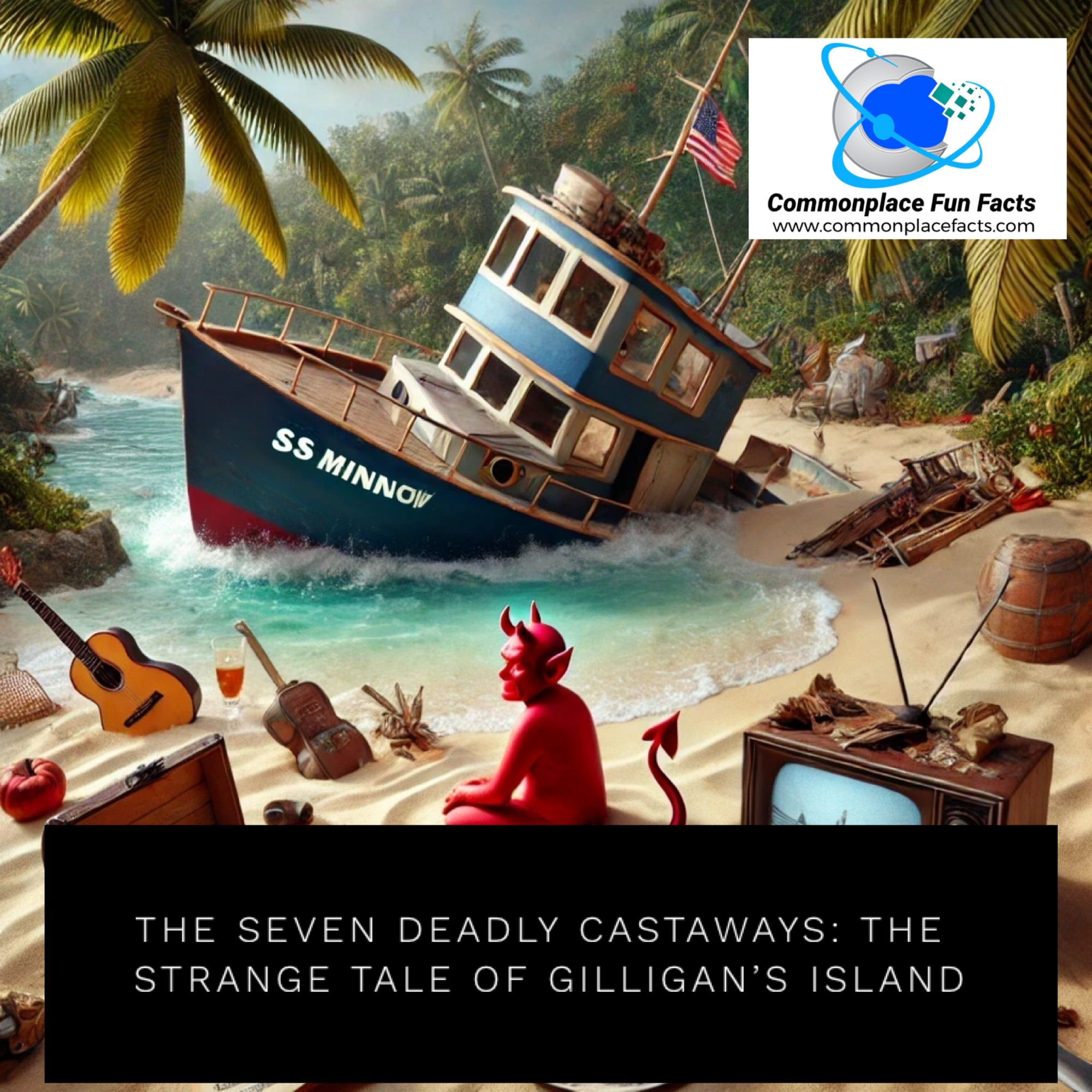
A clever and well-placed inside joke can be found in the ship that wrecked on the island. The ill-fated boat in Gilligan’s Island is called the S.S. Minnow, a name that seems innocuous—until you realize it’s a jab at Newton Minow, the FCC chairman who famously called television a “vast wasteland” in 1961. Sherwood Schwartz, never one to let a slight go unpunished, named the show’s hapless boat after Minow as a cheeky retort. It’s the kind of subtle humor that makes you appreciate the layers of thought behind this seemingly simple show.
The Seven Deadly Castaways

The show is frequently described as having one simple recurring plot: the marooned crew has an opportunity to escape from the island, only to have it thwarted by Gilligan’s incompetence. What seems simple on the surface may cleverly disguise a story rich with symbolism that mirrors the age-old struggles of human nature. According to the show’s creator, Sherwood Schwartz, the crew wasn’t just there to entertain—they were a walking (and stumbling) representation of the seven deadly sins.
Consider the primary trait exhibited by each of the inhabitants of the island. The Skipper, a ticking time bomb of Wrath, whose temper tantrums were so explosive they often ended with him stomping on his own hat. Then there’s the Professor, that pinnacle of Pride, who could invent anything from a coconut radio to a bamboo bicycle, yet couldn’t manage to get them off the island. It’s almost poetic—he had a title but no name, a reminder that all his knowledge couldn’t solve their biggest problem. Ginger was Lust personified—not because she was driven by desire, but because it was her main currency in dealing with others. Mary Ann, the girl next door, was Envy, always a bit jealous of Ginger’s ability to turn heads. Mr. Howell, dripping with Greed, clung to his wealth even when it was utterly useless. And Mrs. Howell? Well, she had more luggage for a three-hour tour than most of us pack for a month, perfectly embodying Gluttony.
That leaves us with Gilligan, who is clearly the embodiment of Slothfulness — or is he? He is a lovable yet hopeless klutz whose laziness and incompetence ensured that no one was going anywhere. Yes, it would seem Gilligan is the personification of Slothfulness, except not everyone is in agreement about this. Schwartz said that he used the Seven Deadly Sins as the inspiration for the characters, but he didn’t reveal who he had in mind for each one. There is some debate among fans as to whether the Skipper would better represent Gluttony because of his obvious girth. That would put Mrs. Howell in the running to be the representation of Slothfulness because she never lifted a finger to help in any of the plans.
Where would that leave Gilligan? Assigning Wrath to him seems ill-placed. Perhaps the answer can be found in a more nefarious fan theory. What if the reason every escape plan fails isn’t due to Gilligan’s incompetence but has a more sinister explanation? Some have speculated that the clue can be found in Gilligan’s iconic red shirt. Is it possible that he is not just a lazy klutz, but a symbol of evil itself, the devil in disguise, charming us into accepting his constant sabotage of freedom? If this theory is correct, Gilligan more than just a goofy sidekick. He is a treacherous miscreant who intentionally keeps everyone stranded—both on the island and in their own personal hells.
Gilligan Saves the Day (Sort Of)
Speaking of Gilligan, Bob Denver wasn’t just the star of the show—he was also the hero behind the scenes. When the first season aired, the theme song infamously referred to “and the rest” instead of naming the Professor and Mary Ann. Denver, whose contract gave him some say in the credits, pushed for the song to be changed to include his co-stars by name. When the network resisted, he threatened to take last billing himself, a move that would have been as awkward as Gilligan finally doing something right. The network relented, and from season two onward, the Professor and Mary Ann got their well-deserved mention.
The Day Gunsmoke Shot Down Gilligan’s Island
Despite its popularity, Gilligan’s Island met an untimely end, not because of ratings but because of Gunsmoke. The western was canceled after 12 seasons, but CBS chairman William S. Paley had a soft spot for the show—it was his wife’s favorite. So when he returned from vacation to find Gunsmoke off the fall schedule, he put it back on, bumping Gilligan’s Island into the abyss. And just like that, the castaways were stranded in syndication, where they would remain forever—or at least until the next bizarre TV movie.
The Globetrotters and Other Oddities
Speaking of which, the post-cancellation Gilligan’s Island movies are a story in themselves. From the 1978 Rescue from Gilligan’s Island to the surreal The Harlem Globetrotters on Gilligan’s Island in 1981, the series took on a life of its own in the strangest of ways. In this final TV movie, the Globetrotters help the castaways defeat a team of basketball-playing robots, because why not? It’s a testament to the show’s enduring appeal that it could go from sitcom to bizarre sci-fi sports crossover and still make sense to its audience.
The Legacy Lives On
Despite the island’s supposed isolation, Gilligan’s Island never really left us. It spawned animated spinoffs like The New Adventures of Gilligan and Gilligan’s Planet—because if getting lost on an uncharted island wasn’t enough, why not get lost in space? A live-action reboot was even in the works at one point, with Michael Cera eyed for the lead role, but it never came to fruition.
In the end, Gilligan’s Island remains a quirky, beloved relic of a different era in television, one where a simple premise could become a cultural phenomenon, where theme songs were more than just catchy tunes, and where a sitcom could, in its own goofy way, make you think about the world. Whether you see it as a silly show or a clever social commentary, one thing’s for sure: we’re all still sitting right back, hearing that tale, that fateful tale of Gilligan’s Island.

20 Quirks and Strange Habits — The Weird Side of Famous Writers
Readers of this site will not be surprised that famous writers have their own niche in the realm of eccentricity. Whether it be their unusual jobs, their acerbic wit, or creepy predictions, the more famous the author, the more exaggerated the quirkiness. Now, thanks to Writer and Blogger Jack Milgram, we now have documented the…

The Sinister Origin of a Beach Boys Song
Few cultural symbols better represent the innocence of the 1960s than the Beach Boys. They ushered in the “California sound” with songs that evoke pleasant thoughts of surfing, cars, romance, and youth. That is why the sinister origin of one of their songs is particularly shocking and creepy. Charlie wanted to strike it big in…

The Death Row Origin of Nike’s Slogan
“Just Do It” has been the slogan of Nike since 1988. The words evoke visions of bold determination and inspirational challenges to be your best. Far from inspirational, the origin of the slogan tells a much darker, somber story. Gary Gilmore robbed and killed a Utah gas station attendant and a motel worker in 1976. After…



Leave a Reply