
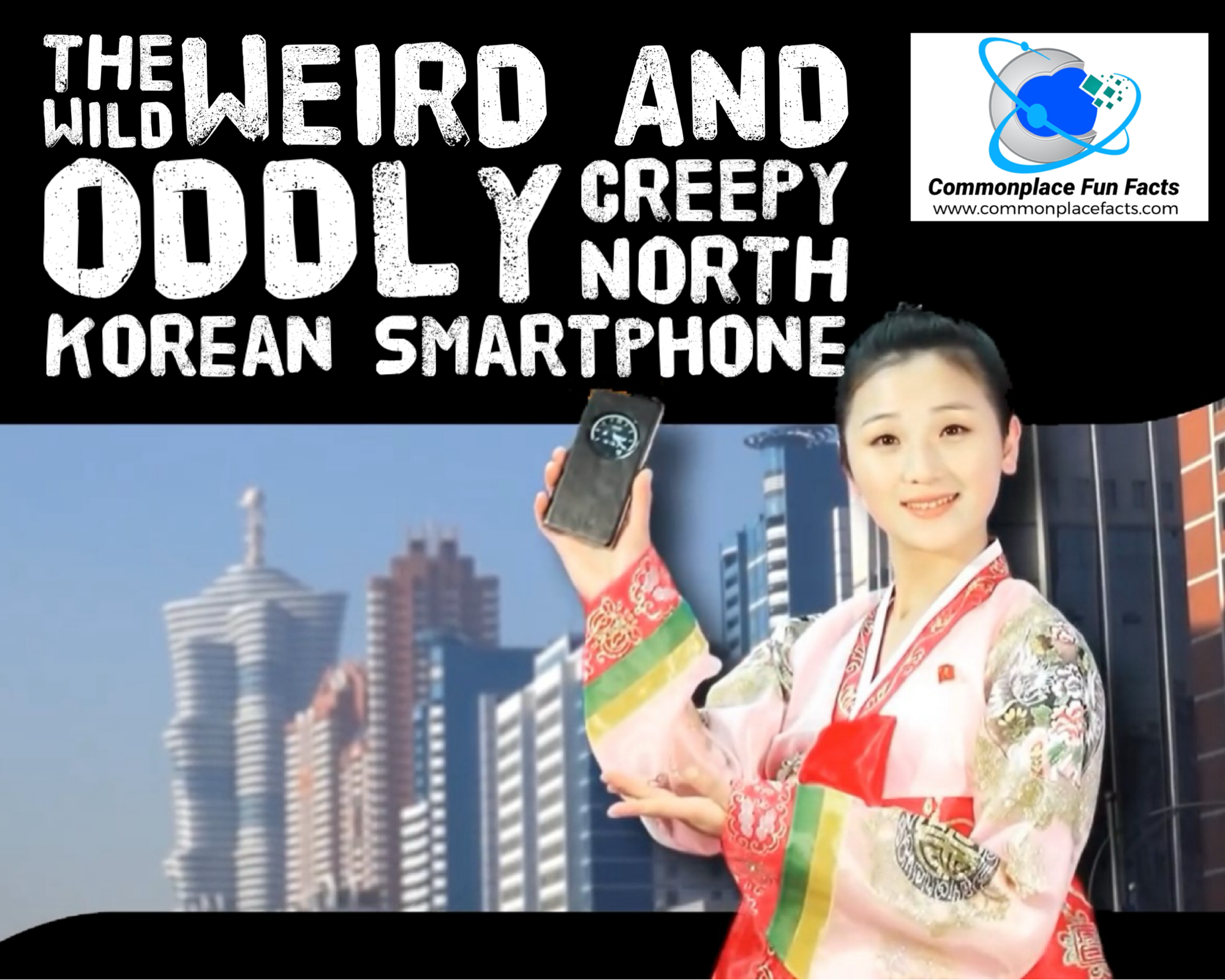

You’ve never seen anything quite like the Arirang 151, the state-of-the-art smartphone from North Korea. It’s a North Korean smartphone that isn’t particularly smart. In their defense, it isn’t really North Korean. Almost everything about it was ripped off from other countries. It does have the uniquely North Korean qualities, though. It is dysfunctional, overhyped, packed with every imaginable form of government intrusion, and stripped of any semblance of individualism and self-determination.
It can be yours for about $350. Assuming, of course, you are among the few people in the country who can afford to buy more than the bare necessities of life.
What’s not to love about the Arirang 151? It is available in different colors. It has a camera. It has a battery. It can connect to a full-sized keyboard. It comes pre-installed with lots of exciting games, such as multiple rip-off versions of Angry Birds, Super Mario Galaxy, and Candy Crush. It allows unlimited internet browsing, wide-ranging internet access, a few brief glimpses into the world outside North Korea, dysfunctional access to the highly regulated and state-approved, locked-down national intranet. It also allows you to take the ever-present eye of Big Brother with you in your pocket so you will never be out of the watchful gaze of your benevolent Communist overlords.
A North Korean smartphone wouldn’t stand a chance in the wild world of global smartphones, but of course, it doesn’t have to. The phone is a reflection of everything that makes the Hermit Kingdom the place to go if you have given up on everything that makes life worth living.
North Korea’s Unique Smartphone Market
North Korea’s smartphone market has its challenges. Phones exist for the purpose of communication. The internet allows for global communication. With the combination of telephone and internet access into one device, smartphones pose a challenge to the government’s total control of information. With one little peek at news and information sources outside of the country, its citizens might begin to suspect that many of the lies they have been told about their country aren’t true.
Telephones are a relatively new phenomenon in North Korea. Before 2008, telephone access was extremely limited, with most landlines connected to government offices. Mobile phones promised to provide communication to the remote areas of the country where no phone lines reached.
In November 2002, North Korea was ready to take its first baby steps into the world of mobile communications. Enter Sunnet, North Korea’s very first cellular network, brought to life by a Thai company called Loxley Pacific. It was a high-tech 2G GSM network set up with second-hand equipment from Vodafone Hungary, which was just upgrading to 3G. That’s right—North Korea’s first cell service was like getting a hand-me-down from a very stylish cousin.
So what did it take to join this pioneering adventure? A mere 750 euros to sign up (that’s about $800 in today’s money), plus another 300 euros for a phone. Making a call 15 North Korean won per minute, which at the time was a little under 1 euro per call. Not exactly the cheapest mobile phone service in the nation, but beggars can’t be choosers, we suppose.
In its early days, Sunnet had about 3,000 subscribers, which grew to over 20,000 by the end of 2003. Coverage expanded from just Rason and Pyongyang to several provincial capitals and major highways. It was like North Korea’s own version of “Can You Hear Me Now?”—but with a lot fewer people asking for a signal in the middle of nowhere.
Just as things were starting to look up for North Korea’s cell phone scene, disaster struck. In May 2004, an explosion rocked a train yard in Ryongchon, a few hours after a train carrying Kim Jong Il had passed through. The rumor mill went into overdrive, suggesting that the blast might have been the result of a cellphone plot. While the true cause of the explosion remains a mystery, the North Korean government decided to put the brakes on civilian cell phone use almost immediately after the incident.
That wasn’t quite the end of the story for Sunnet. For a few years after the service suspension, those sneaky enough to be in the right place at the right time could still pick up signals from Sunnet, especially if they were near the inter-Korean border. It seemed the government wasn’t ready to let go of the benefits of cellular technology just yet.
Introducing the Arirang 151
Enter the Arirang 151, a smartphone that fits perfectly into North Korea’s unique tech ecosystem. Launched in 2014, this phone was part of an announcement that Kim Jong-un’s regime was manufacturing its first smartphones. Like much of North Korean technological advancements, it was overhyped and downright false. In reality, the Arirang 151 appears to be an imported and rebranded low-end Chinese Android device.
The real magic of North Korean smartphones lies in their software. The Arirang 151, for instance, comes pre-loaded with games like Angry Birds and Candy Crush knockoffs, an emulated version of Super Mario Galaxy, and even an app that emits a high-pitched noise to repel bugs. This preloading is essential because users can’t download new apps directly. Instead, they must visit a physical “App Store” to transfer approved apps to their phones.
The phone comes with a dongle to allow the user to connect to a full-sized keyboard because… well… for reasons. Perhaps it allows savvy users to irritate the rest of the world by randomly launching rockets into the ocean. Admittedly, our command of the Korean language is a bit spotty, so we have to guess on some of this stuff.
Security Features: Keeping Tabs on Users
When it comes to security features, the Arirang 151 is in a world of its own. We should clarify something at this point: when you think about the security features on your phone, what undoubtedly comes to mind are those things that protect your data and you so no one knows your business without your permission. That’s not what the Arirang 151’s security features are about. Its security features are designed to make sure the government knows every stinking thing you do, approves every picture you look at and has the ability to block you from receiving snippets of information that it doesn’t want you to see.
Each file on the phone must have a special encrypted signature to open. These signatures can only be added by the North Korean government or the device itself. Files without these features are automatically deleted. Additionally, a program called “Red Flag” runs in the background to ensure the signature system isn’t tampered with. It takes screenshots whenever an app is opened. Another app, “Trace Viewer,” allows users to see how many screenshots are being stored on the phone, but it doesn’t allow the user to actually see the screenshots. It is there simply as an ominous reminder that Big Brother is watching.
Does this seem overly intrusive to you? Perhaps, but did we mention that the phone comes in pink?
You might also enjoy…

The Great Hotel Heist: How Mickey Barreto Stole the New Yorker Hotel
Discover the wild story of how Mickey Barreto used legal loopholes to ‘steal’ the New Yorker Hotel, involving rent laws, fraud, and North Korea.

The Internet in North Korea: How Wi-Fi and Cyber Censorship Shape Dictatorship
Explore the internet in North Korea, where Wi-Fi is tightly controlled. Discover how censorship, propaganda, and cyberwarfare shape life under Kim Jong Un’s dictatorship.

How North Korea Pulled Off History’s Biggest Car Theft
Who hasn’t gotten a little behind on bills? Is there anyone who hasn’t made an impulse purchase without figuring out the impact on the budget? Narrowing the field a bit, let’s talk about automobile enthusiasts. Few professionals are better at getting consumers to opt for bigger and better than car salespeople. Almost every purchaser of…





Leave a Reply