
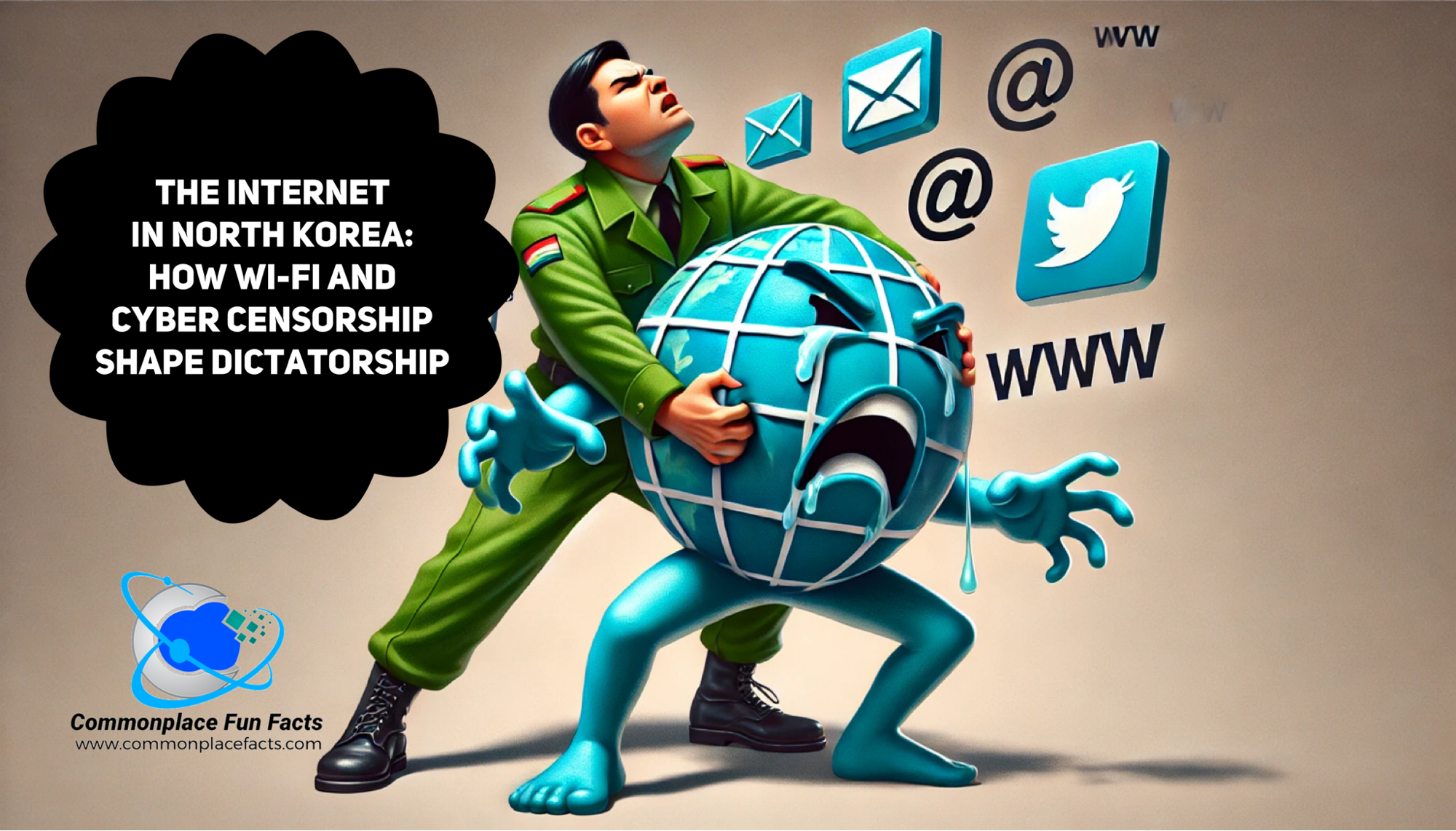

Imagine living in a place where owning a computer requires the same level of government permission as a bio-medical research center. If you live in North Korea, that’s not some hypothetical day in a dystopian future; it’s a typical Thursday. Every personal computer must be registered with the police, and don’t even think about sneaking in a fax machine—those are banned outright. If you have to transmit a fax, you’ll need a high-ranking official’s authorization.
Contents
This is a world where pirated DVDs of South Korean TV dramas are so taboo that getting caught with one can land you in a labor camp for years. Yes, apparently, Squid Game is worth hard labor in the Hermit Kingdom. So, when it comes to the internet in North Korea—something that provides access to way more than TV shows—it’s safe to assume that North Korea keeps an iron grip on that too.
Yes, North Korea does have the internet. Considering how locked down their mobile phone market is, you can imagine that Korean internet access is a very tangled web. What passes for North Korea Wi-Fi will intrigue you and make you thankful for those days when you only get one bar of reception.
A Glimpse of Internet in North Korea
In a stunning David-versus-Goliath scenario, hacker Alejandro Cáceres (known online as P4x) managed to take down North Korea’s internet from the comfort of his own home in 2022. Cáceres, targeted by North Korean cyber spies, decided to strike back with a personal denial-of-service (DoS) attack. Armed with rented servers and some clever code, he exploited the outdated North Korean infrastructure, causing widespread outages for over a week.
What makes this even more jaw-dropping is the irony. North Korea is notorious for launching sophisticated cyberattacks on other nations, yet its own internet system crumbled under the weight of a single individual’s efforts. This episode not only highlights the vulnerability of the country’s digital infrastructure but also serves as a reminder that sometimes, even the mightiest regimes are just one script away from being taken down a notch.
It’s easy for Americans to forget—or be completely unaware—that North Korea has an internet. After all, this is one of the most secretive and impoverished nations in the world. How could a country with such tight control over its citizens allow any internet access at all? Good questions—let’s dive in.
The “Internet” Most North Koreans Use: Kwangmyong

Ask the average North Korean about the internet, and they’ll likely give you a blank stare. For the majority of citizens, the concept of the internet is as foreign as democracy and food. The country is still grappling with widespread poverty, particularly in its rural areas, where access to modern conveniences is limited at best. But in Pyongyang, the elite few who’ve won the government lottery of a cushy office job or a coveted university spot might assume you’re talking about Kwangmyong.
Kwangmyong—meaning “bright star”—is North Korea’s government-approved version of the internet, though comparing it to the real internet is a stretch. Imagine going back to 1994, dial-up connections, and blocky, text-heavy websites, and you’ve got a decent picture of what Kwangmyong offers. It runs on pirated Japanese versions of Microsoft software and allows access only to a carefully curated selection of government-approved “sites.” And by “sites,” we mean mostly static pages of propaganda, basic email, and the occasional educational resource, all scrubbed clean of any pesky Western influence.
The Elite North Korea Internet: A Very Small Circle
For those lucky enough to access the real internet—the genuine, uncensored worldwide web—it’s a different story. But don’t get too excited. This privilege is limited to a tiny group, primarily composed of high-ranking government officials and the country’s cyberwarriors.
North Korea, with its 25 million people, has a grand total of 1,024 IP addresses. By comparison, the United States has billions. While this doesn’t give us an exact number of internet-connected devices, it’s safe to say North Korea’s internet presence is minuscule. It might also explain why we have yet to see our first North Korean visit to Commonplace Fun Facts.
Most of the country’s internet connections run through a single line stretching from Pyongyang into China, where it connects to the outside world via China’s state-run telecommunications agency, Unicom. Essentially, North Korea’s internet piggybacks off China’s notorious Great Firewall. There’s also some internet access routed through satellite systems—both Russian and Chinese—but, once again, this access is limited to a select few.
Oh, and if you’re one of the elite with internet access, you’re probably using a top-of-the-line device—maybe even an Apple product, despite the government’s official ban on Western luxuries. Smuggled iPads and iPhones are not just for keeping up with the Kardashians, they’re for keeping the North Korean elite at the cutting edge of global espionage.
Why Allow Internet Access at All?
You might wonder: if North Korea is so obsessed with controlling information, why allow any internet access? Good question. It turns out there are three main reasons, and all of them reveal a lot about the regime’s priorities.
1. Propaganda: Spreading the Good Word of Kim Jong Un

North Korea has graduated from its classic, text-only state media rants to more sophisticated propaganda campaigns. The regime churns out a steady stream of YouTube videos lauding Kim Jong Un and denouncing the evil American imperialists. While North Korea doesn’t actually have “hundreds of millions” of supporters abroad (as it likes to claim), it does have a small but loyal base, particularly among ethnic Koreans in Japan and even some fringe groups in South Korea.
It’s not just about getting likes on YouTube. North Korea wants to control the narrative abroad, whether to rally its few fans or to stir up tensions with other countries. Whether people believe the propaganda or not, the regime hopes to use it as a tool to maintain its power and rattle international nerves.
2. Hacking: Cyberwarfare, North Korean-Style
North Korea has spent the last few years building up a cyber army. Its hackers aren’t just a minor nuisance; they’re a legitimate threat, particularly to South Korea and the United States. From stealing sensitive information to wreaking havoc on financial systems, North Korea’s hackers play a key role in the country’s strategy for asymmetric warfare. They know they’d lose a physical war against South Korea or the US, so instead, they unleash digital chaos.
Hacking isn’t just about deterrence. It’s also a way to bring in much-needed funds. North Korea uses its cyber operations to run online fraud schemes, helping the cash-strapped regime keep the lights on—and Kim Jong Un’s liquor cabinet well-stocked.
3. Elitism: The Internet as a Luxury Good
For North Korea’s elite, internet access is a perk of power. This inner circle is well aware of how the world works—after all, someone has to keep the regime afloat. They indulge in luxury goods, illegal technology, smuggled delicacies, and the finest entertainment the outside world has to offer. The top officials are not living in the same grim, censored reality as their fellow citizens. In fact, part of Kim Jong Un’s strategy for maintaining their loyalty involves giving them a taste of the high life, complete with high-speed internet.
It’s a twisted irony: the same regime that imprisons citizens for owning a South Korean DVD ensures its top officials have access to the best contraband on the planet.
Conclusion: Who Really Uses the Internet in North Korea?
So, is North Korea’s internet blackout a tragedy for its citizens? Not exactly. The truth is, internet access in North Korea isn’t a public good—it’s a tool of the state, used for propaganda, cyberwarfare, and keeping the elites happy. Shutting down North Korea’s internet for a few days isn’t going to send the average citizen into a panic because, well, they didn’t even know they were missing it.
In North Korea, the internet isn’t about connecting people. It’s about maintaining control. Like everything else in the Hermit Kingdom, it exists solely to serve the interests of Kim Jong Un and his inner circle. And for the rest of the population? They’ll have to make do with Kwangmyong—the dullest “bright star” you can imagine.

The Four Countries That Have Never Visited Commonplace Fun Facts—and What We May Have Done to Offend Them
Readers have visited Commonplace Fun Facts from 191 countries. Meet the four nations still holding out—and discover what may have offended them.

The Great Hotel Heist: How Mickey Barreto Stole the New Yorker Hotel
Discover the wild story of how Mickey Barreto used legal loopholes to ‘steal’ the New Yorker Hotel, involving rent laws, fraud, and North Korea.

The Wild, Weird, and Oddly Creepy North Korean Smartphone
You’ve never seen anything quite like the Arirang 151, the state-of-the-art smartphone from North Korea. It’s a North Korean smartphone that isn’t particularly smart. In their defense, it isn’t really North Korean. Almost everything about it was ripped off from other countries. It does have the uniquely North Korean qualities, though. It is dysfunctional, overhyped,…




Leave a Reply