
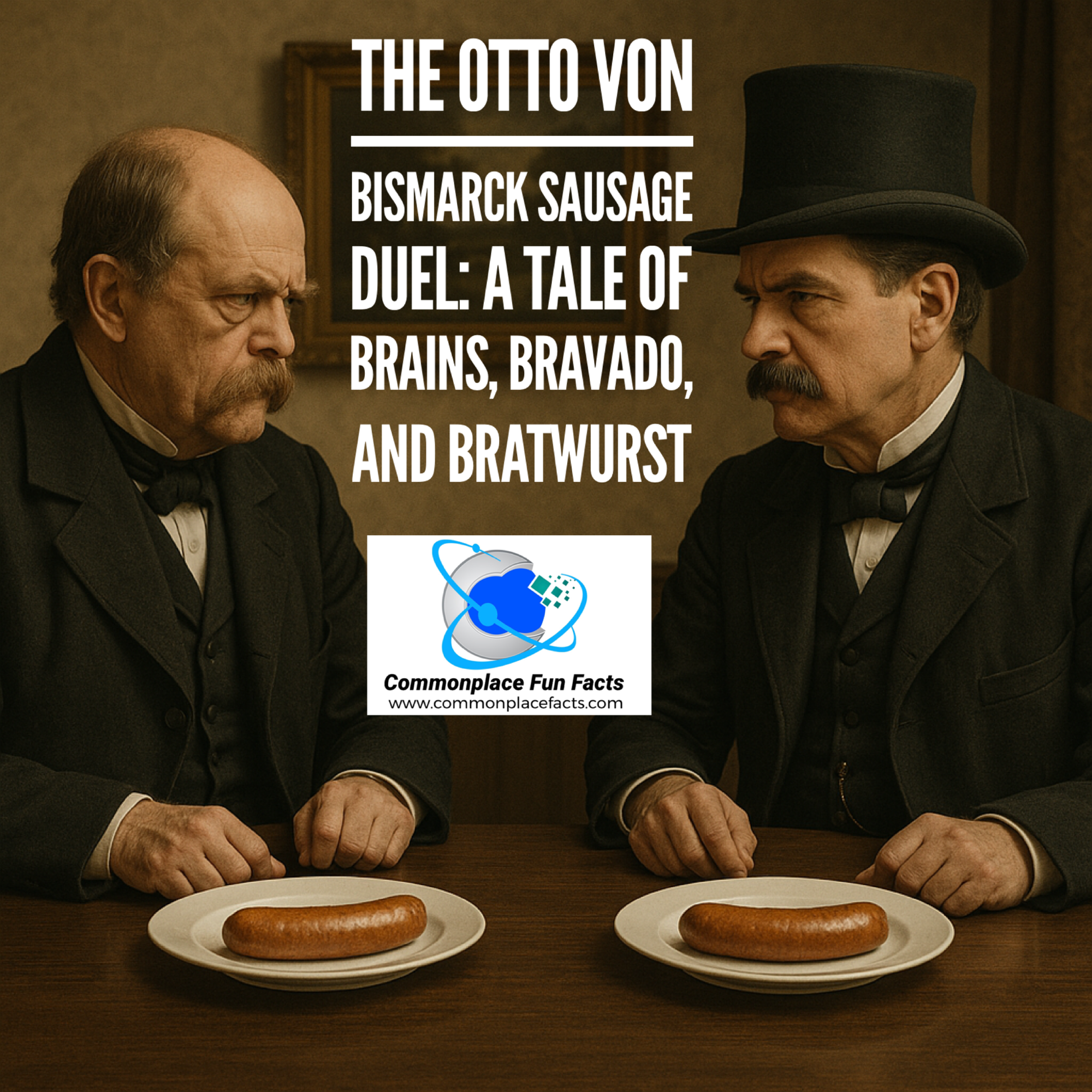

The Great and Glorious Otto von Bismarck Sausage Duel
Let it never be said that 19th-century Prussian politics lacked flavor. While today’s political disputes tend to play out over social media and passive-aggressive press conferences, back in the good old days, if someone insulted your naval budget, you could challenge them to a duel. With sausages. Naturally.
Table of Contents
Setting the Stage (and the Table)

We have already examined the role that sausages played in the Protestant Reformation, but it would seem that the humble bratwurst was destined to cast its sausage-shaped shadow across another chapter of European history. Our story begins in 1865, in the hallowed halls of the Prussian Diet, where two men squared off—not with pistols or sabers, but with sharpened rhetoric and simmering disdain. On one side was Otto von Bismarck, the Iron Chancellor, whose facial hair had more authority than some entire nations. On the other: Rudolf Virchow, medical pathologist, progressive reformer, and professional ruiner of authoritarian dreams.
The conflict? Bismarck was advocating for increased military spending, specifically for beefing up the navy. Virchow, who preferred his public funds directed toward things like public health and sanitation, wasn’t having it. He called Bismarck out with such blistering eloquence that the Iron Chancellor’s blood reached a slow, undignified simmer.
The Duel That Wasn’t (But Should Have Been)

Enraged, Bismarck challenged Virchow to a duel—because that’s how things were done back in the days before social media. Nowadays, of course, people have gotten accustomed to mouthing off without any concern about consequences. Back in the good ol’ days, when someone publicly disagreed with you, he was expected to defend his words with his life.
Dueling may seem a bit barbaric (probably the reason why lawyers and politicians in Kentucky have to take an oath that they haven’t engaged in the practice), but it does have its rules. Dueling etiquette dictated that the challenged party got to choose the weapons. Virchow, being the ever-cunning physician with a wicked sense of humor, made a surprising choice: duel by sausages.
He proposed they would settle their differences by each man selecting and eating a sausage. One sausage would be perfectly cooked and harmless. The other would be raw and infested with Trichinella spiralis, the delightful little parasite responsible for trichinosis. Eat the wrong wurst, and you’d be spending the next several days questioning every life choice you’d ever made—the least of which would likely be your choice of condiments.
As the tale is told, Bismarck declined the offer. Whether it was an aversion to risky charcuterie, a sudden appreciation for his intestinal tract, or simply a grudging respect for Virchow’s creativity, we may never know.
Did It Really Happen?
This is where our tale begins to resemble an undercooked bratwurst: appetizing at first, but kind of sketchy when you poke too deep. While the sausage duel story has been told and retold in books, blogs, and the occasional awkward dinner party, historians have yet to uncover definitive proof that it actually happened.
The tale doesn’t appear in official correspondence, dueling logs (yes, those existed), or contemporary newspapers. The earliest references seem to come decades after the alleged event, making it hard to determine whether Virchow really proposed gastroenterological gladiatorial combat—or if the whole thing was a later invention designed to add a bit of spicy whimsy to history’s otherwise dry sausage roll.
Still, It’s a Delicious Thought
Whether it’s fact, folklore, or an elaborate metaphor for the gut-wrenching state of 19th-century German politics, the sausage duel story endures because it feels like it could be true, and even if it didn’t happen, it should have. Virchow did have a brilliant medical mind with a disdain for violence and a flair for the theatrical. Bismarck was famously irascible, and dueling was still a socially acceptable way to settle disputes—as long as everyone promised not to sue afterward.
In a century filled with wars, revolutions, and imperial ambitions, there’s something deeply satisfying about the idea of two powerful men nearly throwing down over a plate of potentially lethal lunch meat. It’s diplomacy, digestion, and dueling etiquette rolled into one juicy anecdote.
The Moral of the Sausage
So, what can we learn from this possibly-true, probably-exaggerated tale? First, never underestimate the power of a clever mind and a strong stomach. Second, if someone challenges you to a duel, maybe don’t leave the weapon choice up to the guy with a medical degree and access to a parasitology lab. And third—perhaps most importantly—history, whether true or tall-taled, is always best served with a wink and a side of sauerkraut.
You may also enjoy…

The Affair of the Sausages and the Origin of the Protestant Reformation
Sin, Suspicion, and The Affair of the Sausages Sausages. They may fill your mind with questions. What are they made of? How are they made? How will they affect my waistline or cholesterol levels? These are all legitimate questions, but have you ever wondered what effect a sausage may have on your immortal soul? Early…

The Last Sword Duel in France Took Place in 1967
Imagine what it was like in days of yore, when a gentleman’s honor was defended with the razor-sharp steel of a sword. In those long ago days, an insulting word might very well be met with a challenge to duel to the death. Those were the days of chivalry. Those were the days of honor.…

Why We Could Be Eating a Portsmouth: Unveiling the True Story Behind the Sandwich
There is a good chance you have eaten a sandwich within the past few days. Meat, cheese, peanut butter, or any variety of foods held between two pieces of has been a key part of menus for about as long as bread has existed. Many people mistakenly believe the sandwich was the invention of John…




Leave a Reply