
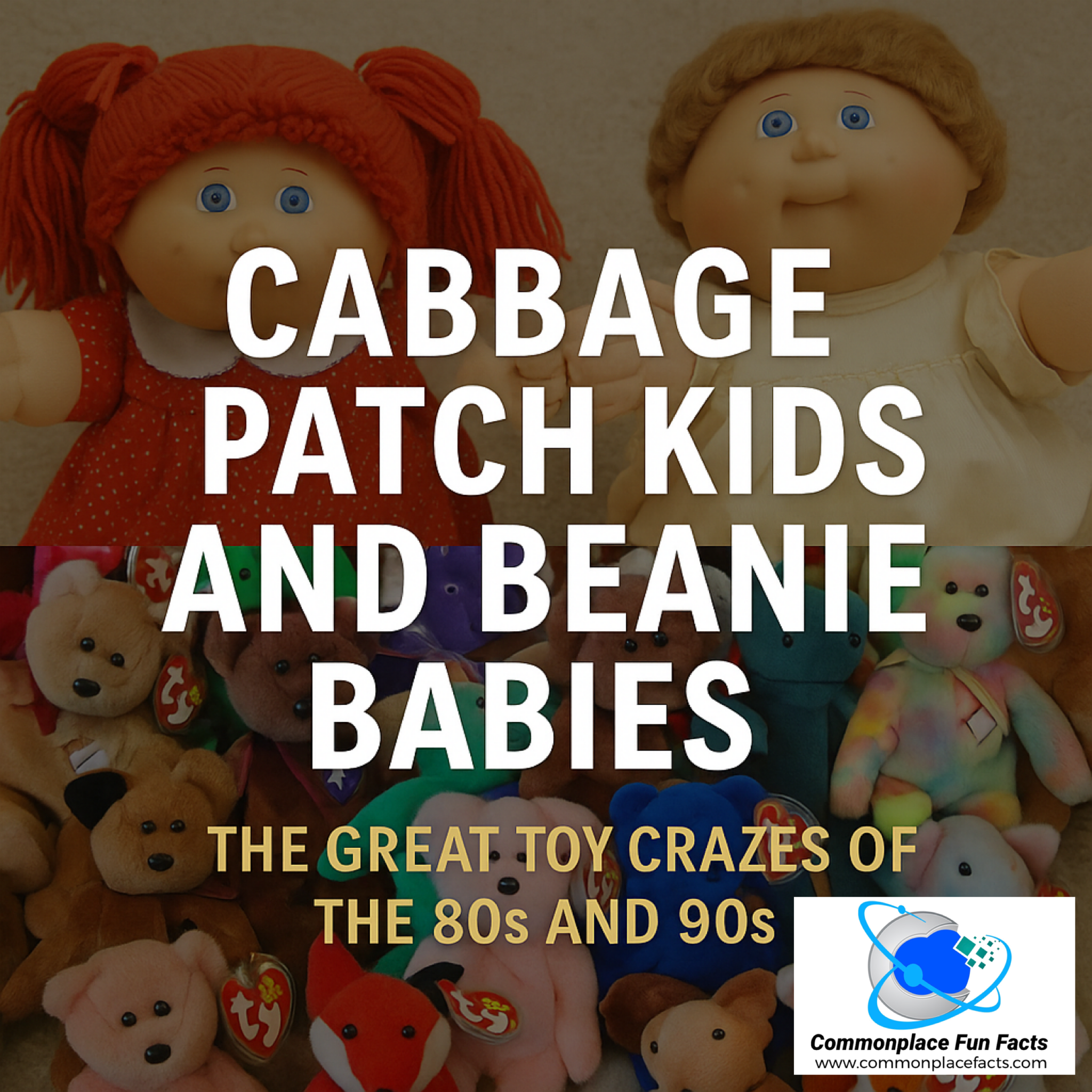

Before Bitcoin, before GameStop stock, before people were flipping digital gorillas for six figures—there were toys. Toys that drove saintly grandmothers to whack competing shoppers over the head with umbrellas. Toys that were hoarded like fine wine and spoken of in hushed, reverent tones.
We’re not talking about your childhood teddy bear or that one-eyed sock monkey Grandma made—we’re talking about full-on, crowd-surfing, eBay-bidding, divorce-court-testifying plush warfare. Enter the gladiators: Cabbage Patch Kids and Beanie Babies.
These weren’t just toys. They were tiny, squishy avatars of economic irrationality, capable of turning ordinary people into investment strategists and elbow-throwing shopping mall gladiators. One came with adoption papers. The other came with poems. Both came with a heaping side of mass hysteria and a surprising number of life lessons about marketing, value, and when to just put down the plush crab and walk away.
Join us as we dive headfirst into two of the strangest bubbles in consumer history—when America collectively decided that the future belonged to yarn-haired toddlers and pellet-filled platypuses.
Contents
The Cabbage Patch Kid Frenzy: 1983’s Black Friday Before Black Friday
The story of the Cabbage Patch Kids begins in 1978, when a 21-year-old art student named Xavier Roberts discovered the magic of soft sculpture dolls and said, “Yes, I will build an empire out of yarn-haired chaos.” Originally dubbed “Little People” (not problematic at all), Roberts would “deliver” these hand-sewn dolls from a make-believe cabbage patch, complete with individual names, birth certificates, and adoption papers. In other words, he invented a doll with just enough legal fiction to make parents feel emotionally—and financially—obligated.

In 1982, toy company Coleco got involved and rebranded them as Cabbage Patch Kids, unleashing them upon the masses like an adorable plague. The dolls hit retail shelves in 1983… and that’s when things got feral.
That Christmas season, Cabbage Patch Kids triggered one of the most infamous consumer stampedes in history. Shoppers physically fought for dolls. Stores ran lotteries. Employees armed themselves with baseball bats and riot gear. It was basically Black Friday before Black Friday was a thing, and the stars of the show were the inanimate soft-bodied toddlers and desperate parents with elbow spikes.
At one point, resale prices ballooned to $200+ for dolls that originally retailed around $25. There simply weren’t enough to go around. Demand exceeded supply, reason, and in some cases, human decency.

Eventually, Coleco ramped up production, and the craze cooled. But the dolls stuck around. Through the ’80s and ’90s, they remained a nostalgic fixture, spawning cartoons, video games, and even a line of snack foods (because nothing says “delicious” like eating something named after a weird doll with eyes that say, “I have seen things.”)
Today, Cabbage Patch Kids are still around—now owned by Wicked Cool Toys—but the mania has long since subsided. Most of us who lived through it now look back on the Great Doll Riots of ’83 with a mixture of confusion, pride, and minor shoulder injuries.
Still, the legacy is undeniable: Cabbage Patch Kids were the first true modern toy craze, laying the groundwork for every plush panic attack that followed. In short, they crawled so Beanie Babies could hop.
Retailing at $25, they were often scalped for $200 or more. Toy store employees became makeshift bouncers. Some stores resorted to lottery systems. Others just gave up and let nature take its terrifying, elbow-throwing course.
The craze peaked and then gently receded, leaving behind a trail of well-loved dolls, broken noses, and a generation of parents who still flinch when they hear the words “limited supply.”
The Beanie Baby Bubble: Wall Street, but Softer
Now let’s fast-forward to the 1990s for another foray into the world of insane toy crazes. This time, the featured artists are Beanie Babies. For that brief, shining moment in American history, under-stuffed plush animals briefly held more value than your retirement portfolio and possibly your grip on reality.
What began as a niche toy line exploded into a full-blown economic fever dream, complete with hype, hoarding, and heartbreak. This was not just a fad. This was a financial ecosystem held together by heart-shaped tags and delusion.
What Were Beanie Babies, Anyway?

Beanie Babies were the brainchild of Ty Warner, who founded Ty Inc. in 1986. Unlike your average teddy bear, these critters were filled with plastic pellets instead of fluff, making them soft, flexible, and adorably floppable—sort of like yoga instructors in plush form and with a less-threatening demeanor. Each Beanie Baby came with a name, a birthday, and a poem that was almost certainly written during a sugar rush in a greeting card factory.
There was Claude the Crab, who seemed to be going through an existential crisis in rhyme. Princess the Bear, a purple tribute to Princess Diana. And who could forget Peanut the Elephant, whose manufacturing color mistake launched a thousand bidding wars?
The Rise: When Plush Became Portfolio
Ty Warner’s company, Ty Inc., never spent big on advertising. With a strategy worthy of a James Bond villain, they made scarcity the marketing plan. That’s all it took for full-on plush hysteria to ensue.
- Limited production runs created artificial scarcity. Popular models were “retired” suddenly, creating a sense of urgency among collectors.
- Regional exclusivity meant certain Beanies were only available in specific areas, triggering cross-country treasure hunts and trunk-load trades at gas stations.
- Tag sanctity became a borderline religious doctrine. If your Beanie lost its tag or got a crease? Congratulations, you just dropped from Wall Street to flea market.
- Internet speculation went nuclear once eBay came along in 1995. It turned basement collections into auction-fueled gold mines overnight.
By 1998, Beanie Babies weren’t just collectibles—they were considered investments. As in, “skip the IRA, buy ten lobsters and a walrus” kind of logic. People stockpiled thousands, kept them in climate-controlled rooms, and even negotiated Beanie Baby custody arrangements in divorce proceedings.
The Pop Heard ‘Round the Toy Box
But just as the weird 17th century Tulipmania craze in Holland, and with all bubbles inflated by hype and hope, this one popped—spectacularly.
- Oversupply: Once everyone and their accountant had a tub full of bears, the rarity disappeared—and so did the value.
- Ty Inc.’s misfire: In 1999, the company announced it would retire the entire Beanie line at year’s end. Panic ensued, followed swiftly by disillusionment.
- No real value: Turns out a plush platypus named Patti doesn’t hold up well against long-term economic indicators.
By the early 2000s, the market had collapsed. Beanies that once fetched $1,000 now sat on eBay for $4.99—or less—with hopeful sellers refreshing their pages like lost souls at a digital wishing well.
Beanie Mania by the Numbers
- Ty Inc. annual revenue at peak: Over $1 billion
- “Princess the Bear” (Princess Diana tribute): Sold for thousands
- “Peanut the Elephant” (royal blue edition): Worth a small fortune due to a color mistake
- “Employee Bears”: Given only to Ty Inc. staff—now holy grails for collectors
To this day, a few rare Beanies do command impressive prices, usually because of tag misprints or quirky defects. But for every $10,000 Diana bear, there are 800 “Snort the Bulls” sitting unsold in someone’s attic next to the ThighMaster and broken dreams.
Where Are They Now?
- Ty Warner: Became a billionaire but eventually pleaded guilty to tax evasion. (Plot twist!)
- Collectors: Mostly left with bins of unsellable plush and a vague sense of economic PTSD
- Modern value: Most Beanies now sell for under $5, unless you’re very lucky or very good at storytelling
Cabbage vs. Beanie: A Plush Side-by-Side
| Category | Cabbage Patch Kids | Beanie Babies |
|---|---|---|
| Debut | 1983 (mass market) | 1993–1995 |
| Original Retail Price | $25 | $5 |
| Peak Resale Price | $200+ | $5,000+ (for rare models) |
| Craze Duration | ~2 years | ~5 years |
| Marketing Style | Adoption fantasy + mass advertising | Scarcity + collector hype |
| Level of Chaos | Physical brawls in stores | eBay wars + court battles |
| Long-Term Value | Mostly nostalgic | Mostly disappointing |
Lessons from the Plushpocalypse
So what can we learn from these cuddly catastrophes of consumer culture?
- Scarcity sells—until it doesn’t.
- Emotional marketing turns a toy into a treasure (see also: Tamagotchi guilt).
- If your retirement plan includes stuffed animals, call a financial advisor immediately.
Whether it was cabbage-grown toddlers or pellet-filled platypuses, these toy crazes remind us that nostalgia is powerful, marketing is witchcraft, and under the right conditions, grown adults will trample each other for fabric and foam.
Bonus Round: Which One’s in Your Attic?
Be honest—are you Team Cabbage or Team Beanie? Or maybe you’ve still got both, staring at you from a Rubbermaid bin with judging eyes and depreciated value. If so, congratulations: you were part of the weirdest economics lesson in American retail history.
Now if you’ll excuse us, we’re off to see if someone still wants to buy our mint-condition “Tickle Me Elmo” in exchange for a down payment on a sandwich. No luck yet, but hope springs eternal.
You may also enjoy…

How Thousands of Rubber Bath Toys Helped Unlock the Ocean’s Secrets
The container ship Ever Laurel was en route from Hong Kong to Tacoma, Washington. On January 10, 1992, it was only halfway to its destination when it encountered a violent storm. The ship survived, but twelve of its shipping containers were washed overboard. While the owners of those lost containers presumably wrote off their losses,…

The Search to Uncover the Legendary Secret Graveyard of Video Games
It was April 2014, and the excavators approached the rumored burial site with high hopes. Many expressed doubt that the place even existed. Those who were in the best position to know had publicly stated that the site was an urban legend. Despite the naysayers, there was a loyal group of true believers who were…

The Big Flub Called Flubber
Learn about the disastrous toy Flubber that made kids sick.




Leave a Reply to Herald StaffCancel reply