
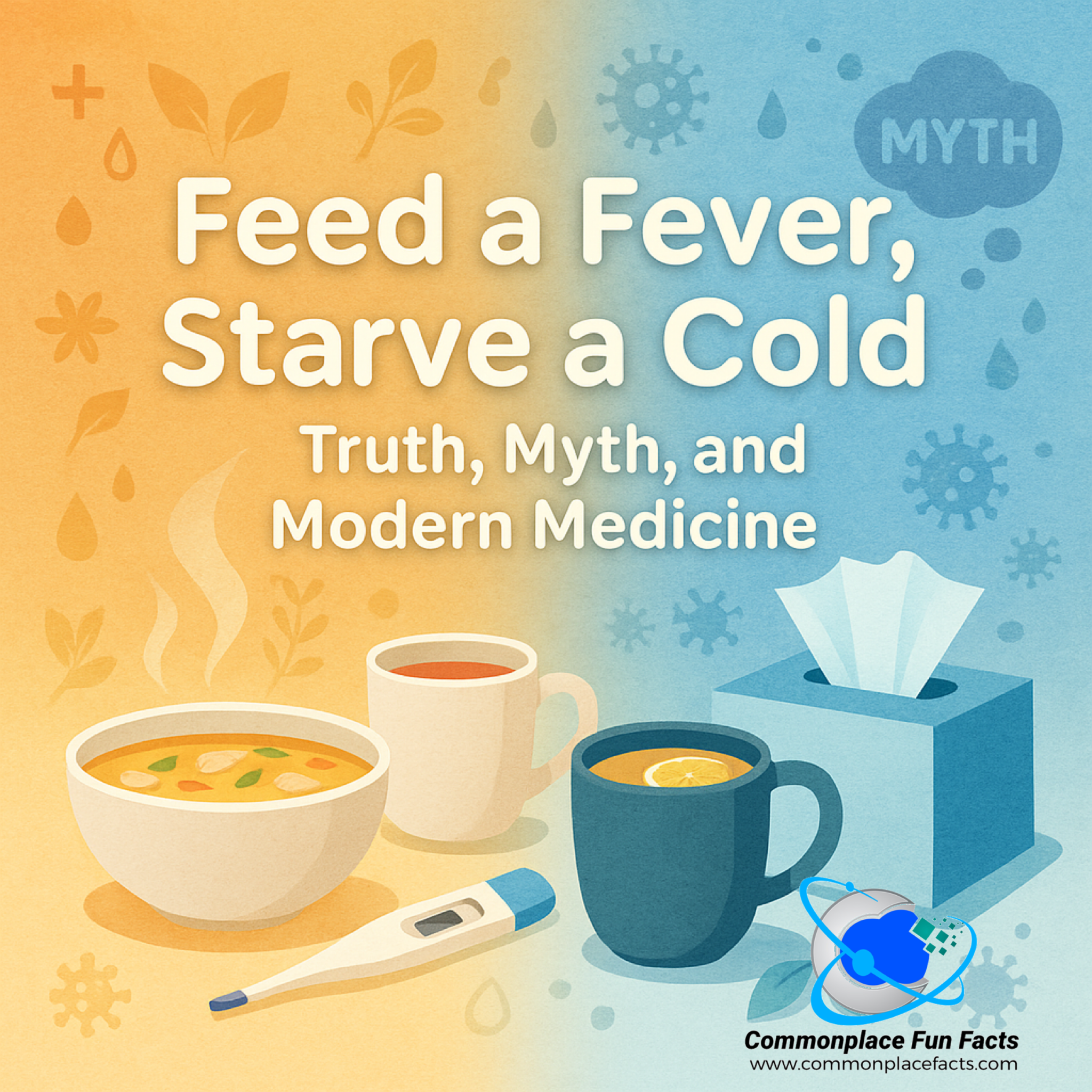

“Feed a fever, starve a cold.” It’s the kind of advice that sounds ancient, authoritative, and just quirky enough to have been delivered by your great-grandmother as she ladled chicken soup into your bowl and dared you to argue. But is it actual medical wisdom, or just a rhyming relic from the same era that thought blood-letting was a universal solution? Let’s pull up a chair, lift the lid on the stewpot of history, and see what’s been simmering in this folksy prescription for the past few centuries.
Contents
What Does “Feed a Fever, Starve a Cold” Mean?
In its simplest (and possibly silliest) form, the saying suggests that if you’ve got a fever, you should eat more, and if you’ve got a cold, you should cut back. This culinary push-pull comes from humoral medicine, that centuries-old system where every illness was either “hot” or “cold,” and the job of the healer was to restore balance—preferably with a side of broth. A fever, being “hot,” needed fuel; a cold, being “cold,” needed restraint. Easy to remember, maybe less easy to survive on if you take it literally.
The catch? Starving yourself when you’re sick is a perfect way to invite fatigue, slow your recovery, and make your immune system feel like it’s been stood up for dinner. Modern medicine says the real priority—whether you’re coughing or cooking from the inside out—is hydration and reasonable nutrition. Translation: listen to your body, not just your grandmother’s rhyme scheme.
The History Behind the Saying
The origin of “feed a fever, starve a cold” bubbles up in English from the 1500s–1600s, when fasting for a fever was as trendy as lace collars. Back then, “starve” could mean simply “go without” rather than “perish dramatically,” so it didn’t sound quite as dire. Over the years, the rhyme caught on and clung to popular wisdom like a cat to a warm lap. By the Victorian era, you’d find it nestled in health columns and home remedy books, right alongside mustard plasters, vinegar gargles, a frankly terrifying remedy for sluggishness, and other classics from the “sounds terrible but might work” school of medicine.
What Modern Medicine Says

We’ve since swapped humors for evidence, and the science crowd has a few notes:
- Fever increases energy needs. You burn more calories and lose fluids faster than usual. Keep sipping water, broth, or oral rehydration drinks like they’re going out of style.
- Colds still need nutrition. The best foods for cold recovery are gentle on the stomach but nutrient-rich—think soups, yogurt, soft fruits, and protein-packed snacks.
- Hydration is non-negotiable. Whether you’re boiling or sniffling, warm herbal teas, water, and light broths can soothe and help thin mucus. Yes, tea counts. Yes, hot cocoa probably counts too, but don’t tell your doctor I said that.
- Chicken soup earns its reputation. Studies suggest mild anti-inflammatory effects, but even if it’s mostly placebo, it’s the coziest placebo you’ll ever slurp.
Practical Cold & Fever Care Tips
- Drink like you’re training for a hydration championship—water, broth, teas, electrolyte drinks.
- Eat what you can manage. Small, frequent meals are fine; nobody’s grading you on portion sizes.
- Rest like it’s your job. Your immune system is on overtime; the least you can do is stay out of its way.
- Keep an eye out for dehydration symptoms like dizziness, dry mouth, or dark urine.
- Call in the professionals for persistent high fevers, breathing trouble, or symptoms that seem to be auditioning for a medical drama.
Why the Proverb Endures
Catchy phrases are like bad pop songs: once they’re in your head, they’re hard to shake. The rhyme and alliteration give “feed a fever, starve a cold” mnemonic superpowers, and generations of repetition have cemented it in our cultural health playbook. It’s easy to remember, fun to recite, and harmless enough—until someone decides to take the “starve” part as an actual action plan.
Final Word
As a medical guideline, “feed a fever, starve a cold” is about as useful as telling someone with a broken leg to “walk it off.” But as a reinterpreted, modern mantra—keep your nutrition up and don’t overload your system—it’s not terrible. Just remember: hydrate, nourish, rest. And if you’re still unsure? Put on the kettle, make some chicken soup, and call it a day. Your immune system will be grateful—and your great-grandmother might even approve.
You may also enjoy…

Breakfast Cereal Killers: How 3 Health Fanatics Unleashed Sugary Cereal Chaos
Breakfast cereal’s history is surprisingly disturbing. Dr. James Caleb Jackson’s tough “granula” kickstarted the trend, followed by Kellogg’s granola and Post’s Grape-Nuts. With sugary evolution, kid-oriented marketing, and health concerns, the legacy of cereal is complex. While convenient, its health benefits are dubious, urging us to reconsider its place in our breakfast routine.

A Heart-Healthy Reason to Avoid Mondays
Mondays tend to be the least favorite day of the week for most people. As it turns out, there is a good reason for it. That is the day of the week on which you are most likely to suffer a heart attack. According to a study published in The BMJ, researchers who studied over 156,000…

Does Beautiful Art Make You Sick?
A sure sign of getting older is when you struggle to make sense of the younger generation’s lingo. For those of Generation X or older, declaring that something is “sick” means that it is physically unwell or repulsive. For the “youngins” of this culture, “That’s sick!” is a way to express admiration. For a sufferer…






Leave a Reply to Herald StaffCancel reply