
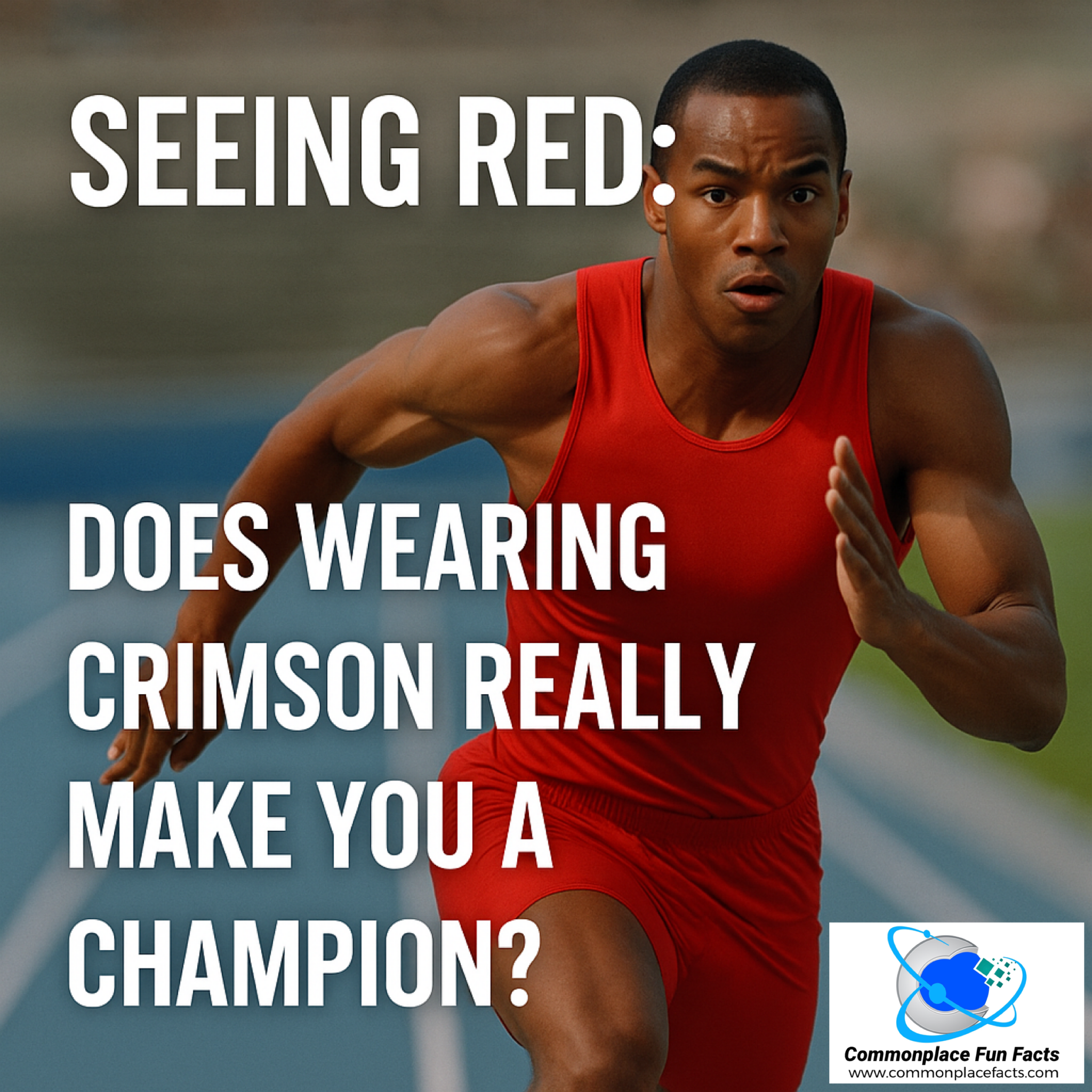

Does Wearing Red Make You Win in Sports?
Sports history is full of colorful characters. Literally. From the All Blacks of New Zealand rugby to the “Orange Crush” Denver Broncos defense, teams have been telling us for years that what you wear matters. And somewhere between the lucky socks, the rally caps, and the headbands that haven’t been washed since last season, there’s one particularly bold claim: athletes dressed in red are more likely to win than athletes wearing any other color.
Sounds dramatic, doesn’t it? Like the plot twist of an underdog sports movie, except the secret weapon isn’t grit or training montages — it’s fashion choices. But is this actually true, or is it just one more superstition to keep company with “never shave on game day” and “eat exactly three pickles before kickoff”?
Contents
The Red Menace: Origins of a Theory
In 2005, sports psychologists Russell Hill and Robert Barton decided to see if color could actually influence athletic outcomes. They didn’t just flip through old highlight reels; they went big — Olympic big. Specifically, they analyzed combat sports at the 2004 Athens Games, where fighters in boxing, taekwondo, and wrestling were randomly assigned red or blue outfits.
The result? Those in red won about 55% of the time overall, and when matches were close, red’s win rate jumped to a rather eyebrow-raising 62%. This, naturally, set off a wave of excitement among sports commentators and athletes alike. “Red means go,” “red means danger,” “red means I can finally beat that guy from Kazakhstan.” You get the idea. It’s much like the idea that painting prison cells pink could control the behavior of prisoners.
Why Red? Psychology, Physics, and a Dash of Bullfighting

Red is one of those colors that humans are hardwired to notice. It’s associated with dominance, aggression, and power — traits you’d ideally like to project when trying to punch, kick, or throw your opponent into submission. It’s also extremely visible, which means that even in a chaotic flurry of limbs, you stand out like a fire truck at a candlelight vigil.
And no, the bullfighting analogy doesn’t quite work here — bulls are colorblind to red. But humans aren’t. Judges, referees, and even opponents might unconsciously give more credit, perceive more aggression, or hesitate just a split-second more against an athlete in crimson.
The Fade to Neutral
Here’s the catch: sports changed. Fast-forward to a 2024 meta-analysis in Scientific Reports that looked at over 6,500 bouts across seven Summer Olympics and nine World Boxing Championships. The win rate for red? A perfectly boring 50.5% overall. In close matches? 51.5%. Statistically speaking, that’s a whole lot of “meh.”
The reason? Judging has gotten smarter. Or at least less swayed by our color preferences. Technology-based scoring systems, stricter judging criteria, and instant replay have stripped away some of the subconscious human bias that may have given red its earlier advantage. In other words, you can still look fierce in red, but the computer doesn’t care.
It’s Not Just Sports — Or Is It?
The “red effect” has been studied outside of sports, too. People in red clothing have been rated as more attractive in social experiments. A red tie can have the effect of making the wearing appear more powerful or aggressive than a more neutral choice of neckwear. It’s one of those things we just subconsciously conclude without any solid evidence to back up our assumptions.
So, while red once might have been the secret sauce of athletic victory, it’s now more of a garnish for interactions with polite society.
Final Score: Science or Superstition?
If you’re playing in a sport where psychological warfare is still a factor, and your opponent is human enough to be subconsciously swayed by color, red might still be worth adding to your kit. Just don’t expect miracles. In the modern sporting arena, your victory is more likely to come from hard work, smart tactics, and maybe a dash of luck — not from the fashion section of your local sporting goods store.
But hey — if nothing else, you’ll look great crossing that finish line. And really, isn’t that half the battle?
You may also enjoy…

Does Pink Purposefully Prevent Prisoners From Pummeling People?
When you see the color pink, you might think about any number of things: the panther nemesis of Inspector Clouseau, Floyd’s first name, the last name of Clara Oswald’s boyfriend in Doctor Who, or the strangely-colored poop pandemic that had its origins in breakfast cereal. Whatever you think of is not nearly as important as…

Why Is Blue For Boys and Pink For Girls? Uncovering the Great Gender Color Association
Discover the fascinating history of why we say pink for girls and blue for boys and how these colors swapped gender associations over time. Explore the origins and societal shifts behind this colorful tale.

Did Ancient People See Blue? The Mystery of the Missing Color
Ancient cultures lacked a word for blue. Did ancient people see blue? Explore the science of color perception, language, and why blue was the last color to be named.







Leave a Reply to Commonplace Fun FactsCancel reply