
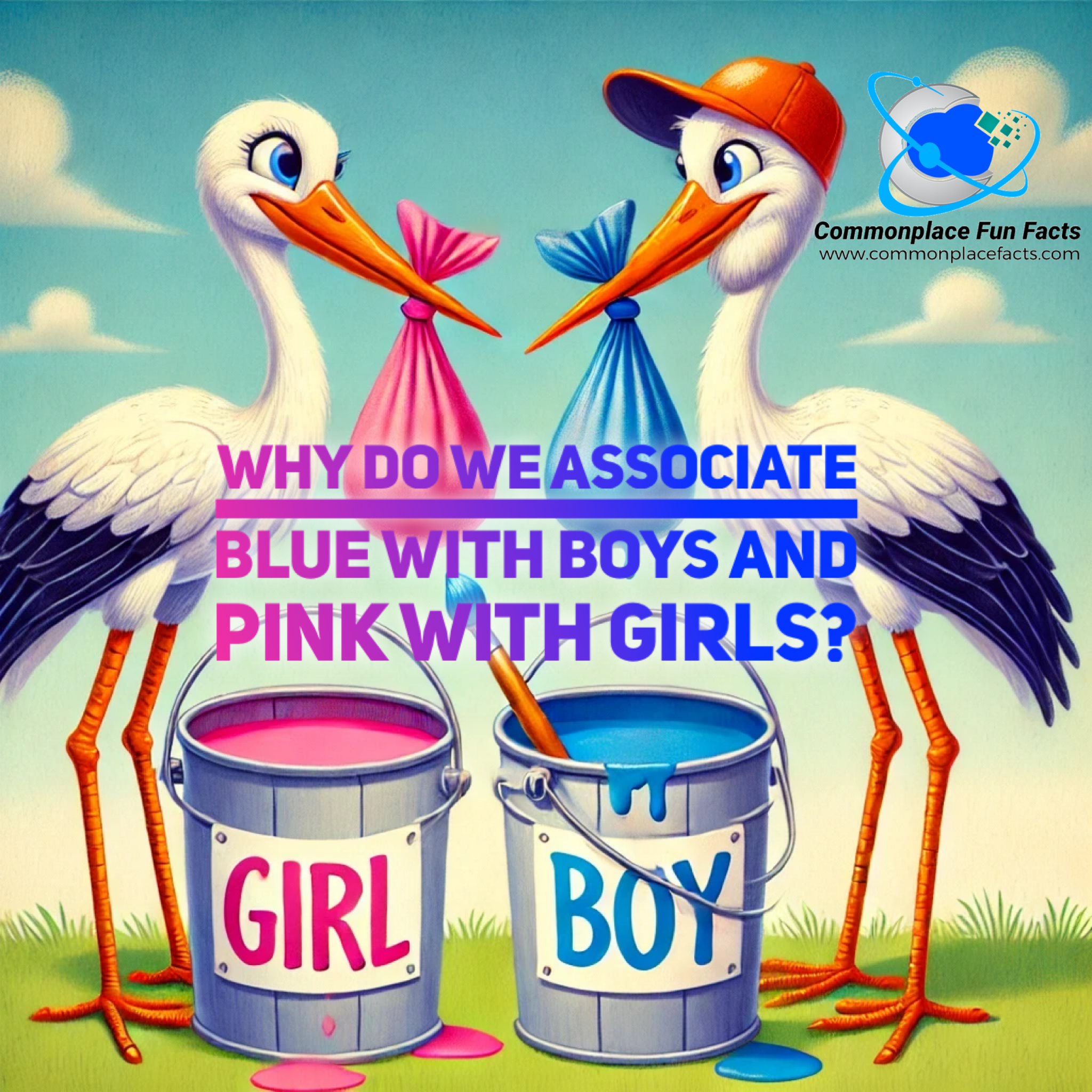

Blue for Boys and Pink For Girls — But Why?
It’s a gender reveal party, and everyone waits to find out if it is a boy or a girl. The clue? Whether it is confetti, smoke, ribbons, or cake, everyone looks for blue or pink to tell the story.

We all know the custom that boys are blue and girls are pink. But why? When did this gender color association start and who came up with anything as weird as baby colors?
Join us as we go on a journey of discovery. Along the way, we’re going to find some mistaken identities—not the kind you see in sappy romcom movies comedies, but the sort that unfold in the aisles of baby clothing and greeting cards. Yes, we’re diving headfirst into the vibrant world of pink and blue. These colors, for decades, have been the guardians of traditional gender norms, but they weren’t always as rigid in their assignments as we’ve been led to believe. So buckle up, because the history of pink and blue is as twisty as a rainbow slinky.
A World Before Color-Coded Babies
We all know that color is a fairly new invention. A quick glance at all of the black and white photos in the family scrapbooks or the old movies and television shows tells us that no one got around to inventing color until sometime in the 1950s or so.
EDITOR’S NOTE: We interrupt this article while the writer goes back to school — with emphasis on history and necessary visits to the principal’s office.
OK, we’re back. Sorry about that. But in our defense, our 7th grade science teacher taught us that if you swallow bubble gum, it will stay in your stomach for ten years. We have had to do a lot of self-education as a result.
Apparently, color was a thing for longer than we had thought. It’s just that before the 19th century, society was blissfully unconcerned about what colors babies wore. Jo B. Paoletti, historian and author of Pink and Blue: Telling the Boys from the Girls in America, writes that gender-neutral clothing was all the rage in the pre-Victorian era. Babies of all genders were swaddled in white dresses—because, let’s face it, bleach was the superhero of laundry day.
This sartorial equality lasted until children hit the ripe old age of six or seven, at which point they graduated to more colorful and structured attire. For a technicolor moment in history, pink and blue were just colors, free of the social baggage they would later carry.
Pink for Boys and Blue for Girls: Wait, What?

By the mid-19th century, pastel colors began to seep into children’s wardrobes, and a strange thing happened. Rather than our modern association of pink with femininity and blue with masculinity, it was quite the opposite. Yes, the gender color association was reversed so pink—the color we now slap on princess dresses and cotton candy—was considered manly. Meanwhile, blue was deemed delicate and feminine.
Need proof? Look no further than a 1918 trade publication, Earnshaw’s Infants’ Department, which declared, “The generally accepted rule is pink for the boys, and blue for the girls.” Imagine the cognitive dissonance of today’s gender reveal parties if we went back to those guidelines. “It’s a boy!”—cue the pink confetti.
The Psychology of Colors: Strong Pink and Gentle Blue
Why this topsy-turvy color coding? Scholars have speculated that pink, being a derivative of bold and fiery red, was associated with strength and masculinity. Blue, on the other hand, had long been tied to the Virgin Mary, giving it a more serene and nurturing vibe—perfect for little girls.
Find out if the color pink has a calming effect on prisoners
Gavin Evans, a writer and color expert, explained in an interview with Business Insider that mothers were even advised to dress their sons in pink to encourage masculine traits. Yes, somewhere out there, early 20th-century moms were dressing their boys in pink onesies, hoping they’d grow up to be lumberjacks or generals.
The Post-War Switcheroo
Fast forward to the aftermath of World War II, and everything changed. Retailers and fashion brands decided it was time for a cultural makeover, flipping the script for gender color association. Pink was aggressively marketed as the ultimate symbol of femininity, while blue became the go-to color for rugged masculinity. Why the switch in baby colors? It’s not entirely clear, but it likely had more to do with marketing strategy than any profound cultural epiphany.
From then on, pink and blue entrenched themselves in everything from cribs to strollers, toys to toothbrushes. The divide became so pronounced that by the 1980s, you couldn’t escape it—whether shopping for baby clothes or watching toy commercials.
Breaking Down the Divide
The story of pink and blue serves as a reminder that societal norms are fleeting and fashion trends even more so. One minute pink is for boys, the next it’s for girls, and who knows what’s next? Maybe chartreuse will become the official color of courage, or taupe the new shade of elegance. Maybe the new rage in baby colors will declare that boys are to be dressed in a color visible only to bees.
We suspect that if breakfast cereals went back to using the food coloring that created the great Pink Poop Pandemic, you’d see a lot more pre-teen boys proclaiming, “Pink for boys!”
You may also enjoy…

Eigengrau: Discover the Intriguing Color You See Every Day Without Knowing
What color do you see when you close your eyes in complete darkness? Learn about Eigengrau, the fascinating ‘intrinsic gray’ perceived by our brain. Discover the science behind it!

How to See Impossible Colors: A Guide to Unseen Spectrums and Optical Illusions
Explore the fascinating world of impossible colors, chimeral hues, and optical illusions explained by a unique perspective on colorblindness.

The Hidden Messages of Flower Meanings: What Do They Really Mean
Discover the surprising hidden messages to be found in flower meanings, including flower colors, numbers, and types in different cultures. Avoid common gifting mistakes with carnations, roses, and more!




Leave a Reply