
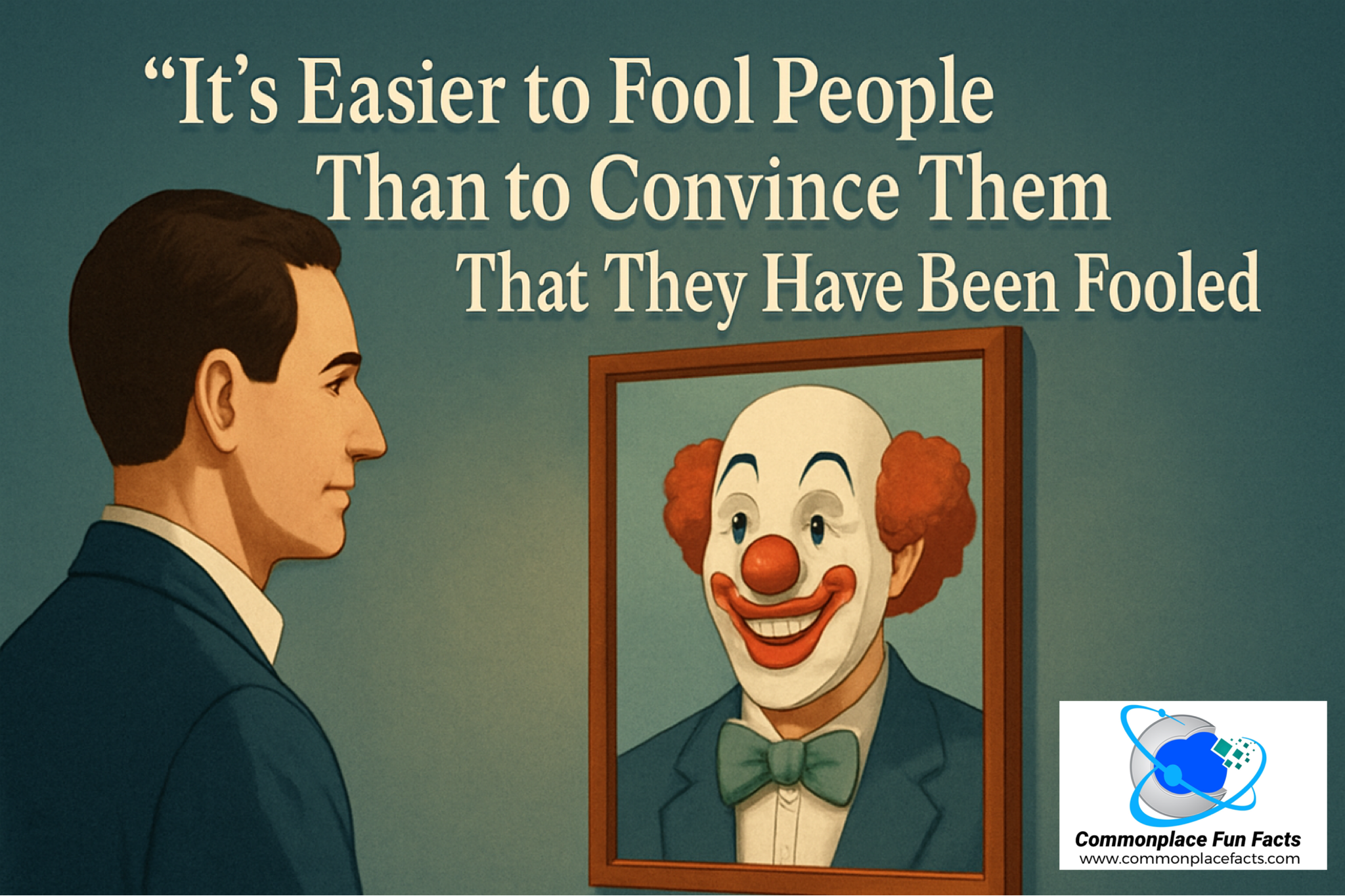

It’s Easier to Fool People Than to Convince Them They’ve Been Fooled
Few sentences capture the state of modern life quite as perfectly as this one: “It’s easier to fool people than to convince them they’ve been fooled.” The quote itself has been floating around so long it’s practically fossilized wisdom at this point — often slapped beneath a picture of Mark Twain looking like he’s about to say something devastatingly clever. And while there’s no solid evidence he ever said it, the words themselves are timelessly, painfully true. Which, of course, makes them all the more tragic that we refuse to learn from them.
Contents
About That Twain Thing

Let’s get the obvious out of the way. There’s no proof Mark Twain ever wrote or said this exact line. According to the diligent souls at Quote Investigator, the phrase doesn’t appear in any of his published works or letters. Twain did say something close: “How easy it is to make people believe a lie, and how hard it is to undo that work again.” That’s the same spirit, but it’s not quite the meme-worthy version that decorates your co-worker’s Facebook wall.
Still, the mix-up is fitting. It’s easier to share a quote you think sounds like Twain than to do the hard work of fact-checking. So, even the quote about people believing lies has fooled us. Perfect, isn’t it?
The Truth Behind the Words
Regardless of who first said it, the quote hits the bullseye of human psychology. Fooling people is easy. It’s quick, satisfying, and remarkably efficient — especially if you tell them something they already want to believe. Convincing them they’ve been fooled, on the other hand, is like trying to convince a cat that the vacuum cleaner isn’t a personal assassination attempt.
People cling to their beliefs with a kind of emotional superglue. Once someone buys into a story — a rumor, a conspiracy, a diet fad, a political talking point — they invest part of themselves in it. Admitting they were wrong doesn’t just mean revising a belief; it means confronting the painful idea that they were gullible. Nobody likes that. So instead, we double down, dig in, and tell ourselves we’re the ones who see things clearly, while everyone else is being fooled.
The Ego Problem

Here’s the dirty secret: it’s not about truth. It’s about identity. When someone challenges a belief that’s wrapped around our ego, it feels like they’re attacking us. Facts suddenly become optional, and logic becomes that annoying friend who keeps texting us reminders we don’t want to hear. It’s why arguing with someone online never ends with, “You know what, you’re right, I was completely misinformed.”
This is why misinformation spreads faster than apologies. It’s why con artists thrive, why grifters get reelected, why people believe the earth is flat, and why our cousin still believes he can start a fire by peeing on an electric fence. Once people accept a lie that feels comfortable, it takes a psychological earthquake to shake it loose — and most of us don’t want the tremor.
Modern Culture: A Masterclass in Self-Deception
If you ever doubt the truth of this quote, scroll through social media for five minutes. You’ll see the entire spectrum of people confidently fooled — from the folks reposting conspiracy memes to the influencers insisting they discovered “ancient health secrets imparted by aliens” involving celery juice. Our age isn’t one of information; it’s one of confirmation. The moment something aligns with what we already think, we hit “share” faster than you can say “citation needed.”
Whole industries depend on this principle. Advertising thrives on it (“You deserve this luxury car because you’re special!”). Politics depends on it (“Only we tell you the truth!”). Even entertainment cashes in (“This time, the sequel won’t be terrible!”). We are constantly being sold comfort — and the price tag is our skepticism.
The Antidote: A Little Humility
The only real defense against being fooled isn’t cynicism; it’s humility. A willingness to admit we don’t always get it right. A moment’s pause before sharing, before defending, before deciding we already know everything. Being open to correction isn’t weakness — it’s the one thing that keeps us from becoming walking billboards for bad information.
That’s the part people miss when they treat this quote as a punchline about other people’s stupidity. It’s not just about them. It’s about us. Every one of us has been fooled at some point, and every one of us has resisted admitting it. Recognizing that doesn’t make you foolish — it makes you honest.
The Real Joke
So maybe the best way to honor the wisdom behind this quote — whether Mark Twain said it or not — is to live with enough self-awareness to laugh when we realize we’ve been duped. Because in the end, it’s not a matter of intelligence. It’s a matter of courage. The courage to say, “Well, I fell for that one.”
That’s not defeat. That’s growth. And in a world full of people proudly insisting they’re never wrong, admitting you’ve been fooled might be the smartest thing you’ll ever do.
You may also enjoy…

Mark Twain Reminds Us That Seeing Isn’t Always Believing
“You can’t depend on your eyes when your imagination is out of focus.” — Mark Twain

Famous Quotes That Most People Get Wrong
Famous quotes are like pizza toppings; everyone has their favorites, but they can get messy! Dive into the wild world of misquotes, false quotes, and misunderstandings where “money is the root of all evil” has a twist and “nice guys” don’t just finish last—they might even finish seventh! Who knew?

It’s Election Season and Time to Bring “Snollygoster” Back Into Use
Find out why the term “snollygoster” should be revived so we can add some color to the election season.




Leave a Reply to Monkey’s TaleCancel reply