
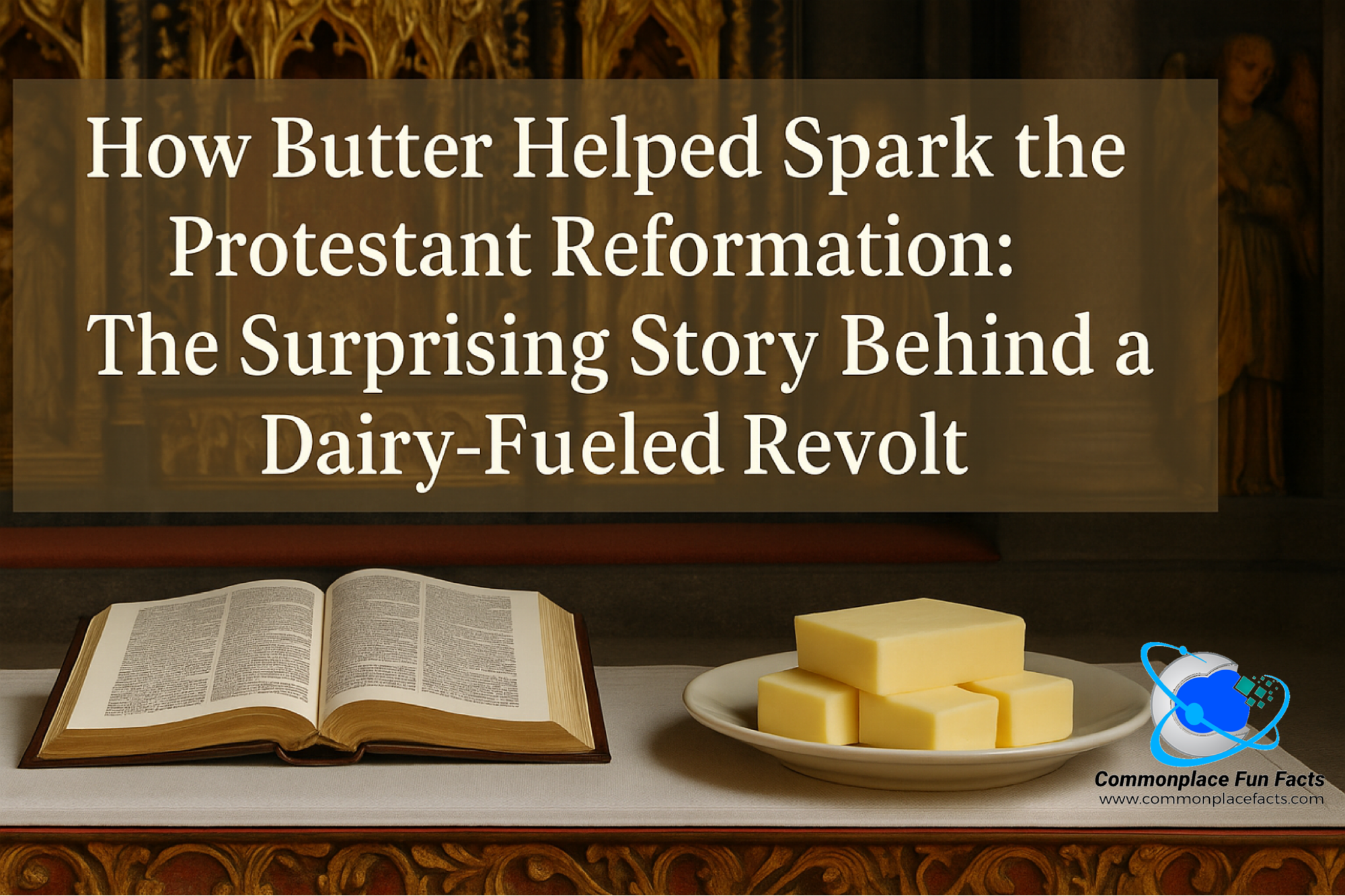

Food and religion sit right at the center of the human experience. We’ll argue about just about anything, but start tinkering with sacred beliefs or the dinner plate, and suddenly you’ve got a full-scale cultural crisis on your hands. There’s something deeply primal about the moment those two worlds collide. Tell people to adjust their theology and they might grumble. Tell them to give up butter, bacon, or chocolate in the name of that theology, and civilizations start sharpening their pitchforks.
Across history, some of humanity’s most spirited debates have come from the intersection of faith and food. Fasting rules, feast days, dietary laws, sacred meals—none of it ever stays in the realm of quiet contemplation. Instead, it spills straight into daily life where ordinary people actually live, cook, and complain. Which brings us to one of the most delightfully unexpected moments in religious history: the part where Europe, already simmering with theological tension, found itself pulled into the Protestant Reformation with an assist from a very familiar kitchen staple.
Yes, this is the story of how butter—simple, dependable, melt-on-contact butter—ended up playing a supporting role in one of the most significant religious transformations in Western civilization. When doctrine meets the breakfast table, breakfast will definitely have its say.
Contents
The Medieval Rulebook: When Butter Was Basically a Sin
To understand how butter muscled its way into theological controversy, we have to start with medieval fasting rules. The Church maintained an extensive calendar of fast days, during which meat was off-limits, eggs were banished, and dairy products were treated as though they were plotting humanity’s moral downfall. Milk, cheese, cream, and especially butter were considered off-limits during these periods.

Lest you think this was just a minor dietary inconvenience a few days each year, it absolutely was not. The faithful were expected to fast from butter, milk, cheese, and eggs during Lent, Advent, every Friday, many Wednesdays, quarterly Ember Days, Rogation Days, and the vigils of major feasts. Add it all up, and a medieval Christian spent well over one hundred days a year under fasting rules. In many regions, that number crept closer to one hundred fifty. Depending on where you lived, anywhere from 30% to nearly 50% of the entire year was lived under some form of dietary restriction.
This was all well and good if you lived somewhere like Italy, where olive oil flowed freely like the world’s tastiest baptismal font. But if you lived in Germany, England, or Scandinavia, where olive trees tend to shrivel up and die out of sheer spite, butter wasn’t merely an option. It was survival. Replacing butter with olive oil in January in northern Europe would be like trying to replace your furnace with a scented candle.
So naturally, people did what people always do when confronted with impossible rules: they either broke them, or they paid to get out of them.
Butter Dispensation Fees: The Original “Premium Subscription”

The Church, never one to miss an opportunity to keep the lights on, allowed people to pay a fee for permission to use butter during fasts. These butter dispensation fees were basically the the medieval version of video-game cheat codes that let a person skip the moral restrictions and go straight to rich, dairy-infused happiness.
The fees weren’t pocket change. They generated significant revenue, which in at least one famous case literally shaped the skyline. In Rouen, France, the money from butter dispensations helped fund the magnificent “Butter Tower” of Rouen Cathedral. Imagine explaining to your grandchildren: “Yes, children, this architectural marvel was brought to you by the collective refusal of our ancestors to give up cooking with butter for 40 days.”
Architects called it the Tour de Beurre. Historians call it “another reason people got fed up with the Church.” We call it the most majestic dairy-funded building project in world history.
Luther’s View: If God Wanted You Miserable, He Would Have Said So Directly
Enter Martin Luther, stage left, carrying a hammer, a handful of theology degrees, and possibly a sandwich. He already held some pretty unconventional views about diet (see “Martin Luther’s Feces Theses” for those disturbing details). He also had more than a few grievances with how the religious leaders were running the show. Luther’s critique of the Church covered many issues—the sale of indulgences, clerical corruption, doctrinal problems—but food rules made the everyday person sit up and listen. If Christian liberty mattered, Luther argued, then piling on mandatory dietary restrictions didn’t help anyone except the people collecting fees.
The idea that God probably didn’t care whether you sautéed your vegetables in olive oil or butter struck ordinary people as both comforting and extremely practical. Luther didn’t just offer spiritual freedom; he offered culinary freedom. In a world full of bad harvests, cold winters, and limited fat sources, that kind of liberation meant something.
The Affair of the Sausages: Lent, Logic, and a Theological Food Fight
Butter wasn’t the only food to ignite religious fireworks. In 1522, Zurich was treated to what might be history’s most chaotic dinner party. A group of citizens gathered to eat sausages on a Lenten fast day—a mild act of culinary rebellion that somehow escalated into a full-blown theological crisis.
Ulrich Zwingli defended the sausage-eaters, arguing that mandatory fasting rules had no scriptural basis. And that was that. Switzerland joined the list of places where Lent officially lost a bit of its bite.
We’ve already covered this incident in far greater detail (including the part where Zurich collectively loses its mind over processed meat). You can find that deliciously chaotic story here: “The Affair of the Sausages and the Origin of the Protestant Reformation”.
Yes, we are absolutely linking to ourselves, which is arguably the most historically accurate Reformation-themed move we could make.
Butter vs. Olive Oil: Europe Picks Sides

It is no coincidence that Protestant regions tended to be the butter-loving north, while Catholic regions included the olive-oil-rich Mediterranean south. Geography determined food, food determined culture, and culture sometimes nudged theology.
If you ever find yourself wandering through Europe and wondering who historically leaned Protestant, just stroll into a bakery. If everything is laminated, fluffy, and suspiciously buttery, congratulations—you’re probably standing in a former Reformation hotbed. If everything glistens in olive oil, you’re in Catholic country, where the butter bans were less of a big deal because they weren’t using it in the first place.
Propaganda, Polemics, and Passive-Aggressive Dairy Commentary
Because humans can weaponize anything, even cooking fat, butter became a favorite target in religious pamphlets and sermons.
Protestants mocked Catholics for “selling butter permissions.” Catholics mocked Protestants for being so spiritually weak they couldn’t get through Lent without dairy. Somewhere in Europe, a monk probably wrote a very stern letter about cholesterol.
It wasn’t theology at its highest level, but it was relatable. Nothing unites the masses like mutual annoyance over food rules.
The Economic Side: When Dairy Meets Discontent
For dairy farmers in northern Europe, butter bans meant strained livelihoods. For cooks, bakers, and brewers, it meant changing recipes in ways no one liked. The more restrictions piled up, the more people grumbled, and the more they looked favorably on anyone promising reform.
You can tell a system is under stress when the question “How am I supposed to make anything taste good?” becomes a unifying cry for social change.
Butter’s Legacy: Still Spreading After All These Years
The impact of butter didn’t end in the 1500s. To this day, regional cooking traditions preserve echoes of the Protestant–Catholic divide. Visit Brittany, Normandy, Flanders, Scandinavia, or Germany, and you’ll find butter baked into everything that can legally hold it. Visit the Mediterranean, and you’ll find olive oil reigning supreme.
It turns out that culinary habits, once shaped by theology, are harder to reform than the doctrine itself.
Conclusion: Revolutions Sometimes Begin with Breakfast
When we imagine the Protestant Reformation, we tend to picture stern theologians, fiery debates, and grand proclamations. But behind the high drama of doctrinal dispute was a simpler, humbler truth: people just wanted to live their lives without the Church micromanaging their frying pans.
Butter didn’t cause the Reformation all by itself, but it did nudge a lot of everyday Europeans to question the system. And so, tucked between the 95 Theses and the Diet of Worms, we find a quiet little block of dairy doing its small but meaningful part to reshape the Western world.
So next time you spread a bit of butter on a warm roll, take a moment to appreciate that you are participating in a grand historical tradition. And possibly reenacting a 500-year-old act of theological rebellion.
You may also enjoy…

The Affair of the Sausages and the Origin of the Protestant Reformation
Sin, Suspicion, and The Affair of the Sausages Sausages. They may fill your mind with questions. What are they made of? How are they made? How will they affect my waistline or cholesterol levels? These are all legitimate questions, but have you ever wondered what effect a sausage may have on your immortal soul? Early…

Why Butter Stick Sizes Differ Across the USA: The History Behind Eastern vs. Western Butter
Ever wondered why butter stick sizes are different across the USA? Discover the fascinating history behind ‘Elgins’ and ‘Western Stubbies’ and how regional dairy production shaped their evolution.

The Great Margarine War: When Butter Lovers Fought Back Against Oleomargarine
Discover the strange, scandalous history of margarine war — from its invention by Hippolyte Mège-Mouriès and Napoleon III’s challenge to America’s “pink butter” laws, bans, and the century-long battle between butter lovers and oleomargarine.




Leave a Reply to cat9984Cancel reply