
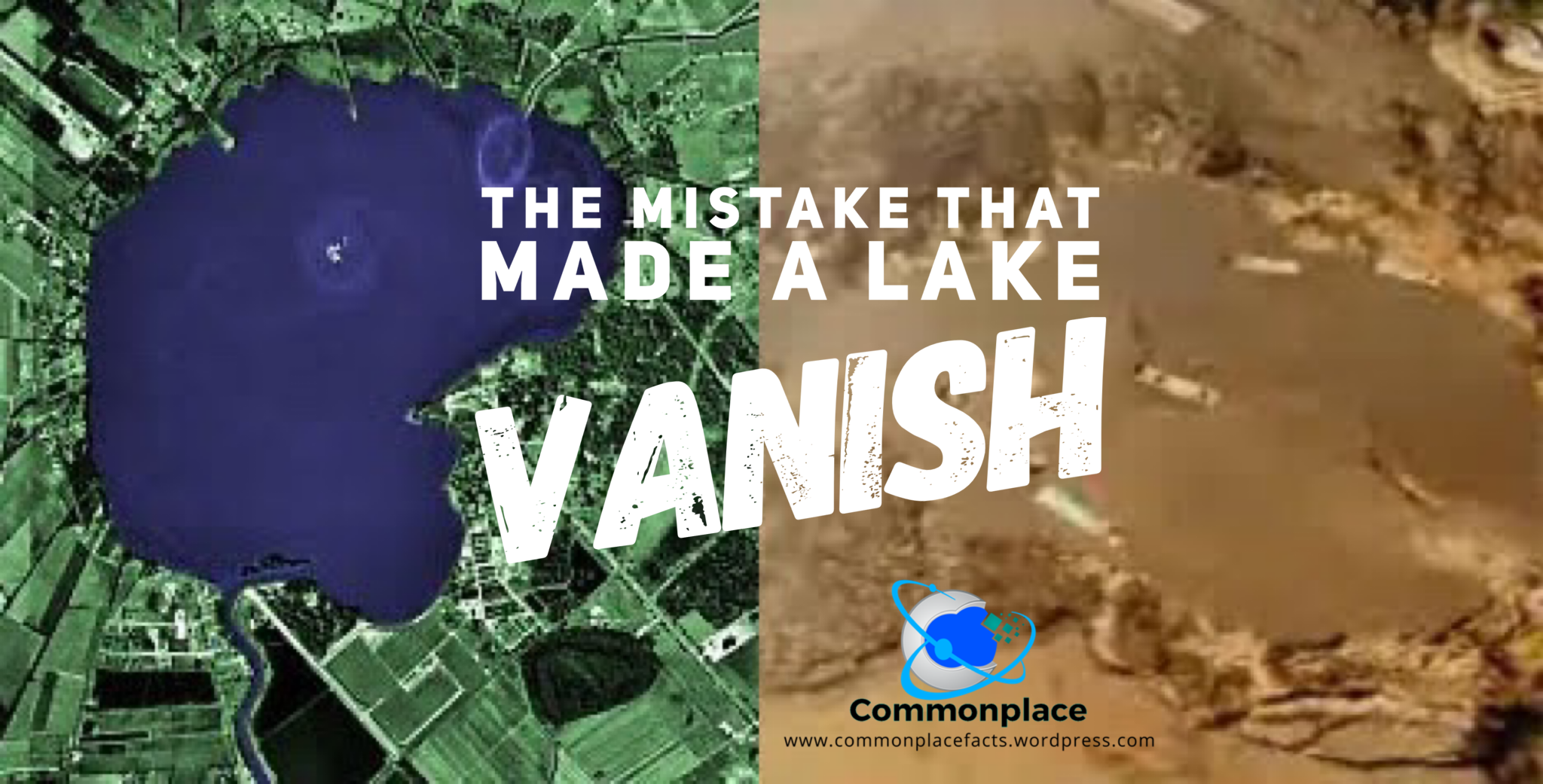

What Happened to Lake Peigneur?
Prior to 1980, there was little about Lake Peigneur of particular interest. The 1,300-acre freshwater lake near New Iberia, Louisiana was only 11 feet deep and attracted its share of fishing enthusiasts, but little else. All of that changed in the span of three terrifying hours when Lake Peigneur disappeared.
This wasn’t a carefully planned erasure of a natural wonder, such as the erasure of one of the largest waterfalls in the world. This was an accident that no one saw coming.
The tranquility of Lake Peigneur belied the bustle of activity under the lake itself. Since 1919, the Diamond Crystal Salt Company had been mining salt from the mines below the lake. Where you find salt, you will frequently find oil. For that reason, the Texaco oil company started drilling on and around the lake, looking for oil deposits.
On November 20, 1980, crew members working on a drilling site ran into difficulty. With the drill just past 1,200 feet, it seized up. As they worked to free the mechanism, they heard loud popping sounds, immediately followed by the horrifying sight of the oil rig beginning to tip.
The men wisely evacuated the oil rig. No sooner did they get to shore than they witnessed the seemingly impossible. The 150-foot oil rig disappeared into a lake whose waters were supposed to be less than 11 feet deep.
Meanwhile, some 1,500 feet below, Junius Gaddison, an electrician working in the salt mines, heard a sound that should not exist in that setting: rushing water. In a nearby corridor, Gaddison saw water, already knee-high and rising rapidly. He sounded the alarm, signaling 55 miners to evacuate as soon as possible. Miraculously, all of the workers made it to the surface in safety. Less fortunate were three dogs who were lost to onslaught of rushing water.
On the surface, the amazed oil rig workers watched as an enormous whirlpool formed around the former location of the oil rig. The whirlpool grew to more than a quarter of a mile in diameter as water poured into the underground mine. The relentless power of the water swallowed another drilling platform, 70 acres of soil from Jefferson Island, buildings, vehicles, and trees. What started as a 14-inch hole from a drill bit rapidly grew and swallowed 3.5 billion gallons of water.

The enormous sucking force of the whirlpool temporarily reversed the course of the 12-mile Delcambre Canal that linked the lake with the Gulf of Mexico. Eleven barges were pulled into the lake before disappearing into the ever-widening hole.
In three hours’ time, Lake Peigneur was emptied. The water from the canal now flowed unimpeded into the crater. The salty water from the Gulf formed a 164-foot waterfall, the highest in the state of Louisiana. Over the next two days, water continued to flow into the erstwhile lake, filling the salt mine below. One by one, nine of the sunken barges popped back to the surface. Periodic geysers bursts forth, sending sprays of water 400 feet into the air as the compressed air in the mine forced its way to the surface.
As water returned to the banks and the canal resumed its normal course, Lake Peigneur was dramatically different than it had been. What was once a fresh-water lake of 11-foot depth is now a saltwater lake that is 200 feet deep at its maximum. All freshwater-compatible plant and animal life was wiped out, replaced by saltwater species previously unseen in that part of the state.
Officially, the cause of the disaster remains unknown, since all of the evidence was wiped out in the swirling vortex of entropy. The Mine Safety and Health Administration released a report (available to view here) on the disaster in August 1981. The report exhaustively documented the event but stopped short of identifying an official reason for the disaster. Texaco and the drilling contractor Wilson Brothers paid $32 million to Diamond Crystal and $12.8 million to a nearby botanical garden and plant nursery, Live Oak Gardens, in out-of-court settlements. to compensate for the damage caused.
You may also enjoy…

The Famous Ship That Was Named By Mistake
One of the most magnificent passenger liners of the 20th century was the RMS Queen Mary. Its name became synonymous with luxury travel. Its name was also a mistake. Construction on the ship started in 1930. The Cunard Line wanted it to be the flagship of the industry, establishing the highest standards in all categories.…

Broken Arrows: At Least 32 Times Someone Said Whoops With a Nuke
Discover the shocking history of Broken Arrows—nuclear weapon accidents that almost changed the world. From lost bombs to near detonations, explore 79 nuclear mishaps, their causes, and how close we came to disaster. Read more at Commonplace Fun Facts!

Lake Karachay: An Hour at The World’s Most Polluted Lake Will Kill You
Find out why an hour spent in Russia’s Lake Karachay will kill you. This is the incredible story of the most polluted lake in the world.




Leave a Reply