
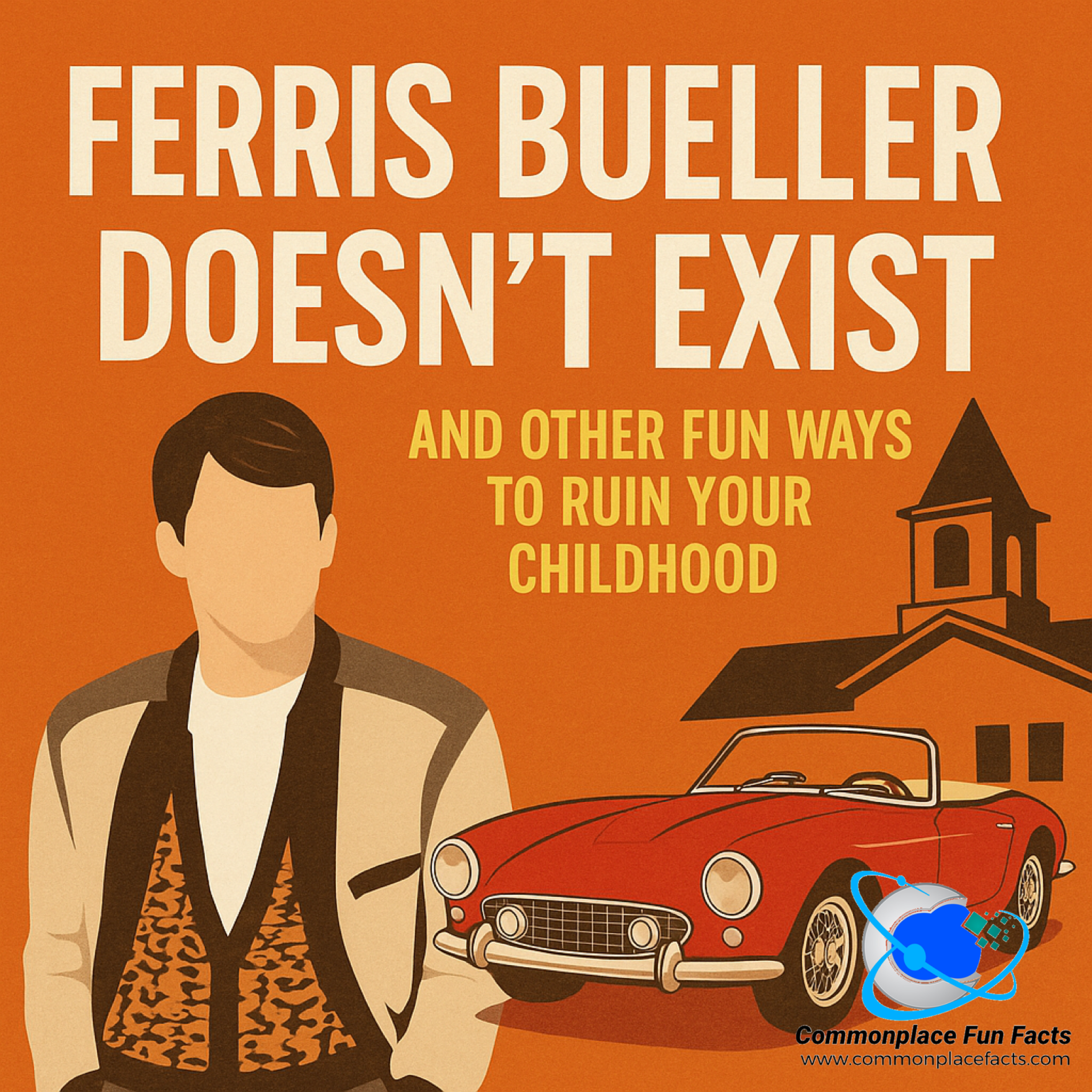

If you were a teenager in the 1980s, chances are your two greatest goals in life were: (1) to avoid homework at all costs, and (2) to become Ferris Bueller. He was everything you weren’t—cool, confident, a one-man rebellion against authority who managed to pull off a full-scale musical number in downtown Chicago while somehow avoiding both traffic and truancy officers.

But what if we told you Ferris never actually existed?
Yes, we know he’s a fictional character; it’s not like Ferris Bueller’s Day Off was a docudrama about an actual person. What we’re saying is that perhaps even within the scope of the movie itself, Ferris wasn’t really there.
No, this isn’t another depressing reboot or gritty Netflix remake. It’s a fan theory that’s been quietly lurking on the internet for years, just waiting to shatter your childhood like Cameron’s dad’s Ferrari. According to this idea, Ferris Bueller is nothing more than a figment of Cameron Frye’s stressed-out, emotionally repressed imagination—a fantasy created by a deeply anxious teen to help him survive the worst mental health day since Hamlet invented sword-fighting therapy.
It’s weird. It’s wild. And, honestly? It kind of makes sense. Let’s dig into the theory that turns Ferris Bueller’s Day Off into the most upbeat psychological breakdown in cinematic history.
Contents
Meet Ferris Bueller: Cameron’s Spirit Animal?
Let’s start with the evidence. Ferris Bueller is, by all accounts, kind of too good to be true. He’s got charisma, looks, a girlfriend who’s somehow not annoyed by his nonstop hijinks, and the entire city of Chicago practically cheering him on as he parades through downtown in a vest that screams, “I make questionable life choices, and I do them with flair.”
Meanwhile, Cameron is a walking pile of anxiety in khakis. He spends most of the movie pale, whispering things like “I’m dying,” and talking about his father’s car like it’s a religious relic. Their personalities are so diametrically opposed, you half expect them to be played by the same actor in a Parent Trap-style split screen.
Ferris: The Cure for Bedridden Ennui?
When we first meet Cameron, he’s in bed, sick — or, more accurately, “sick.” He looks like he’s lost an argument with a toaster, and it’s pretty clear this isn’t the flu. It’s depression, burnout, and years of emotional neglect wrapped in a comforter.
Enter Ferris. Or… imagine Ferris entering.
What if Cameron created Ferris as the embodiment of everything he wishes he could be? Ferris gives him purpose, a mission, and a chance to get out of the house and into a bright, sunny Chicago where adventure awaits, and life isn’t a never-ending parade of emotional constipation. In other words, Ferris is the imaginary pep talk Cameron desperately needs, just with better hair and a suspicious amount of plot armor.
The Ferrari Incident: Therapy by Sports Car
Let’s talk about the Ferrari. Ah yes, the 1961 Ferrari 250 GT California — a car so sacred to Cameron’s father, it might as well have its own security detail and shrine. Ferris, the charming devil-may-care rascal, insists on taking it out for a joyride. Cameron protests, but eventually caves — perhaps because, you know, he’s arguing with himself.
And then comes the moment. The Big Scene. Cameron, finally snapping, destroys the car. It’s not just a tantrum. It’s a catharsis. Years of repressed rage, daddy issues, and self-loathing get channeled into that single moment of vehicular annihilation. Ferris stands back — supportive but oddly passive — as Cameron declares he’s ready to take a stand and face the consequences. The imaginary friend’s work is done.
The Case for Dissociative Wish Fulfillment
This theory hinges on the concept of dissociation — the psychological trick the brain plays when reality is just a bit too much to handle. Cameron, trapped in a house of emotional ice and ignored by his parents, creates a vibrant alter ego who lives in the moment, never stresses, and sees life as a big adventure.
Think of Ferris like Cameron’s version of what therapists call a “coping mechanism,” except instead of deep breathing and journaling, it involves crashing a Ferrari and hijacking a parade float. Tomato, tomahto.
But What About Sloane and Rooney?
Ah yes, the plot holes. If Ferris is imaginary, how do you explain Sloane? She interacts with both Cameron and Ferris. Then again, we’re in the realm of unreliable narration here. Maybe she’s real, and Cameron’s projecting Ferris into their shared interactions. Or maybe she’s also imaginary. Or maybe Ferris is real but so incredibly Ferris that he feels imaginary. Like a guy who only exists when the camera’s watching.
Principal Rooney, on the other hand, could represent the authority figure that threatens Cameron’s rebellion. He’s the embodiment of the adult world trying to drag him back into conformity and fear. That he’s cartoonishly incompetent is, frankly, just the cherry on top of this theory sundae.
John Hughes: Dreamweaver or Master of Psychological Subtext?
Is this what director John Hughes intended? Almost certainly not. Hughes himself described Ferris as “the person I always wanted to be.” But as any English major on their third coffee of the day will tell you: authorial intent is optional. It’s not what the creator meant — it’s what we can spin into a plausible-sounding TikTok theory.
So no, we’re not claiming this theory is canon, but is it any less plausible than the theory that almost all of the television and movie characters you know are all part of one boy’s imagination? Isn’t it kind of fun to think that underneath the quirky 80s comedy about skipping school lies a psychological drama worthy of Freud, Jung, and probably Dr. Phil if he got bored?
Final Thoughts: Is Ferris Just Cameron’s Daydream?
So, is Ferris Bueller just a figment of Cameron Frye’s imagination? Maybe. Maybe not. But the theory does add a surprising layer of psychological depth to what’s otherwise a high school fever dream of ditching class, dodging authority, and dancing on parade floats. Viewed through this lens, the film isn’t just about playing hooky—it’s about finding the courage to take control of your own life, even if you have to invent someone cooler to show you how.
Whether Ferris is real, imaginary, or simply the physical embodiment of 1980s wish fulfillment, one thing’s certain: he helped Cameron stand up, speak out, and finally stop letting his dad’s car (and possibly his dad) control his every move. Not bad for a guy who might not exist.
And if nothing else, it gives you a great excuse to rewatch the movie—this time with a slightly more suspicious eye and a lot more armchair psychology. Just don’t crash any Ferraris in the process.
You may also enjoy…

How One Snow Globe Unraveled TV Reality: The Mind-Bending Tommy Westphall Universe
In the world of entertainment, spin-offs create interconnected universes, such as the Marvel Cinematic Universe. The finale of St. Elsewhere suggests its entire narrative was a figment of a character’s imagination, spawning the Tommy Westphall Universe Theory. This theory connects over 400 shows, proposing they exist within one character’s active imagination.

Simulation Theory 101: Are We Living in a Simulation?
Explore the fascinating Simulation Theory, backed by Elon Musk and Nick Bostrom, which questions whether our reality is a computer-generated illusion. Dive into the science, philosophy, and tech advancements that suggest we might be living in a simulation.

Why Do Movies Insist that Similarities to Real People Are Purely Coincidental?
Why do movies always insist that similarities to real people are purely coincidental? Learn about the movie and the controversy that started it all.


Leave a Reply