
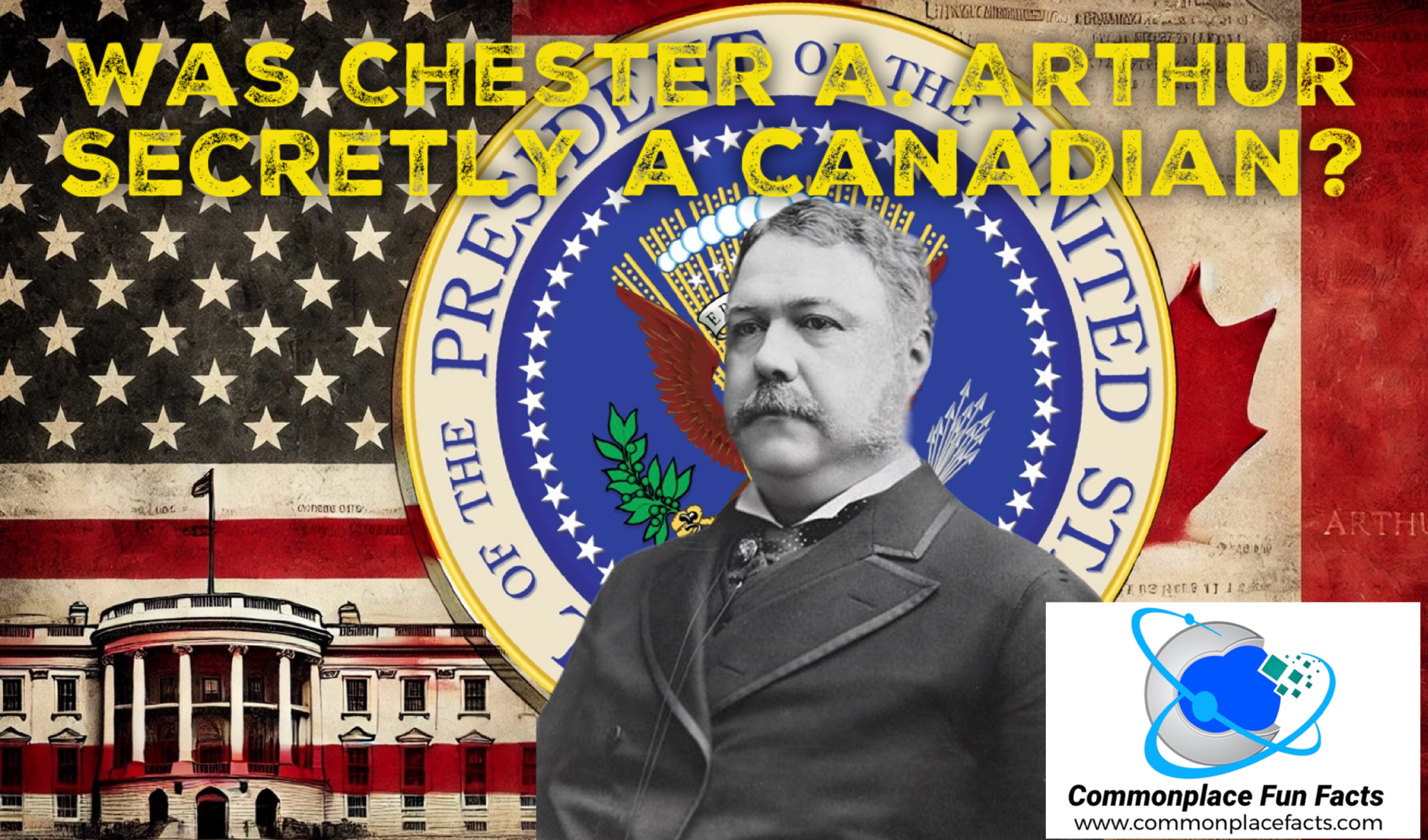

The First Birther Controversy
It wouldn’t be the election season without some fresh conspiracy to contemplate. How about a theory that the President of the United States is unqualified to hold office? I know… every election seems to have at least one candidate with questionable qualifications. Still, we’re not talking about someone who lacks the intelligence, grace, or wisdom to do the job. I’m referring to a candidate who doesn’t meet the minimum requirements under the Constitution.
Admittedly, the Constitutional requirements are pretty sparse: the individual must be at least 35 years old, a natural-born citizen of the United States, and have been a resident of the United States for at least 14 years. In retrospect, it might have been a good idea to include a word or two about intelligence, but it would seem the Founders took some things for granted.
Even the issue of being a natural-born citizen posed some questions. Any of those powdered-wig-wearing gents who had presidential dreams might have found themselves in a bit of a pickle if they took a literal approach to the phrases “natural born citizen of the United States” and “resident of the United States for fourteen years.” The Constitution didn’t become the law of the land until 1789. That means that anyone old enough to run for president at that time would’ve been born a British citizen. On top of that, in 1789, the United States was only a teenager—thirteen years old, to be exact. The idea of anyone being a resident for fourteen years was out of the question, unless, of course, they had a time machine. In other words, the Constitutional requirements were interpreted a bit loosely for the first few elections. It wasn’t until the eighth president, Martin Van Buren (born 1782), that we had a president who was born after the Declaration of Independence. From that point forward, the Constitutional requirements seemed pretty cut and dry.
Imagine, therefore, what would happen if questions were raised about the qualifications of the primary inhabitant of the White House. Suppose someone were to start a rumor that the chief executive was not a natural-born citizen? What if those rumors persisted to the point where people began to wonder if there was any truth to the claims?
If you’re thinking that we’re talking about the Birther Controversy surrounding the qualifications of Barack Obama, think again. More than 125 years before rumors began to swirl that Obama was born outside of the USA, one of his predecessors had to deal with the country’s first Birther Controversy.

It was back in December 1880. When Vermont was best known for maple syrup, picturesque snowfalls, and the occasional moose sighting, Arthur P. Hinman rolled into the sleepy little town of Fairfield. Hinman wasn’t just any traveler looking to sample the local pancakes; Hinman was a man with a mission. Ostensibly, he was there to gather material for a biography of the Vice President-elect, Chester Alan Arthur. His alibi sounded innocent enough, but like any good Victorian mystery, there’s a twist. According to The New York Times, this wasn’t just a literary endeavor. In reality, Hinman was on a covert operation to expose a scandalous secret: that Chester A. Arthur wasn’t born in the good ol’ U.S. of A. Initially, he claimed that Arthur was born in Ireland. When that rumor failed to gain traction, he tried again, citing the frosty climes of Canada as the place of his birth.
Remember this was Vermont in the 1880s. How does one go about proving his status as a natural-born citizen? You might as well try to prove you hadn’t been kidnapped and replaced by a doppelgänger. Let’s face it, the stakes were high. If Hinman’s claims proved that Arthur was indeed Canadian-born, it could have upended the entire political landscape, rendering Arthur ineligible for the Vice Presidency—and, by extension, the Presidency, should anything unfortunate happen to President Garfield (spoiler alert: something unfortunate did happen just a few months later.)
Hinman’s investigation, as the rumor mill would have it, was allegedly instigated by the Democratic Party. After all, what better way to dethrone a political opponent than to suggest he wasn’t even eligible to sit on the throne in the first place? It’s like discovering that your rival for prom king isn’t even a senior but a sophomore who somehow fudged his birth certificate. Or, if this writer is going to draw on a more realistic analogy, it’s like discovering that your rival for the Chess Club chairmanship was, in reality, a football player.
Chester Arthur was an anomaly in more ways than one. He was the third U.S. president to have a foreign-born parent (aside from the first presidents, whose parents were born as British subjects). His father, William Arthur, hailed from Ireland. While the Arthur family did spend time in the area, even venturing across the border into Canada for William’s work as a teacher and clergyman, there was no concrete evidence that Chester was born anywhere but in Vermont. Even so, the mere possibility of a Canadian birth was enough to send political opponents into a frenzy. Imagine the headlines: “Scandal Rocks Nation—President May Be a Canuck!”
Rumors about Arthur’s birthplace had been circulating for months before Hinman began his investigation. When James Garfield was assassinated just a few months into his term, Arthur—his Vice President—was thrust into the presidency. It didn’t take long for the New York Sun to dive headfirst into Arthur’s personal history, publishing a feature that questioned the “suspicious conditions” of his birth. As if being president wasn’t stressful enough, Arthur now had to contend with allegations that he might not be American enough for the job.

To make matters even more confusing, there was the issue about Arthur’s date of birth. Officially, he was born on October 5, 1829. At some point, Arthur began claiming he was born in 1830. Why would he change the date? The reason, according to his detractors, was to perpetual a massive coverup.
In their investigative zeal, reporters for the Sun conducted interviews with residents from various Vermont towns where the Arthur family had allegedly lived. One of the key testimonies came from Dr. C. L. Case, a well-respected citizen of Brandon, Vermont, who remembered the birth of a boy named Arthur in either 1829 or 1830. However, the confusion over the baby’s middle name — it was either Abell or Alan — only added fuel to the conspiracy fire. Some locals believed that Chester Abell Arthur was the child born in Vermont, who tragically died in infancy, and that his Canadian-born brother, Chester Alan Arthur, assumed his identity around 1832. Say what you will about Arthur, but he brought identity theft to the public consciousness long before the cyber age.
After all the dust settled, the Sun concluded that the rumors were baseless. There was no solid evidence to suggest Arthur had been born abroad, nor was there any proof of a conveniently deceased brother. The newspaper confidently declared, “The whole case is conclusively settled. The controversy over the birthplace of the man who last November was elected Vice-President is disposed of. President Arthur was born in the State of Vermont.” Case closed—or so it seemed.
“While I don’t mean to say anything about my birthplace, whether it was in Canada or elsewhere, still, if I should get to going about the secrets of the campaign, there is no saying what I might say to make trouble between now and the 4th of March.”
-Chester A. Arthur
What is the point of a good conspiracy theory if it can be so easily dismissed? That’s where things get even more interesting. While Chester Arthur may have been truthful about his birthplace, he wasn’t exactly a stranger to bending the truth when it suited his political or social needs. According to historian Thomas C. Reeves in Gentleman Boss: The Life of Chester Alan Arthur, during the 1880 election, the Democrats were relentless in their efforts to discredit Arthur. They didn’t just stop at questioning his birthplace; they also painted him as the ultimate political villain—a “prince of spoilsmen” and a ballot-box stuffer whose every move needed to be monitored like a hawk watches a mouse. Clearly, the mudslinging campaigns we see today have deep historical roots.
During this time, Arthur found himself in the middle of a Republican civil war, caught between two feuding factions: the Stalwarts, led by New York Republican powerhouse Roscoe Conkling, and the Half-Breeds, who championed civil service reform. Arthur, a loyal Stalwart and beneficiary of New York’s Republican “machine,” had climbed the political ladder through social connections and strategic favors. By the time the 1880 Republican National Convention rolled around, Arthur’s ties to New York and his Stalwart allegiance made him the perfect candidate for the vice-presidential slot, balancing out the ticket with the more moderate James Garfield. It was a match made in political heaven—at least on paper.
Once in office, however, Arthur surprised everyone by supporting civil service reform, much to the dismay of Conkling and his old Stalwart pals. He wasn’t one for flashy politics, preferring to stay behind the scenes and focus on organizing campaign rallies and fundraising efforts. It’s probably why most political players didn’t take the birthplace rumors seriously—they were too busy dealing with the actual political battles of the day to worry about whether Arthur was secretly Canadian.
Despite the persistent rumors, Arthur never directly addressed the speculation. Well, not exactly. In a speech following the 1880 election, as reported by the Times on February 12, 1881, Arthur allegedly teased his audience by saying, “I don’t think we had better go into the minute secrets of the campaign, so far as I know them… while I don’t mean to say anything about my birthplace, whether it was in Canada or elsewhere, still, if I should get to going about the secrets of the campaign, there is no saying what I might say to make trouble between now and the 4th of March.” Was he speaking in jest or giving a clue about a real conspiracy?
As for Hinman, the man with the Canadian conspiracy, he eventually gathered enough “evidence” to publish a book in 1884 titled How a British Subject Became President of the United States. The book was less a historical account and more a political screed, filled with dubious claims about Arthur’s identity and the credibility of those who remembered his birth. By then, though, Arthur was no longer a significant political threat. He decided not to seek his party’s nomination in 1884, leaving the field open for James Blaine, who ultimately lost the election to Grover Cleveland.
Even after Arthur’s death in 1886, the rumors about his birthplace lingered like a persistent cold. In 2009, Associated Press journalist John Curran revisited the case, traveling to Vermont to investigate the available documents. While earlier researchers had debunked the Canadian theory, Curran noted that no conclusive evidence proved Arthur’s Vermont birth either. It didn’t help that the plaque at Arthur’s grave displays the incorrect date of 1830 as his date of birth. In the end, the truth about Chester Arthur’s origins may forever remain a tantalizing mystery.
But one thing’s for sure: the tactic of questioning a candidate’s birthplace is a time-honored tradition in American politics. Whether it’s the 19th century or the 21st, there will always be those who seek to undermine their opponents by sowing seeds of doubt—sometimes even creating a foreigner out of thin air.

The Tartarian Empire: The Internet’s Favorite Lost Civilization That Wasn’t
Explore the Tartarian Empire theory, from old maps and real Tatar history to mud floods, grand architecture, and internet pseudohistory.

Albert K. Bender: The UFO Investigator Who Helped Create the Men in Black Legend
Albert K. Bender founded one of the first UFO investigation groups, tried to contact aliens by telepathy, and helped launch the Men in Black legend.

“Louie Louie”: Why the FBI Investigated Rock-and-Roll’s Most Mumbled Song”
In 1964, the FBI investigated “Louie Louie” for obscenity, only to conclude that The Kingsmen’s garbled lyrics were officially unintelligible.



Leave a Reply