

Do you know someone who is perpetually dissatisfied with the government, complains about everything politicians do, and firmly believes the country is going to the dogs? Someone who can turn an innocent conversation about the weather into a lengthy denunciation of the people running the country?
Congratulations. You know a grumbletonian.
It’s a delightful word that deserves a comeback, particularly since modern civilization has provided grumbletonians with cable news, social media, and the ability to complain to complete strangers on the other side of the planet without ever leaving their recliners.
Contents
What Is a Grumbletonian?
A grumbletonian (pronounced grum-bul-TOH-nee-un) is a habitual complainer, particularly someone who is constantly dissatisfied with politics, government, or the general state of affairs.
It’s not merely someone who occasionally voices a legitimate grievance. We all do that. A genuine grumbletonian has elevated dissatisfaction from an occasional activity to something approaching a full-time occupation. If things are bad, he complains. If things improve, he complains that they haven’t improved enough. If everything is going perfectly, he becomes suspicious and demands to know who’s responsible.
The word sounds like it ought to describe a resident of Grumbleton, a fictional community where the sun never shines quite properly, the tea is always the wrong temperature, and the traffic lights seem to conspire against you.
That place already has a name: Valparaiso, Indiana.
When Complaining About the Government Became a Political Identity
The term dates to seventeenth-century England, when political arguments were conducted through pamphlets, speeches, and heated conversations rather than television networks populated by people who apparently receive bonuses for interrupting one another.

During the latter part of that century, English politics featured a loose division between the Court party, associated with the government and its supporters, and the Country party, which included critics of the administration and its exercise of power. These divisions were sufficiently memorable that historian Thomas Babington Macaulay would later describe the political opposition as people who were sometimes called grumbletonians and sometimes honored with the considerably more respectable designation of the Country party.
Supporters of the Court party sometimes dismissed their opponents as “grumbletonians,” suggesting that their objections had less to do with noble political principles and more to do with being unhappy about who held the desirable government positions.
In other words, the people in power accused their opponents of complaining simply because they weren’t the people in power. Considering that this particular accusation remains a staple of modern political discourse, we can safely conclude that nearly 350 years of political development have accomplished remarkably little in that department.
English already had a fine assortment of colorful political insults, although it would take another couple of centuries for Americans to contribute such masterpieces as “snollygoster,” a wonderfully descriptive word for an unprincipled politician. Apparently, criticizing public officials has always inspired some of humanity’s finest linguistic creativity.
The expression was sufficiently familiar to appear in a slang dictionary published in 1699, which defined grumbletonians as malcontents unhappy with the government because they wanted an official position or had lost one.
Even the word’s elaborate ending appears to have been part of the joke. It echoed names such as Muggletonian and Grindletonian. Sadly, these do not refer to fringe student groups at Hogwarts School of Witchcraft and Wizardry. Instead, they were associated with religious movements of the period. By complaining about that, however, we run the risk of being labeled as a grumbletonian.
From Political Malcontents to Everyday Grumps
Eventually, grumbletonian escaped the confines of politics and became a more general description of someone who complained incessantly.
In Oliver Goldsmith’s 1773 comedy She Stoops to Conquer, the character Tony Lumpkin refers to his unpleasant stepfather as “the old grumbletonian.” By then, the term was useful for describing an ordinary household grouch, even one who wasn’t particularly interested in parliamentary affairs.
Francis Grose’s Dictionary of the Vulgar Tongue, in its 1811 edition, defined a grumbletonian as someone who was perpetually dissatisfied and complained about the times or the government.
Unfortunately, the word gradually fell out of everyday use. The people it described, however, continued to flourish. In fact, modern technology has allowed them to become more productive than anyone in seventeenth-century England could possibly have imagined.
A Word Whose Time Has Come Again
There is something wonderfully reassuring about discovering that people were complaining about government incompetence, political favoritism, and the general deterioration of civilization centuries before the invention of cable television.
Our ancestors didn’t have Twitter, Facebook, or twenty-four-hour news coverage. Nevertheless, they somehow managed to maintain an impressive supply of political outrage using little more than newspapers, coffeehouses, and their own inexhaustible reserves of indignation.
Perhaps it’s time to restore grumbletonian to everyday English. It’s considerably more elegant than “chronic complainer,” less confrontational than many modern political insults, and has the added advantage of making the person using it sound like an eighteenth-century aristocrat who has just discovered something deeply unsatisfactory about Parliament.
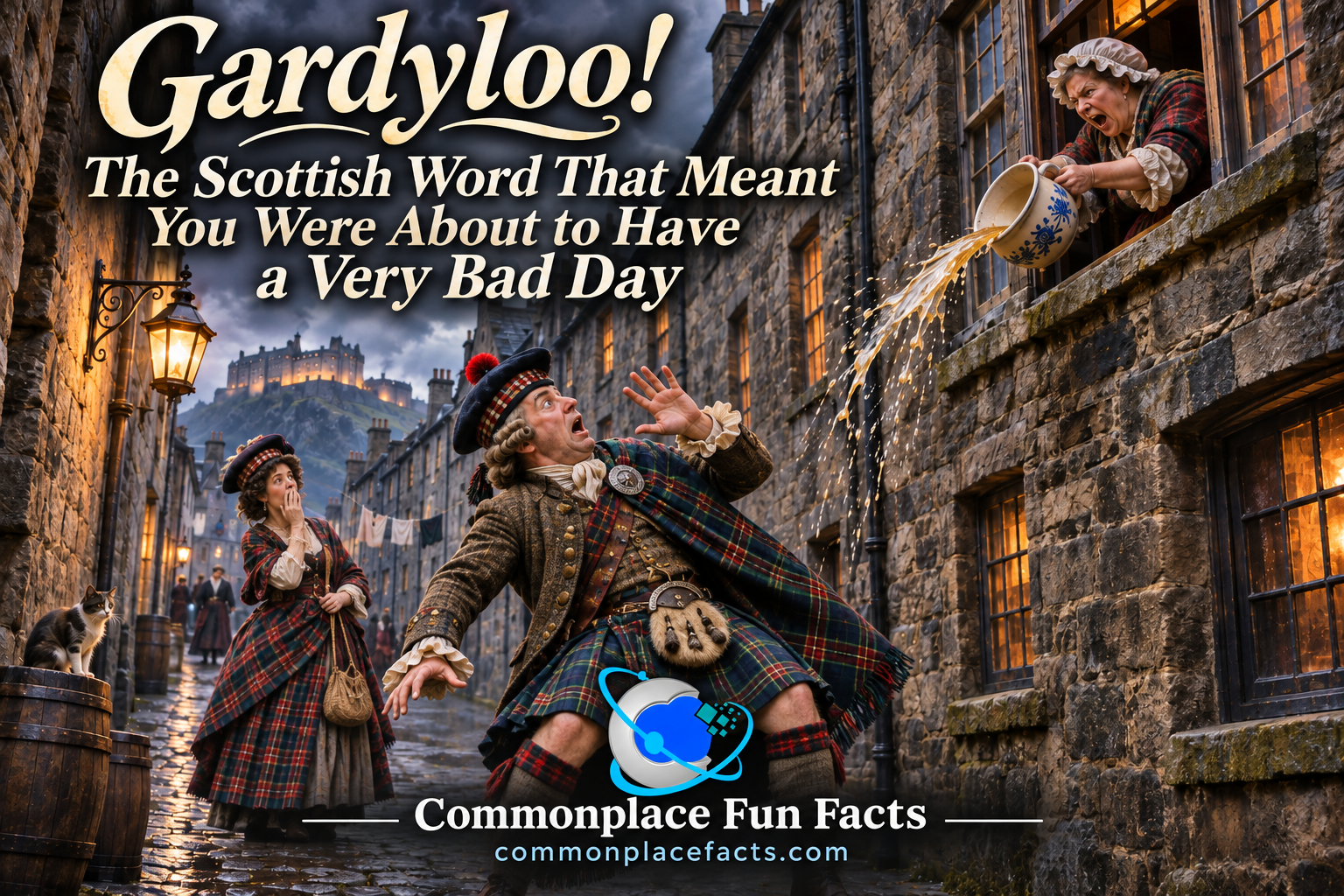
And grumbletonian is hardly the only forgotten expression deserving renewed attention. The English language has a remarkable collection of words whose meanings have changed dramatically over the centuries. Other expressions, such as the Scottish warning “gardyloo,” remind us that our ancestors possessed a colorful vocabulary for situations modern civilization has mercifully eliminated.
Of course, some people will undoubtedly object to bringing back an obsolete word when perfectly serviceable modern expressions already exist. They’ll complain that it’s too long, too difficult to pronounce, or simply unnecessary.
Those people are grumbletonians.
You may also enjoy…

Gardyloo! The Scottish Word That Meant You Were About to Have a Very Bad Day
In eighteenth-century Edinburgh, hearing someone shout “Gardyloo!” meant you had seconds to get out of the way. Discover the forgotten Scottish word that warned pedestrians of an unpleasant delivery from the windows above—and why modern plumbing deserves considerably more appreciation.

Words That No Longer Mean What They Used To
Everyone reading this is a girl. You lived much of your life in the Matrix. You’re really not all that fantastic; in fact, you’re really quite awful. Even before you were born, you were naughty and artificial, and you will never be too old to wear a diaper. Consider this, as you drink defecated water.…

15 Obsolete English Words That Deserve a Comeback
Discover funny obsolete English words like ultracrepidarian, mumpsimus, slubberdegullion, fudgel, apricity, and more—forgotten vocabulary that deserves a comeback.
Leave a Reply