
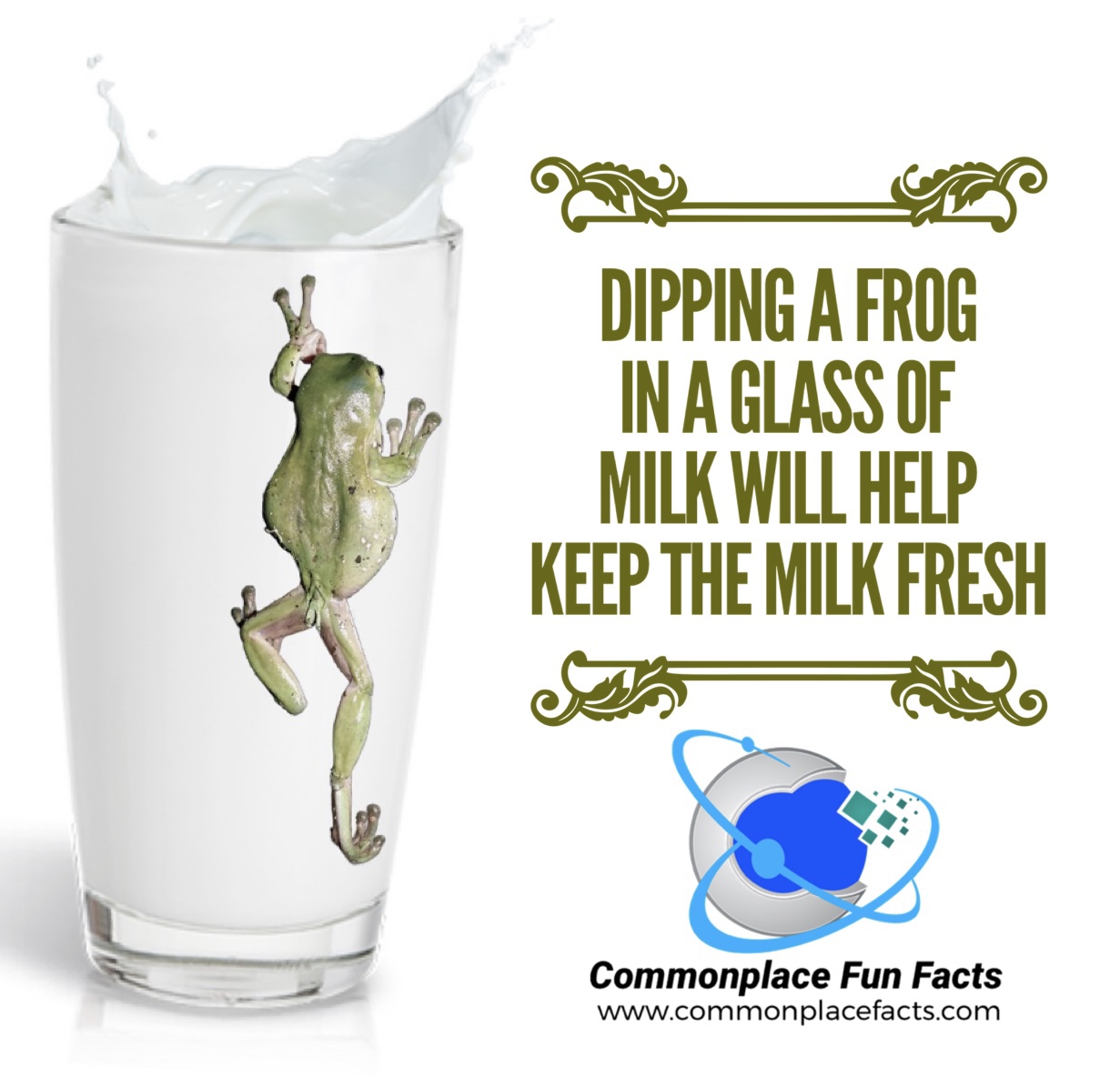

Frogs: The Unlikely Superheroes in the Quest to Keep Milk Fresh
We are beginning to believe frogs may be the true superheroes of the natural world. We have previously documented their amazing powers of levitation, and times when it literally rained frogs on two cities. True, they are responsible for a bunch of kids getting salmonella after trying to turn a frog into a prince with a kiss, but recent studies show they may be making up for that mischief with incredible curative powers that can even help extend the life of milk.
The Surprising Connection Between Frogs and Fresh Milk
A 2012 study by scientists in Moscow identified 76 peptides in the secretions of common frogs (Rana temporaria). They determined that many of the secretions are a natural source of antibacterials. This is encouraging news among medical researchers who are always looking for new ways to combat drug-resistant bacteria. The findings also elicited a buzz of excitement within the community of folklore aficionados.
A common belief in Russia and Finland has been that frogs can be used to keep milk from going bad. This belief has been met with skepticism and dismay among those who consider themselves better educated. Note, for example, the manner in which the practice is described and dismissed in this article from the 1876 Country Gentleman’s Magazine:
At the Dairy Fair held at Sinclairville, Chautauqua County, New York, October last, Alexis Elisheff, a young gentleman from Russia read a paper giving some information concerning the progress of dairying in Russia According to this writer, dairying among the peasants has been conducted in a very rude manner. For instance, the peasant, he says, has a way of cooling milk with frogs. He keeps a number of small frogs in his dairy cellar for the purpose of putting into his milk. His idea is that cold creatures will take the heat out of milk, and so he puts them in to keep milk sweet longer. Somewhat recently, however, the Government has established schools for educating persons in dairy management, and rapid progress is being made under teaching.
Why Frogs in Milk Worked for Centuries
The practice seems to stem from Russian folklore about two frogs falling into a milk container. One of the frogs gave up and drowned. The other frog, fueled by a tenacious desire to succeed, continued to swim throughout the night. By morning, the frog’s efforts were rewarded when the churned milk transformed into solid butter, allowing the frog to jump to safety.
Certainly, frogs and milk were not strangers to each other. Those who tried to keep milk chilled by putting milk cans in rivers and streams would frequently have to remove frogs that found their way inside. Although this may cause many of us to shudder in revulsion, the milk was rarely any worse for the amphibian swimming session.
The 2012 study on frog secretions found that the ability of frogs to inhibit harmful bacteria through peptides was at least equal to that reported for some antibiotics.
Keep this helpful bit of Russian folklore in mind as the holidays approach. If your refrigerator’s capacity is stretched to its limits with leftovers, make space by leaving your milk unrefrigerated. Just be sure to keep a healthy supply of frogs on hand and start dunking your frog, rather than your cookie.
You may also enjoy…

When the Chief Justice Got the Presidential Oath Wrong, a 13-Year-Old Girl Called Him Out
In 1929, Chief Justice William Howard Taft botched Herbert Hoover’s presidential oath. A 13-year-old girl caught the mistake and wrote to correct him. Taft insisted she was wrong about how he’d gotten it wrong. Unfortunately for Taft, someone had recorded the whole thing.

Old-Time Radio Horror: When Your Imagination Did the Special Effects
Explore the terrifying world of Old-Time Radio, where shows like Inner Sanctum, Suspense, Lights Out, and Quiet Please proved that a creaking door, a few footsteps, and an active imagination could be scarier than anything Hollywood could put on a screen.

E-COM and NetPost: When the Post Office Looked at Email and Asked, “Could We Make This Slower?”
When email made written communication nearly instantaneous, the U.S. Postal Service had an idea: print those electronic messages, stuff them into envelopes, and deliver them the old-fashioned way. Discover how E-COM and NetPost turned technological progress into an exercise in paper, postage, and bureaucratic ingenuity—twice.




Leave a Reply