
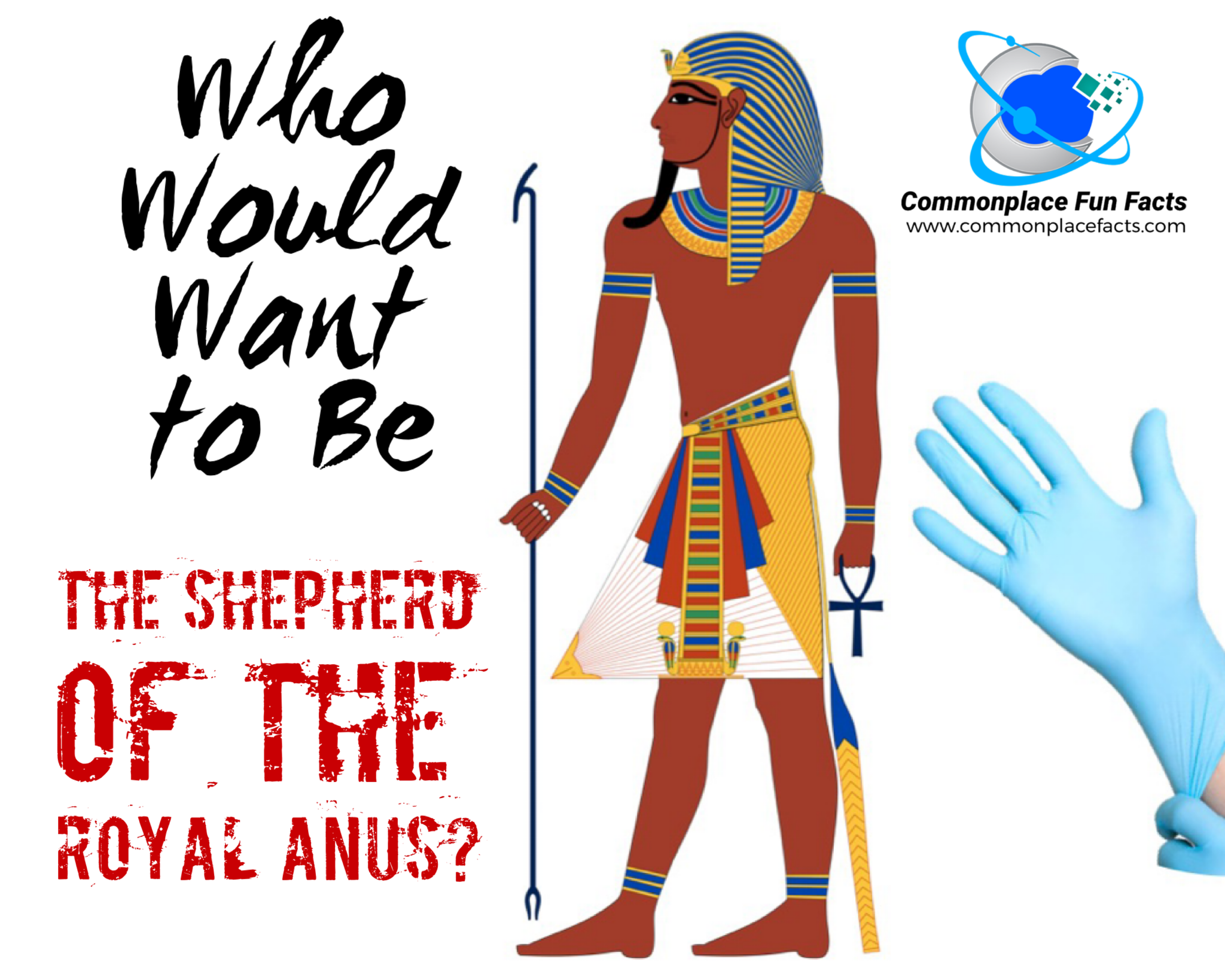

Help Wanted: Shepherd of the Royal Anus
What is the weirdest job you could list on your resume? It probably doesn’t hold a candle to “Shepherd of the Royal Anus.” Despite what you may think, having that job was an honor and not the butt of anyone’s jokes.
Unusual Jobs in Ancient Egypt
The medical practices of ancient Egypt were woven into the priesthood and were highly specialized. The medical practitioners limited their diagnoses and treatments to one part of the body. Physicians were thus designated as Royal Guardian of the Right Arm, Royal Keeper of the Left Foot, etc.

Bringing up the rear, so to speak, was the Nehru Pehut, which translates as “Shepherd of the Royal Anus. This exalted practitioner was charged with making sure that everything worked out in the end for Pharaoh. As such, he would prescribe and administer rectal medications and enemas.
Historical accounts record several individuals who shepherded assorted royal tushes over the years. Among them were Khufu and his successor Ir-en-akhty, who lived during the First Intermediate Period (2181 BC – 2040 BC).
Learn about Hippocrates’ horrifying method for dealing with hemorrhoids
Khufu was evidently an overachiever and is recorded not only as the Shepherd of the Royal Anus but also the pharaoh’s dentist.
Distressingly, there is not much in the record to tell us what he thought about the practice of handwashing.
You may also enjoy…

Martin Van Buren Was Arguing Cases in Court Before He Was 16
Before he was 16, Martin Van Buren was already arguing cases in court—and once had to stand on a table so the jury could see him.

Britain’s Post Office Cats: The Mousers Who Were Government Employees
Britain’s Post Office cats caught mice, earned maintenance allowances, passed performance reviews, and even became the subject of debate in Parliament.

Grover Cleveland: The President Who Personally Hanged Two Men
Before entering the White House, Grover Cleveland served as a New York sheriff and personally hanged two convicted murderers.





Leave a Reply