
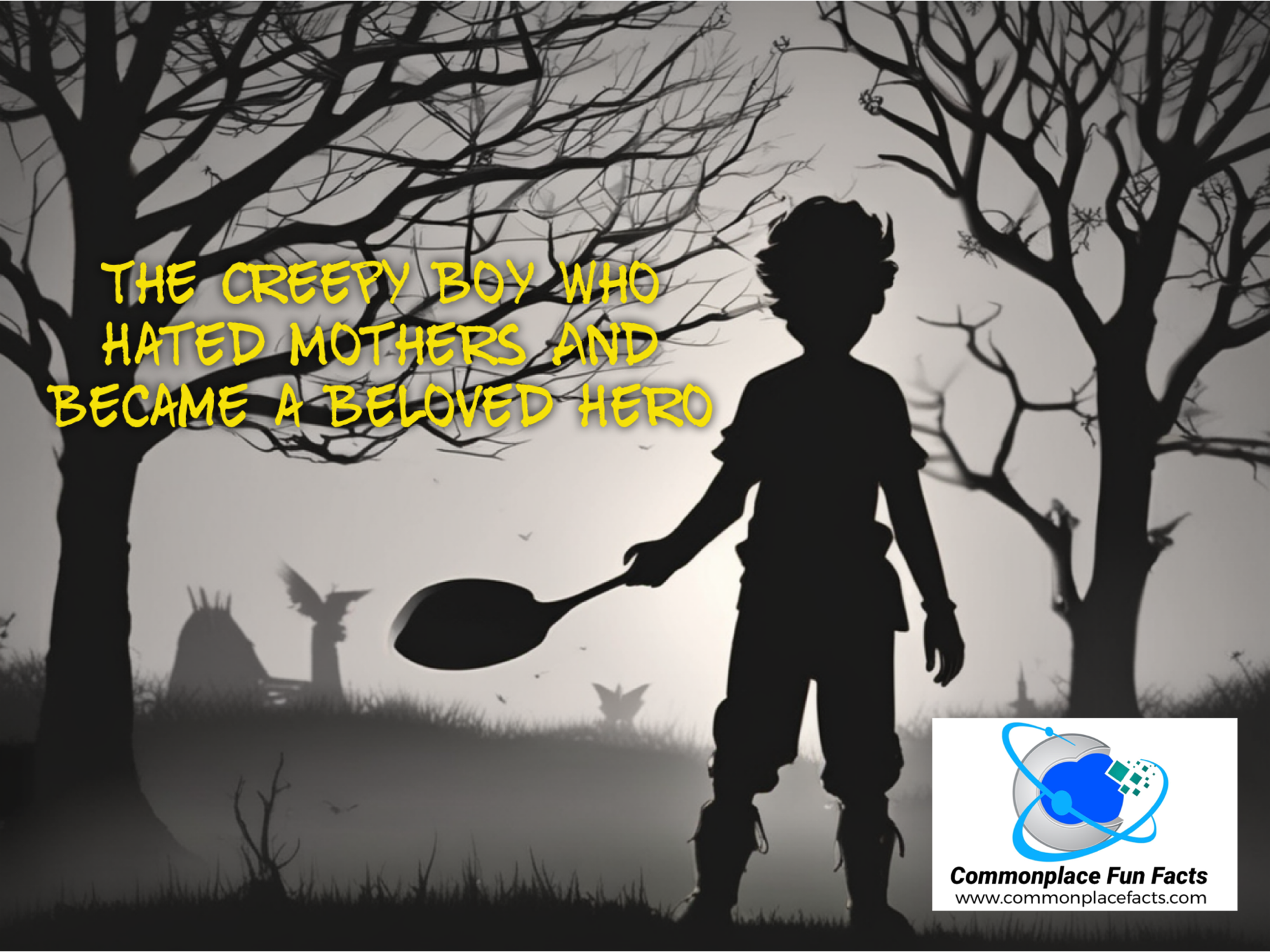

The Demon Boy probably wasn’t the sort of character you’d want impressionable children to emulate. You likely would think twice before featuring him in a bedtime story for a child who is subject to bad dreams. There was virtually nothing of any redeeming value about a Demon Boy who hated mothers.
To be fair, Jimmy didn’t intend the character for children when he created him. The Demon Boy made his first appearance in The Little White Bird in 1902. Jimmy wrote the novel written for an adult audience. It is ominous, dreary, and more than a little creepy.
The Little White Bird is narrated by someone known only as “Captain W.”, an older, solitary man living in London. The story unfolds through a series of loosely connected episodes, focusing on Captain W.’s interactions with a young boy named David.
David is the young son of Mary. As the story evolves, Captain W. gradually becomes a father figure to the boy. Their bond deepens as they embark on imaginative adventures together, with Captain W. sharing fantastical tales, including those of a baby who flew away with the birds, became the mischievous Demon Boy, and learned how to fly.

The tale of the Demon Boy is a story within a story. Captain W. uses him to try to win the affection of young David so he can “completely take him away from [his mother] and make him his own.”
Like we said… more than a little creepy. This is definitely not a children’s story. In fact, we’re not entirely sure why adults would want to read it. When The Little White Bird hit the shelves, the public couldn’t get enough. Specifically, it was the mischievous Demon Boy who they loved and wanted more. Jimmy decided to give them what they wanted.
For the next two years, Jimmy worked on bringing the Demon Boy to life in a play. As he worked with others to prepare the play for production, his quirkiness and strange views about life became increasingly apparent to others on the set. It was his habit, for example, to order Brussels sprouts every day for lunch but leave them untouched. When someone asked him why, he said, “I cannot resist ordering them. The words are so lovely to say.”
Read the tale of two boys and how their fathers’ creations ruined their lives
His working title for the play was “The Boy Who Hated Mothers.” In an early version, he intended the mother and the arch-villain to be played by the same actress. His biographers tell us that the title and the dichotomy with the mother’s character reflected the author’s unresolved psychological issues concerning his relationship with his mother, his two failed marriages, and his inability to father any children of his own.
His complicated relationship with his mother arose from her difficult childhood. She frequently lamented that she was forced to become the lady of the house at the tender age of 8 years. She was plagued with depression for the rest of her life.
Her depression was compounded when her son David (not coincidentally the name of the boy in The Little White Bird) was killed the day before his 14th birthday in a tragic skating accident. Jimmy was six years old at the time. He had to deal with his own grief about the loss of his older brother while simultaneously feeling isolated from his mother as she lost herself in depression. Jimmy tried all sorts of things to earn her affection, including entering her darkened room dressed like and pretending to be David.

These are the sorts of things that can scar a boy’s psyche, and perhaps that explains why Jimmy’s literary endeavors had such a dark tone. Before he envisioned the mother and the arch-villain being two sides of the same coin, he had a different idea for the villain. The Demon Boy was the true antagonist.
The Demon Boy wasn’t just mischievous. He was evil (as if the name “Demon Boy” didn’t give you a clue). He lived in a faraway, mystical land where he was eternally youthful. For companionship, the Demon Boy flew back to the land of his birth and kidnapped young boys, snatching them from their mothers. They were his playmates and fellow warriors against the pirates who threatened their new home.
The numbers of the boys in this land varied. At first, one might chalk that up to casualties from fighting pirates or from boys moving away as they get older. Alas, this is where the really dark part of “The Boy Who Hated Mothers” reveals itself. As Jimmy wrote, “The boys on the island vary, of course, in numbers, according as they get killed and so on; and when they seem to be growing up, which is against the rules, [Demon Boy] thins them out; but at this time there were six of them, counting the twins as two.”
In other words, since Demon Boy never got older, he wanted to make sure his companions remained young, as well. The only way to do this was to kill them off once they got a little too long in the tooth.
It is easy to see why Jimmy didn’t see the need for any villain other than the Demon Boy. He was forced to create one, however, for a very practical reason. “The Boy Who Hated Mothers” was a play. Plays require scene changes. One technique that allows the plot to continue during a scene change is called a “front-cloth scene.” A curtain drops, and as stagehands change the scenery behind the curtain, another scene is acted out in front of the curtain. Jimmy needed a front-cloth scene to keep the audience’s attention while the stagehands transformed the stage behind the curtain from a London nursery to the mystical land of the Demon Boy.

Since there were pirates in the story, Jimmy devised a particularly dastardly villain who could capture the audience’s interest in the front-cloth scene. It was a man with a black heart and a hook for a hand. His name was Captain Hook.
If this is starting to sound like some kind of horrible, twisted knock-off of a beloved children’s story, you’re not entirely wrong. It certainly does resemble beloved books, plays, and movies that feature fairies, Lost Boys, pirates, a girl named Wendy, and a flying boy who never grew up. Did Jimmy base his dark and creepy story on the wholesome character of Peter Pan?
In reality, Jimmy’s Demon Boy came first. As we have seen, several of his original concepts changed by the time Jimmy’s play made it to the stage. The final version had a softer view of mothers. The Demon Boy’s bloodlust was dialed down quite a bit. The pirates became the true villains instead of a boy or a mother. Perhaps the biggest change was with the Demon Boy. He went from being the primary villain to becoming the protagonist. His description as “Demon Boy” was dropped altogether, and everyone referred to him by his proper name.
Even the title got a rewrite. By the time it hit the stage in 1904, “The Boy Who Hated Mothers” was rebranded. In short, audiences saw something utterly different than James Matthew “J.M.” Barrie’s original concept when the curtain rose on “Peter Pan, the Boy Who Wouldn’t Grow Up.”

The Original Cinderella: The Blood, the Birds, and the Butchery Disney Forgot
Discover the shocking, horrifying truth behind the Brothers Grimm’s original Cinderella — a tale filled with blood-soaked slippers, toe-less stepsisters, and vengeful pigeons. The real story is darker, stranger, and far creepier than the Disney version.

Snow White: The Fairytale That Might Just Be a True Crime Story
Was Snow White a real person? Explore the dark origins of the classic fairy tale, from Grimm brutality to real-life German nobility, child miners, and poisoned apples. Discover the truth behind the fairest tale of them all.

The Pied Piper of Hamelin: Dark Legend or True Story?
Discover the eerie legend of the Pied Piper of Hamelin, a tale rooted in medieval history and mystery. Explore the chilling story of how a colorful musician rid Hamelin of its rat infestation—only to take the town’s children when his payment was denied. Was it a folktale, a mass migration, or something even darker? Unravel…






Leave a Reply to sopantoothCancel reply