
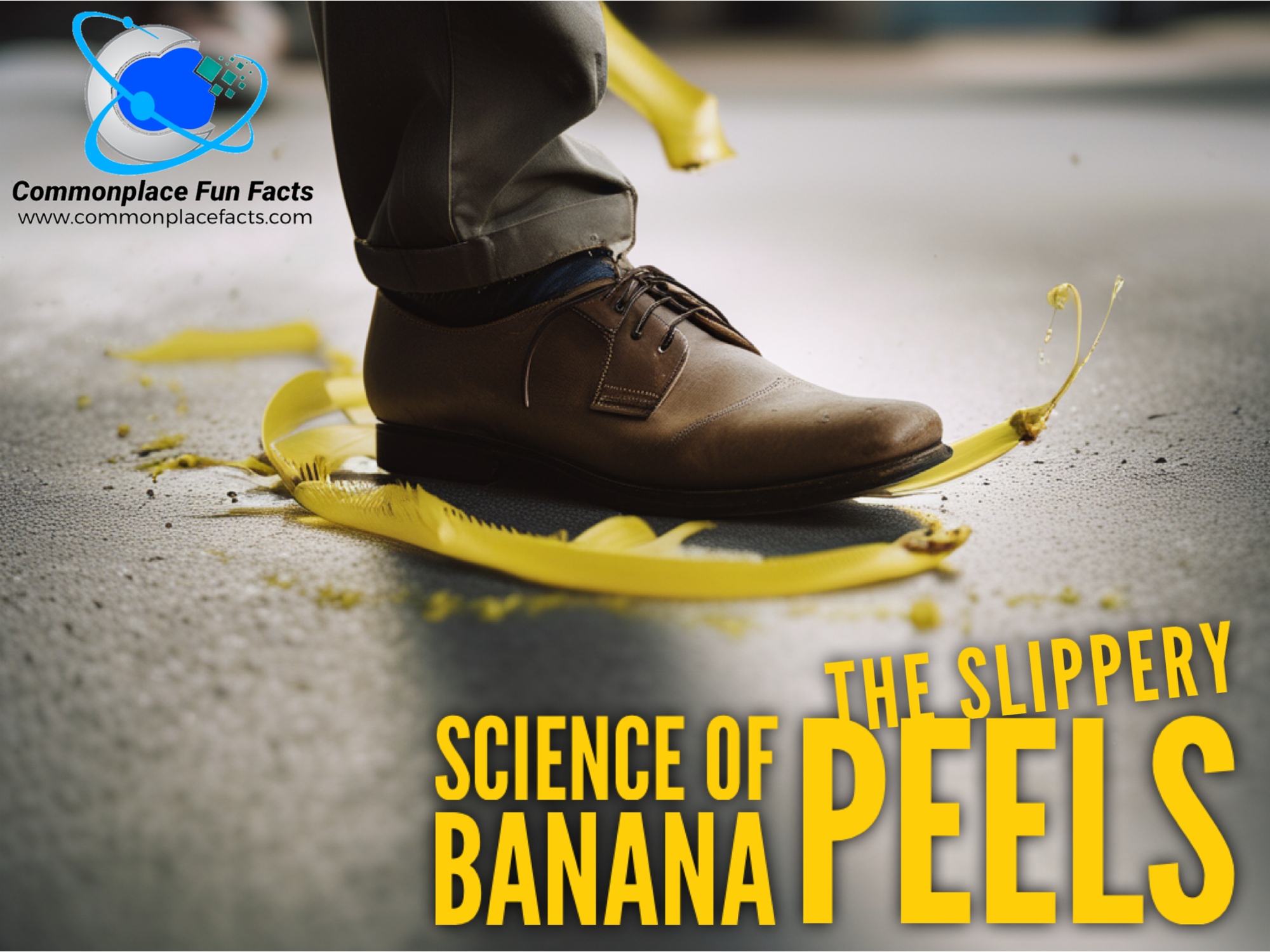

Why Are Banana Peels Slippery?
If you want to trip someone up, leave a banana peel in his path. Everyone knows that nothing is more slippy than the discarded skin of one of our favorite fruits. If you aren’t convinced, you just have to ask Wile E. Coyote or any other cartoon character whose bottom has slammed onto the ground after an unfortunate encounter with a banana skin.
Although this truth about bananas has been known for ages, the reason for it has always slipped away from scientists. Thanks to intrepid researchers, however, we now know the physics that explain why watching someone fall on a banana peel is so fun.

Japanese researchers Kiyoshi Mabuchi, Kensei Tanaka, Daichi Uchijima, and Rina Sakai peeled the secrets away in their groundbreaking study “Frictional Coefficient under Banana Skin” (Tribology Online 7, no. 3, 2012, pp. 147-151). They combined their considerable smarts to ponder the amount of friction between a shoe and a banana skin, and between a banana skin and the floor, when a person steps on a banana skin that’s on the floor.
The chemical substance that makes banana peels are especially slippery is the polysaccharide molecule. These molecules are also in the membranes at the point where the bones in the human skeleton meet. Scientists believe that a better understanding of the slipperiness of banana peels can help improve prosthetics designs and lead to advancements in orthopedic medicine.
For their contribution to human understanding, the researchers were awarded the 2014 Ig Nobel Prize in physics.
The results of the study are certainly noteworthy. We really wish we would have been asked to help with the research. What better way to spend an afternoon than sitting around and video recording a bunch of people falling ingloriously on their bottoms?

Sleep Science 101: Why Are Yawns Contagious? The Answer is More Invigorating Than You Might Expect
Why are yawns contagious? Discover the fascinating science as we explore theories on brain chemistry, social mirroring, and how yawning strengthens social bonds across humans and animals alike.

Nightmare on Left-Side Street: Is Your Sleep Position to Blame?
Does your sleep position affect whether you will have dreams or nightmares? Discover the surprising science behind sleep positions and dreams, plus tips to improve your night’s rest.

Honeybee Sting Pain Index: Exploring the Most Painful Places on the Body to Get Stung
Discover Michael L. Smith’s research on the Honeybee Sting Pain Index, ranking pain from stings on different body parts. Find out which sting hurts the most.




Leave a Reply