
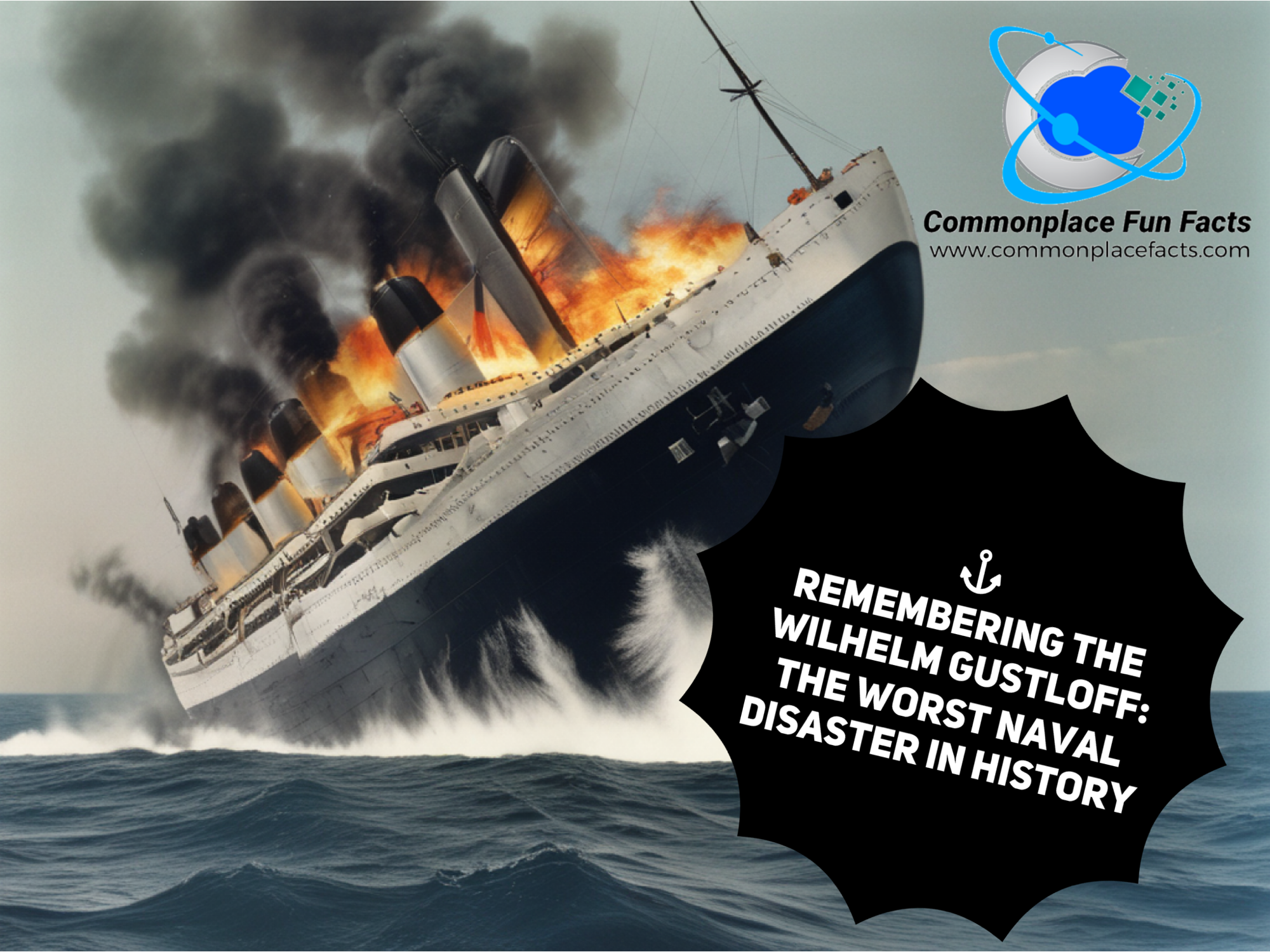

In the annals of naval history, tales of great maritime disasters often evoke names like the Titanic and the Lusitania, ships whose tragic endings are etched deeply in public memory. The Titanic, a luxury liner that sank on its maiden voyage in 1912 after striking an iceberg, led to the loss of over 1,500 lives. The Lusitania, torpedoed by a German U-boat during World War I in 1915, resulted in the deaths of 1,198 passengers and crew. These tragedies, remembered for their dramatic narratives and significant loss of life, represent some of the most notable maritime disasters. However, the greatest naval disaster in terms of human loss occurred more recently and is relatively unknown: the sinking of the Wilhelm Gustloff on the night of January 30, 1945.
Contents
A Fateful Night in the Baltic

As World War II raged on, the German ship Wilhelm Gustloff was steaming through the icy waters of the Baltic Sea. It was on this cold night that three Russian torpedoes found their mark, plunging the vessel to the ocean floor within minutes. This was not just another wartime loss, however. The Wilhelm Gustloff was a passenger liner, not a warship, and it was carrying over 7,000 non-combatants—mostly civilians fleeing the advancing Soviet forces. Tragically, all but a few hundred perished in what remains the largest single loss of life in maritime history.
Operation Hannibal: A Desperate Evacuation
The Wilhelm Gustloff was part of a massive evacuation effort known as Operation Hannibal, organized by Grand Admiral Karl Doenitz. As German resistance crumbled under the Soviet onslaught, Doenitz marshaled every seaworthy vessel—warships, coastal boats, luxury liners, and freighters—to rescue as many Germans as possible from the Eastern Front. This evacuation dwarfed the British Dunkirk operation in scale, aiming to transport millions from the Gulf of Danzig, including key military personnel and civilians.
The port of Gotenhafen (now Gdynia, Poland) was a crucial embarkation point. However, Hitler’s orders for Army Group North to hold fortified positions instead of retreating led to chaotic scenes as tens of thousands of refugees besieged the ports, desperate to escape the retribution they feared from the Soviet forces.
Wilhelm Gustloff’s Ill-Fated Voyage
Wilhelm Gustloff had been languishing at dock for four years, repurposed as a floating barracks for U-boat trainees. This was a far cry from her original mission as a part of Germany’s ‘Strength Through Joy’ fleet. This 1930s initiative produced a series of cruise liners that promised affordable holidays to the working class as ann effort to bolster Nazi propaganda by showcasing German engineering prowess. Launched in 1937 and named after a martyred Swiss Nazi leader, Wilhelm Gustloff had seen better days. Early in the war, she served as a hospital ship, but by 1945, she was a floating dormitory, with a faded red swastika still visible on her funnel.
As the Soviet Army closed in, Wilhelm Gustloff was tasked with evacuating not just military personnel but also high-ranking officials, their families, and thousands of civilians. The ship, built to accommodate 1,900 people, was overloaded with at least 7,000 souls, including 1,500 submariners and 373 teenage Women Naval Auxiliaries. The urgency of their departure left little time for proper preparation; they sailed with only 12 of their 22 lifeboats and insufficient life-rafts. Everyone everyone was issued lifejackets—an ultimately futile gesture, in light of the icy waters the ship would navigate.
Collision with Fate
Wilhelm Gustloff departed around midday on January 30, 1945, bound for the Kriegsmarine naval base at Kiel. Shortly after departure, her sister ship, the Hansa, broke down, leaving Wilhelm Gustloff to sail alone with just two decrepit torpedo boats as escort. Captain Friedrich Petersen, her veteran merchant-navy captain, and Commander Wilhelm Zahn, a young submarine officer, were at odds over how to navigate the dangerous waters. Petersen chose to keep the navigation lights on to avoid collisions, a decision that made them an easier target.
Around 9 PM, 12 miles off the Pomeranian coast, Soviet submarine S-13, under the command of Alexander Marinesko, spotted Wilhelm Gustloff. Marinesko, a seasoned captain frustrated by weeks without a significant target, saw an opportunity. He fired four torpedoes, three of which struck the ship, causing catastrophic damage. The ship lost power, and as panic ensued, passengers and crew struggled to launch lifeboats in the freezing conditions.
Chaos and Heroism Amid Disaster

The sinking of Wilhelm Gustloff exhibited both the depths of human despair and the heights of heroism. Passengers, many of whom were already suffering from seasickness and poor conditions below deck, were thrust into a nightmare. Crew members struggled with frozen winches, and many lifeboats were inadequately launched or quickly capsized by desperate survivors. Amid the chaos, some displayed remarkable courage. One woman saved a teenage girl by giving the girl her coat before jumping overboard. One seaman forcefully ensured a teenage girl’s spot in a lifeboat, while others chose to end their lives rather than face the icy waters.
The lifeboats that did make it into the water were quickly overwhelmed, and many survivors faced a grim fate in the frigid sea. The temperature of the water, typically around 4ºC (39ºF), meant that lifejackets offered little protection from hypothermia. Despite the heroic efforts of some, the ship’s rapid sinking left little time for rescue, and the cries of those in the water gradually faded into the cold night.
Aftermath and Legacy
Rescue efforts were scant and slow. The heavy cruiser Admiral Hipper and its escort arrived first but, already laden with refugees, could not risk taking on more. They departed, leaving behind only one escort to rescue 550 survivors. It would be five hours before more help arrived. The final death toll remains uncertain, with estimates ranging from 6,500 to 9,300. What is certain is that scarcely more than 900 survived the sinking.
In the chaotic final months of World War II, the sinking of Wilhelm Gustloff was one of many tragedies. Operation Hannibal ultimately evacuated over two million people but at a tremendous cost. Other ships like the General Steuben and the Goya were also sunk, each with thousands of casualties. Despite the enormity of the disaster, the story of Wilhelm Gustloff remained relatively obscure, overshadowed by the broader narrative of the war and the sheer scale of the human tragedy it represented.
A Tragic Footnote in History
The sinking of Wilhelm Gustloff has been largely forgotten in the West, overshadowed by other wartime tragedies and the reluctance of both Nazi Germany and the Soviet Union to bring attention to the incident. For Germany, it was a reminder of their military and moral collapse; for the Soviets, it was a story of a war crime that went unrecognized and unpunished.
Commander Marinesko, despite his significant achievements, was not honored as a Hero of the Soviet Union and faced demotion and dismissal. In Germany, the sinking was a painful reminder of the horrors of war and the regime’s failures, and Admiral Doenitz’s memoirs downplayed the loss amidst the larger context of the war.
The loss of life in the sinking of Wilhelm Gustloff, greater than the Titanic and the Lusitania combined, remains a somber reminder of the human cost of war. It underscores the immense suffering experienced during those final months of World War II and stands as a testament to the countless lives disrupted and destroyed in the conflict. While the world may have moved on, the memory of Wilhelm Gustloff’s tragic end continues to echo through history, a poignant symbol of wartime devastation and the fragility of human life amidst the tides of war.

USS William D Porter: The Navy’s Unluckiest Ship
Discover the strange story of the USS William D Porter — the unluckiest ship in the US Navy.

Violet Jessop: The Unsinkable Woman Who Survived Titanic, Britannic, and Olympic
Violet Jessop, known as “Miss Unsinkable,” survived the Titanic, Britannic, and Olympic disasters. Discover her incredible true story of courage, resilience, and survival against all odds.

Trapped Underwater for 16 Days: The Tragic End for Three Sailors at Pearl Harbor
Over 2,000 Americans were killed as a result of the attack on Pearl Harbor, Hawaii, on December 7, 1941. For three sailors, their deaths would come after 16 horrifying days of being trapped underwater. Twenty-one ships were damaged or destroyed in the attack. Among them was the USS West Virginia. The Colorado-Class battleship went down…




Leave a Reply