
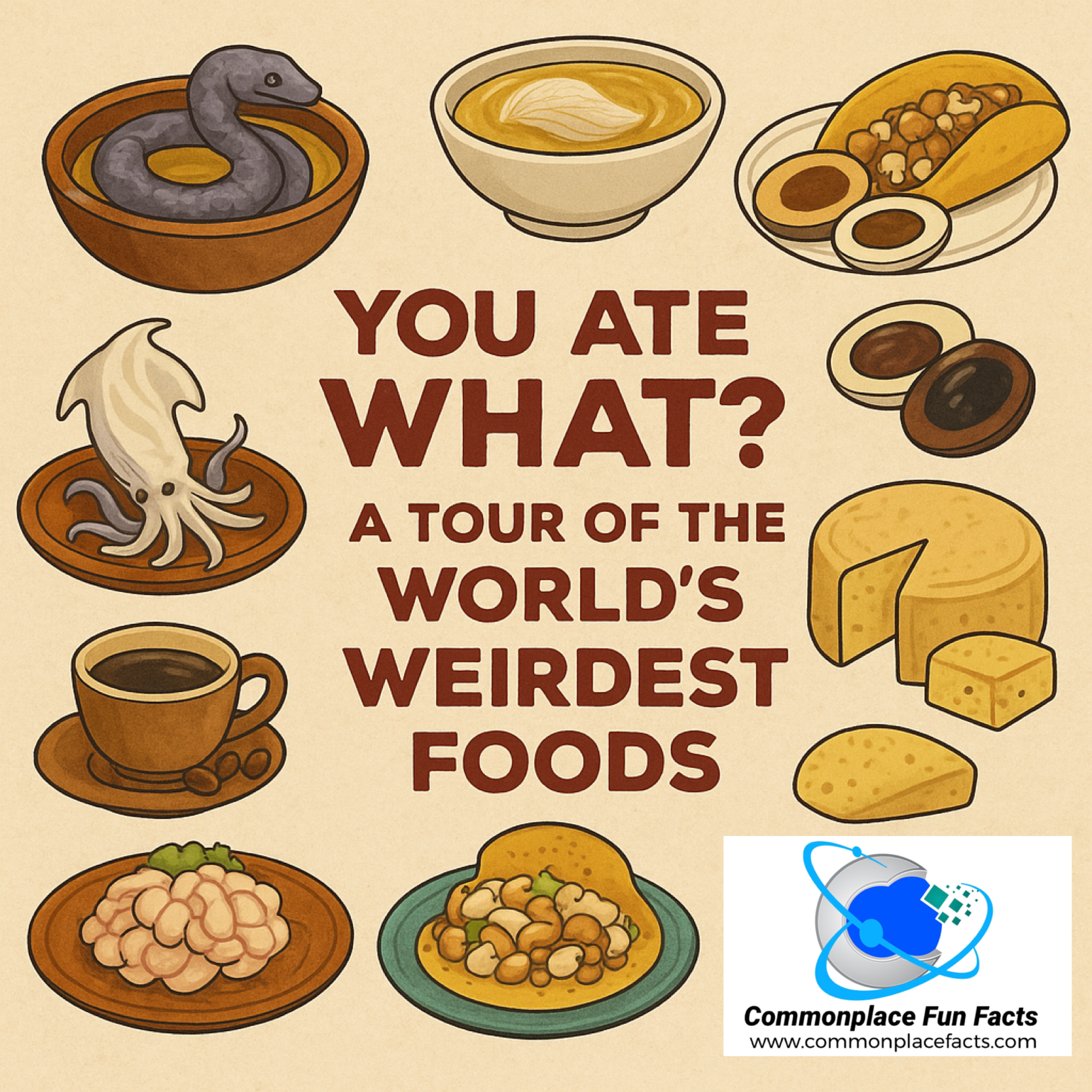

The Wonderful World of Weird Food
Food is a universal language—unless you’re trying to speak it with fermented shark, twitching tentacles, or anything that Steve Irwin ever called “adorable.” Let’s take a quick culinary tour around the globe and meet weird foods that prove humans will eat literally anything if you slap the word “delicacy” on it or charge an outlandish price for the privilege of trying it.
Contents
Sannakji: The Octopus That Refuses to Quit
Sannakji is a Korean delicacy made by chopping up a live baby octopus into small pieces and serving it immediately. The live dish is so fresh that the tentacles are still moving like they’re auditioning for a feature role in a horror movie. Drizzled with sesame oil and sometimes sprinkled with sesame seeds, it’s equal parts daring and delicious. But be warned: the suction cups on those tentacles are still very much operational, making this possibly the only food that can fight back on the way down. Yes, the choking hazard is real. Chew like your life depends on it—because it kind of does. The dish claims the lives of about half a dozen people a year.
Dancing Squid: The Food That Dances Before You Do
Now let’s swim over to Japan, where the famous dancing squid dish gives you a front-row seat to seafood’s final encore. Unlike its Korean counterpart, the squid is already dead and served whole—often atop rice or noodles. The twist? When soy sauce is poured over it, the high salt content triggers a chemical reaction in the still-active ion channels of the squid’s muscle cells, causing it to twitch, as if to say, “Please don’t!” But it’s too late. This is the culinary version of the Zombie Apocalypse. It’s science, not sorcery. No live dish here—just the unsettling miracle of postmortem biochemistry. Eventually, the dancing stops, and you can eat your now-settled cephalopod in peace. Whether your stomach ever settles down again, well, that’s for you and your toilet to know.
Casu Marzu: When Your Cheese Needs a Leash

If you’ve ever thought your cheese just wasn’t alive enough, Italy’s got your back. In Sardinia, casu marzu is made by intentionally infesting pecorino cheese with cheese fly larvae. The maggots break down the fats, resulting in a creamy texture and a flavor profile best described as “biohazardous.” The larvae are often still squirming when served. Do with that information what you will.
Shirako: Sushi With a Side of Existential Crisis

Over in Japan, you can find another exotic food shirako, which charmingly translates to “white children,” though the poetry fades once you learn it’s actually the sperm sacs of male fish. Served raw, steamed, or fried—because nothing says “bon appétit” like hot fish reproductive organs—this is the kind of delicacy that reminds you ignorance really can be bliss.
Escamoles: The Caviar That Crawls

Mexico introduces us to escamoles, affectionately nicknamed “insect caviar.” These are ant larvae harvested from the roots of agave plants—the same ones used to make tequila. Sautéed with butter and folded into tacos or omelets, this strange food offers a nutty flavor and a crunchy texture that might just distract you from the whole “I’m eating bugs” reality.
Century Eggs: Time Is Not on Your Side

Next up, the not-so-fresh freshness of century eggs from China. This delicacy can be made from duck, chicken, or quail eggs, preserved for weeks—or months—in a cocktail of clay, ash, quicklime, and rice straw. The result? A translucent black “white” and a yolk the color of decay, all delivering a pungent, acquired taste you may never want to acquire.
All of you college students who are living on your own for the first time should remember this when your parents get after you for that weird thing in the back of your refrigerator that has been there since you moved in. Just tell them you’re trying to create a delicacy.
Bird’s Nest Soup: Saliva Has Entered the Chat

In China, you can indulge in bird’s nest soup, which sounds quaint until you learn it’s made from actual swiftlet nests—crafted entirely from the bird’s hardened saliva. Yes, that silky texture comes courtesy of avian spit that’s lovingly simmered into a gelatinous delicacy. It’s widely believed to have health benefits, though none are strong enough to erase the image from your mind.
Snake Wine: Cheers to Venom

Vietnam’s contribution to this list of exotic foods is snake wine, which is—brace yourself—rice wine or grain alcohol with a whole venomous snake steeping inside. Supposedly medicinal (although it clearly didn’t help the snake), it’s the kind of drink that says, “I enjoy danger, but I also have a refined palate.” Bonus points if the snake looks like it’s judging your life choices from inside the bottle.
Hákarl: The Smell Hits First
Iceland, never one to be outdone, offers hákarl—fermented Greenland shark that’s buried for weeks and then hung out to dry for months, like some sort of ammonia-scented laundry. The result is a dish that’s been described as tasting like “a rotting urinal cake dipped in fish.” And yet, it’s a point of national pride. Go figure.
Kopi Luwak: Your Coffee Has Been… Processed
Imagine waking up to the rich aroma of freshly brewed coffee—and then realizing it came from beans that were previously inside a civet cat and exited through the usual route. That’s Kopi Luwak from Indonesia, a brew made from beans eaten and pooped out by the Asian palm civet. Fancy? Sure. Sanitary? Debatable. Overpriced? Absolutely. You can purchase 50 grams of Kopi Luwak for $27.99; that comes out to $253.90 per pound. The price alone should wake you up without the need for caffeine.
Amazingly, that’s not the most expensive coffee. For that, you’ll want the kind that comes from elephant dung. It goes for $50 per cup.
Balut: The Snack That Looks Back

From the Philippines and Vietnam comes a dish that’s as controversial as it is cultural: balut. This traditional delicacy is a fertilized duck egg containing a partially developed embryo, usually between 14 to 21 days old. It’s typically boiled and served warm, cracked open at one end, and eaten directly from the shell—sometimes with a pinch of salt, vinegar, or herbs to enhance the flavor. The experience is not for the faint of heart, as the textures range from broth-like liquid to tender yolk, and finally, the chewy embryo itself.
Feathers, beak, bones—yes, they’re all part of the package. While many outsiders react with shock, locals often view balut as a rich source of protein and a nostalgic comfort food, commonly sold by street vendors in the evening. In many Southeast Asian cultures, it’s more than a snack—it’s a rite of passage, a symbol of resilience, and a bite of home. If you’re wondering whether you have what it takes to try it, just remember: balut doesn’t ask questions—it looks back.
Surströmming: Sweden’s Weaponized Fish

This delightfully offensive-smelling dish is Baltic herring that’s been fermented until it resembles a biological hazard. Cans of surströmming are sometimes opened underwater to prevent the stench from launching a neighborhood evacuation. It’s banned on some airlines, which tells you everything you need to know, considering the odor that comes from some of the things — and people — that aren’t banned from airlines.
It’s not cheap. One can costs close to $50, so you may need to hold your nose before you even begin to open it.
Witchetty Grubs: Squishy with a Side of Scream

Indigenous Australians have long enjoyed witchetty grubs—large white larvae eaten raw or lightly cooked. Raw, they taste like almonds; cooked, like scrambled eggs. Emotionally? Like a betrayal of everything you thought you knew about breakfast.
Stinkheads: Alaska’s Rotten Royalty
In Alaska, the Yupik people prepare stinkheads by burying salmon heads underground and letting them ferment until they reach peak rot. The name isn’t hyperbole—it’s a warning. This is fine dining for people who think expiration dates are just suggestions.
Jellied Moose Nose: Because Why Stop at the Antlers?
In Canada, you can enjoy jellied moose nose, which is exactly what it sounds like. The nose is boiled, de-furred (yes, that’s a step), sliced, and set in gelatin like a Canadian version of head cheese. It’s a dish that asks, “Have you considered therapy instead?”
Tuna Eyeballs: A Real Eye-Opener

In Japan, tuna eyeballs—golf ball-sized orbs with optic nerves still attached—are boiled and served with soy sauce. The texture is gelatinous, the flavor is intense, and the experience is unsettling. But hey, at least your food is watching its sodium intake.
Mukluk: Whale Blubber, Hold the Flavor

A traditional Inuit dish, muktuk is frozen whale skin and blubber served raw or pickled. It’s chewy, fatty, and—as one visitor said—“like biting into a rubber sandal soaked in fish oil.” But it’s packed with vitamins, and you’ll definitely remember it forever. Whether you want to or not.
You may also be violating all kinds of laws and treaties designed to protect whales from exactly this sort of thing, so be sure you are prepared to accept the consequences.
Huitlacoche: Mexico’s Corn Fungus Surprise

Huitlacoche (aka corn smut) is a blue-black fungus that infects corn kernels, puffing them up like alien pods. While it may look like the crop needs an exorcist, this delicacy is beloved in Mexico, where it’s sautéed and served in tacos. It’s earthy, nutty, and the only plant disease you’ll find at five-star restaurants.
Cuy: It’s Guinea Pig, Not a Typo

In Peru, Ecuador, and Bolivia, cuy is guinea pig—roasted whole, feet and face intact. While North Americans might flinch at eating what they consider a pet, Andean cultures see it as a tasty, sustainable source of protein. Let’s just hope no one ever opens a Build-A-Cuy workshop.
So there you have it—a reminder that while food is a window into culture, sometimes it’s also a screaming exit through the gift shop. And before you judge, just remember: somewhere, someone thinks your peanut butter and jelly sandwich is the weirdest thing they’ve ever seen.
You may also enjoy…

Having 80-100 Close Friends Over For Dinner? Try This Recipe for Stuffed Camel
Having a lot of family and friends over for the holiday? Looking for a dish that is big enough to feed even your hungriest teenagers? Why don’t you try “Stuffed Camel”? The traditional Bedouin dish is frequently referred to as “Camel Turducken.” Whatever you call it, it will feed a crowd of 80 – 100.…

Enjoy Kiviak: The Tasty Christmas Dish of Putrefying Birds
Kiviak is a unique Greenland Christmas tradition that involves fermenting auk birds inside a seal carcass for three months. The preparation is labor-intensive and requires specific ingredients, creating a potent dish reminiscent of mature cheeses. Although costly and unconventional, kiviak offers an unforgettable holiday experience for adventurous eaters.

The Freakish Fate of the Heart of Louis XIV
Was Louis XIV’s heart used for paint? Find out in this intriguing article about the Sun King.







Leave a Reply to Commonplace Fun FactsCancel reply