

Bob Hope On D-Day: Not a Native, But Speaking For All of Us
He wasn’t born in America. He didn’t wear a uniform. He didn’t carry a rifle or storm the beaches of Normandy. But on June 6, 1944, Bob Hope’s voice became a symbol of the American war effort—funny (although notably lacking any jokes on that night), familiar, and unshakably patriotic. Born in London and naturalized in the U.S. in 1920, Hope somehow managed to become the spiritual embodiment of the American G.I., one wisecrack at a time.
Contents
Hope wasn’t just the guy who showed up with a golf club and a few punchlines; he was the connective tissue between the battlefield and the backyard. His radio shows weren’t just entertainment—they were emotional glue. And on D-Day, when the entire world held its breath, he didn’t cancel the broadcast. He didn’t run his usual bits. He didn’t crack wise about the Axis. He did something far more powerful: he let silence hang heavy. He spoke in solemn tones. And when he said “our big effort” and referred to the big invasion as something “that all of us have worked for,” he wasn’t just talking to the troops. He was talking to the welders pulling double shifts, the schoolkids buying war stamps, the farmers who fed the nation, and the housewives straining bacon grease. Everyone had skin in the game. No one sat this one out.
When the Jokes Stopped and the Whole Nation Listened
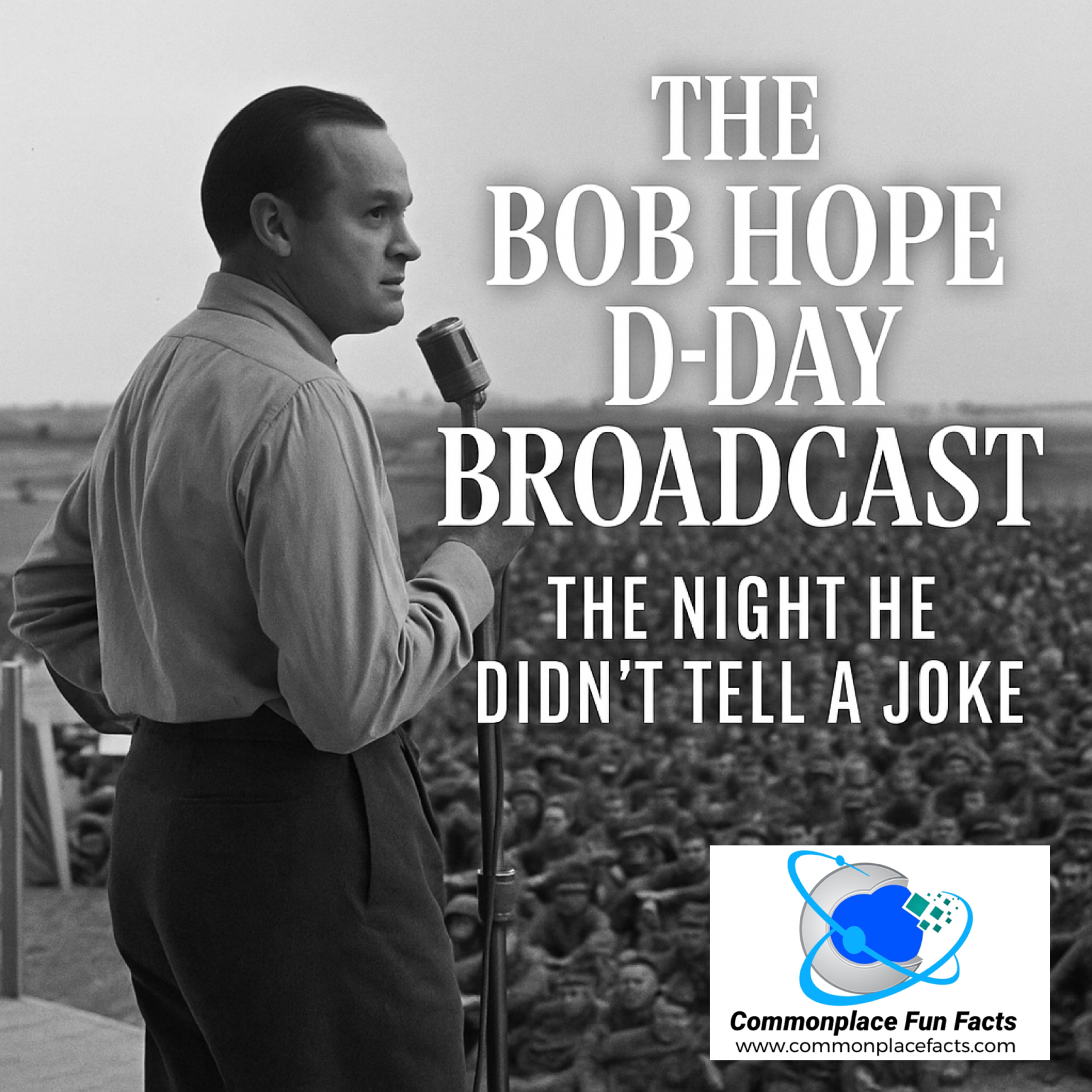
It was the last-scheduled program of the season for Hope and was broadcast live at a P-38 airfield in Van Nuys, California, in front of a group of young airmen about to be shipped overseas. The jokes were set aside. The message was unity, sacrifice, and shared purpose. The usual Bob Hope bravado gave way to something quieter and more profound. And somehow, that made the message all the louder.
Folks, this is Bob Hope speaking from a P-38 Airfield out here near Van Nuys, California. We looked forward to being with these men and doing our regular show here, but of course, nobody feels like getting up and being funny on a night like this. Still, we did want to go through with our plans and visit with these fellas, because these are the same kind of boys who are flying those 11,000 planes in our big effort.
What’s happened during these last few hours not one of us will ever forget. How could you forget? You sat up all night by the radio and heard the bulletins, the flashes, the voices coming across from England. The commentators. The pilots returning from their greatest of all missions. Newsboys yelling in the street.
It seemed that one world was ending and a new world beginning—that history was closing one book and opening a new one. Somehow, we knew it had to be a better one.

You sat there, and dawn began to sneak in, and you thought of the hundreds of thousands of kids you’d seen in camps these past two or three years. The kids who scream and whistle when they hear a gag and a song. And now you could see all of them again—in 4,000 ships on the English Channel, tumbling out of thousands of planes over Normandy, on the occupied coast, in countless landing barges crashing the Nazi gate, going on through to do the job.
That’s the job of all of us.
The sun came up, and you sat there, looking at that huge black headline—that one great black word with the exclamation point:
INVASION!
The one word the whole world has waited for. That all of us have worked for. We knew we’d wake up one morning and have to meet it face to face—a word in which America’s invested everything these 30 long months.
The efforts of millions of Americans: building planes and weapons, the shipyards and the men who took the stuff across. Little kids buying war stamps. Housewives straining bacon grease. Farmers working around the clock. Millions of young men sweating it out in camps and fighting the battles that paved the way for that headline this morning.
Now the investment must pay—for this generation and all generations to come.
And folks, what a wonderful thing it is that no matter the price, the reward will be greater than the sacrifice. We hope that thought can go along with the prayer tonight—the prayer of a whole nation:
God bless those kids across the English Channel.
Music… And More
Most of the show was musical. “Ava Maria” sung by Frances Langford. A medley of military songs. A heart-rending rendition of “Goodnight Wherever You Are.” A stirring rendition of “Army Air Corps.”
With just a minute remaining, Hope returned to the microphone to sign off:
Well folks, it’s old “Auld Lang Syne” time with all of us here tonight—the last show of a season has given us a lifetime of memories. We’d like to thank all the people who’ve given us those memories, but the list is longer than a roller towel.
At the top of the list are kids like these here at Van Nuys and in camps all over America. Right beside them are you folks out there in the homes these kids are fighting for.
And I’d like to thank the swell gang who help us hang this Tuesday night show together.
Yes sir, the last program of the season—and a couple of days ago, maybe that would have seemed important to us. But General Eisenhower and America’s finest have opened a new season with a new show that tops anything on Earth. A new season for freedom—and a show that’s playing the four corners of the globe. And when that show is over, freedom’s enemies will never open again.
Let’s all hope—and work—and pray—that it may be a short, successful season.
Folks, we’ll be seeing you again next year. And the best of the best to you and your boys across the sea.
Good night.
No Uniform. No Rifle. Just the Right Words.
In the days and years that followed, Bob Hope would go on to entertain troops in every major conflict through Operation Desert Storm, cementing his status as the comedian-in-chief for America’s military. But on that quiet night in June 1944, he wasn’t telling jokes—he was reminding us why we fight, what we share, and who we’re fighting for. No punchline required.
You may also enjoy…

D-Day Shrapnel Makes Up 4% of the Sand on Omaha Beach
Despite all the years that have passed since the invasion, the D-Day shrapnel still composes as much as 4% of the sand on the D-Day beaches.

The Secret Disaster That Saved D-Day
Everyone knew the outcome of the war would be settled in Europe. For that to happen, it would require an invasion of unprecedented force. Over 7,000 ships and landing craft would have to transport nearly 200,000 men across the English Channel to storm the beaches of France. Although only a handful of people knew the…

Eisenhower and His Frustration With Over-Planning
In 1952, Dwight D. Eisenhower compared a 35-page campaign plan to the planning of the Normandy invasion. Discover the humorous yet insightful story behind his reaction.




Leave a Reply to AFRS: The Voice From Home – In The Shadow of YesterdayCancel reply