
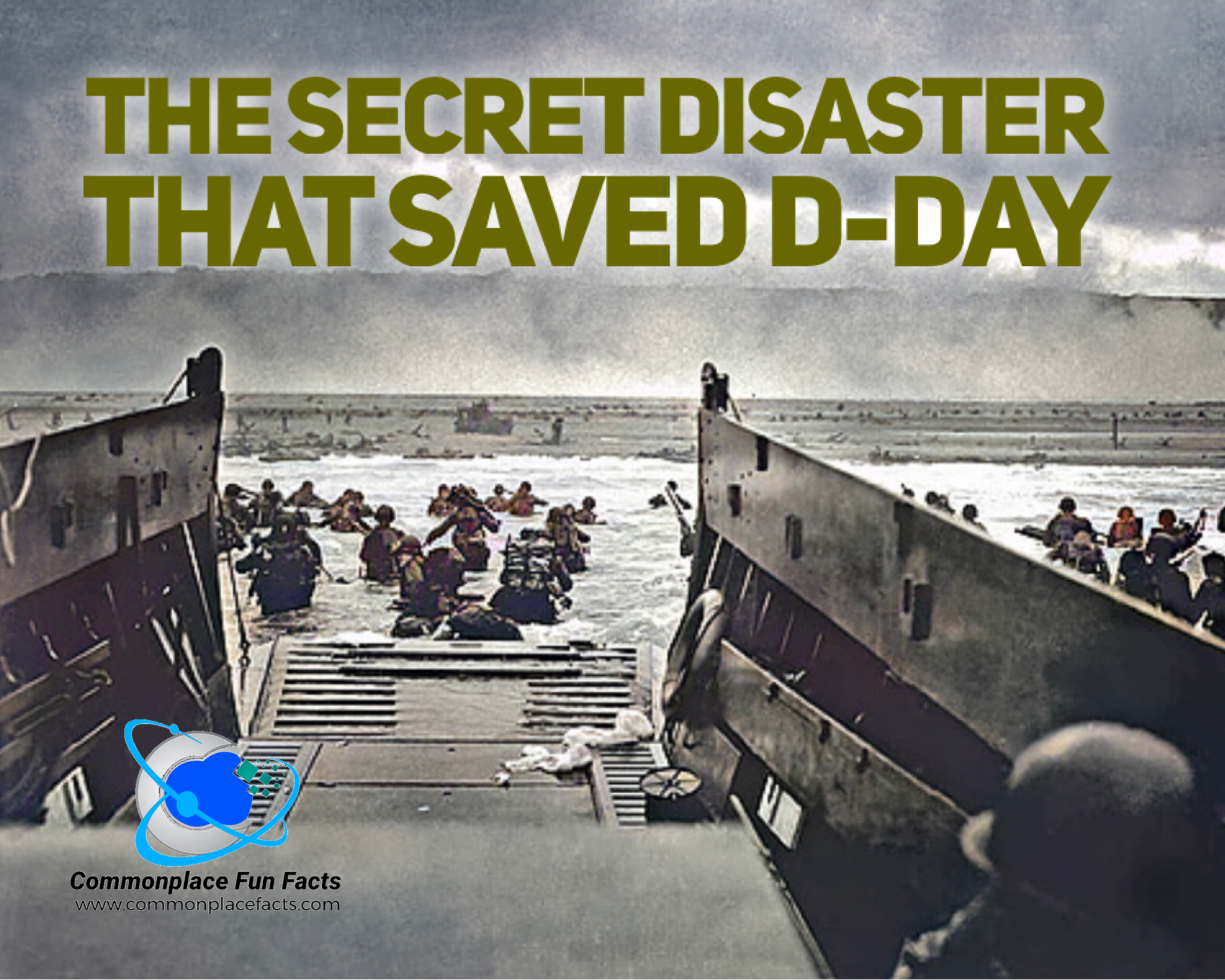

Everyone knew the outcome of the war would be settled in Europe. For that to happen, it would require an invasion of unprecedented force. Over 7,000 ships and landing craft would have to transport nearly 200,000 men across the English Channel to storm the beaches of France. Although only a handful of people knew the specifics, it was generally assumed the big invasion would take place in 1944. At last, it was time to put years of planning into operation.
Plans for the D-Day invasion were cloaked in secrecy, so nearly everything associated with it was hidden by codes. Those codes, once among the most carefully guarded secrets of all time, are now remembered with awe and reverence. The entire operation was named Overlord. The beaches where the first Allied boots would hit the ground had the code names Utah, Omaha, Gold, Juno, and Sword. There was even a code name for something that never existed. Fortitude South was the name for a plan to convince the Nazis that the invasion would come from southeastern England. General George S. Patton commanded an “army” of dummy landing craft and inflatable rubber tanks. Fake wireless communications to and from Patton helped convince Hitler that when the invasion came, it would be at Calais.

One of the most ambitious plans of the invasion was Exercise Tiger. Nothing less than the success of the landing on Utah Beach hung in the balance. No words can adequately describe the range of emotions experienced by the 30,000 troops as they were moments from storming the beach. Only the waters of the English Channel stood between the landing ships and the sandy shores.
Trouble arose from the beginning. The time established for H-Hour was 7:30 a.m. Admiral Don P. Moon pushed the time back by an hour, but some of the landing craft did not receive the order. Consequently, some of the troops came ashore while the beach was still under heavy bombardment by Allied forces. As many as 450 soldiers died from friendly fire.
While most of the invasion force was still aboard the landing craft, the German navy struck. Despite the attempts at secrecy and heavy patrolling of the English Channel, nine German E-boats swarmed the Allied ships. Convoy T-4 consisted of eight large tank landing ships known as LSTs. The convoy was supposed to be protected by two corvettes, but only one was where it was supposed to be. The second ship was under repair and unable to join the fleet. Since US and British naval headquarters used different radio frequencies, the U.S. ships were unaware that they had only half the protective firepower they thought they did. Adding to the problems was that the one corvette they did have led the convoy of transport ships in a straight line, presenting an easy target for the E-boats.
The E-boats unleashed their torpedos, and the convoy suffered immediate damage. LST-289 was hit and caught fire. It returned to shore after sustaining 13 casualties. LST-507 took a direct torpedo hit and sank, taking 202 soldiers and sailors with it. LST-531 also met its watery grave from a torpedo; 424 personnel went down with the ship. LST-511 evaded German torpedos, but it was damaged by friendly fire from LST-496. Eighteen soldiers and sailors were wounded.
Steven Sadlon was a sailor on one of the LSTs. “There were flames everywhere and the poor guys were screaming to death,” he said. He jumped into the frigid water where he spent the next five hours, treading water before passing out from hypothermia. “The last thing I thought of was being held in my mother’s arms,” he said. “Then I found myself on a mess table in the ship that rescued me. I was covered in 14 Army blankets and this sailor told me I was a lucky guy.” Sadlon was one of more than 130 men plucked to safety by LST-515. He was alive only because the ship’s captain, John Doyle, disobeyed orders not to go back for survivors.
The carnage of Exercise Tiger exceeded even the most pessimistic projections. The official body count was 749 soldiers and sailors. Between enemy attacks, friendly fire, drowning, and hypothermia from the frigid waters of the English Channel, some estimate the real number of casualties to have exceeded 1,000 men. Not included within those numbers is Admiral Moon, who committed suicide soon after the disastrous mission.
The history of D-Day is replete with countless tales of courage, sacrifice, victory, and tragedy. With so many stories to tell, it might not be particularly surprising if you never heard of the disastrous landing known as Exercise Tiger. This is especially true because Exercise Tiger took place on April 27, 1944 — forty days before D-Day. Exercise Tiger was the dress rehearsal for the big event that would take place on June 6. During this exercise, Allied troops braved the waters of the English Channel to storm the beaches of Slapton Sands on the coast of Devon, England.
With no time to grieve and with secrecy still paramount to the success of the upcoming invasion, the details of Exercise Tiger remained largely under wraps for the next forty years. The survivors of the botched operation took what they learned from the experience six weeks later and successfully established a beachhead on the beaches of Normandy.
The lessons were well learned. When the actual invasion took place on June 6, 197 men were killed in the mission that took Utah Beach. How many more would have given their lives if five times that many hadn’t been killed when the invasion was “just a practice”?

Eisenhower and His Frustration With Over-Planning
In 1952, Dwight D. Eisenhower compared a 35-page campaign plan to the planning of the Normandy invasion. Discover the humorous yet insightful story behind his reaction.

D-Day Shrapnel Makes Up 4% of the Sand on Omaha Beach
Despite all the years that have passed since the invasion, the D-Day shrapnel still composes as much as 4% of the sand on the D-Day beaches.

Did Tootsie Rolls Save the Day During the Korean War?
Did Tootsie Rolls save the day during the Battle of Chosin Resevoir? Find out the truth here.




Leave a Reply