
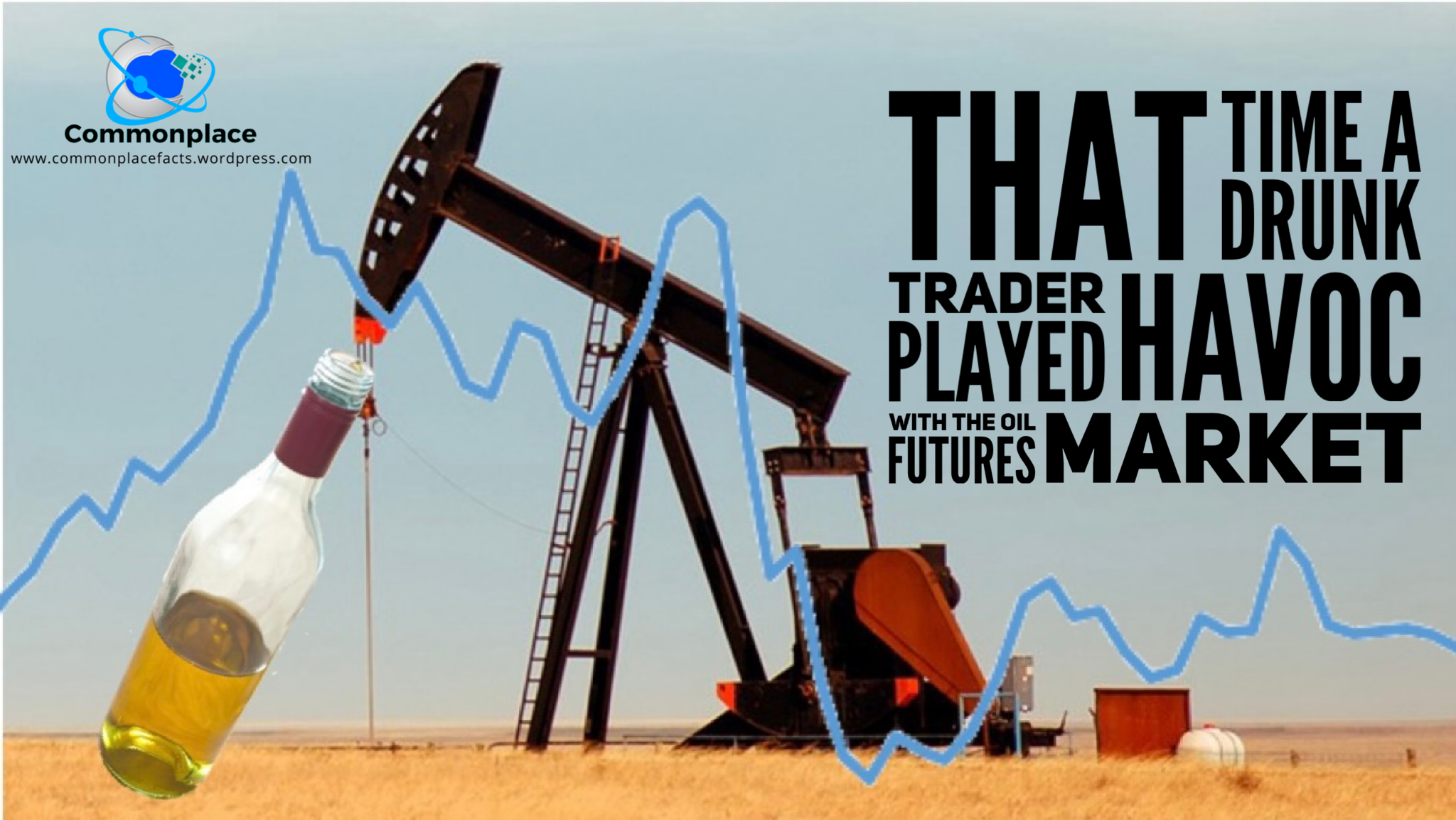

The Cautionary Tale of the Drunk Trader
Forget “don’t drink and drive.” This is the cautionary tale of “don’t drink and trade $500 million in crude oil.”
It was 7:45 a.m. on June 30, 2009, and Stephen Perkins was battling a hangover of apocalyptic proportions. What he really wanted was sleep. Instead, he got the next worst thing: a ringing phone. And not the “wake up from this nightmare” kind of ring — the “your career is on fire” kind of ring.
The voice on the line belonged to a clerk from London-based PVM Oil Futures. The message? Perkins had, during the night, singlehandedly purchased 7 million barrels of crude oil — to the tune of over half a billion dollars. Yes, billion with a “B.”
Contents
From Golf Course to Trading Floor
The trouble began the day before at a company golf event. Perkins was not destined to impress on the greens, but he was more than happy to demonstrate Olympic-level drinking skills. By the end of the outing, he had blacked out. Many people in that situation might wake up embarrassed after texting their ex (or, if you are a prime minister, drunkenly calling a special election). Perkins woke up having briefly cornered the global oil market.
“Mr. Perkins poses an extreme risk to the market when drunk.”
— FCA Regulator
To his credit, he didn’t drive home drunk or vomit on a CEO’s shoes. Instead, he staggered into the far more dangerous territory of believing alcohol had improved his trading instincts. Spoiler: it hadn’t.
The Morning After
When Perkins arrived at the office, his colleagues were waiting, eyebrows arched in unison. His hastily concocted story — that he had been trading on behalf of a client — fell apart faster than his liver enzymes. When he couldn’t name the client, the truth became unavoidable: he had been trading with the company’s own money. Roughly $520 million of it.
Why This Was Such a Catastrophe
First, brokers aren’t supposed to play with house money like Vegas tourists on payday. Second, Perkins’ spree accounted for nearly 70% of the day’s global oil trades, driving prices up from $71.40 to $73 per barrel — an 8-month high. Normally, prices only spike like that when, say, a major geopolitical crisis erupts. This time it was courtesy of one man, a keyboard, and several pints too many.
Secondly, traders operate on the basic economic principle of supply and demand. The greater the demand, the greater the price. Stephen’s frantic trading definitely caught the attention of the market. He purchased 7.13 million barrels of oil over a 2.5-hour period. This represented 69 percent of all of the oil trading that took place that day and drove the trading volume to 10 times its usual levels. This highly-unusual demand sent prices skyward from $71.40 a barrel to $73. This represented an 8-month high in oil future prices. Sudden price increases of this magnitude are typically reserved for major geopolitical crises. This was the first time an inebriated trader caused such havoc on his own.
An oil future is, basically, a contract, in which the owner of the future promises to purchase oil at a certain price on a future date. The trader is betting that on that date, the actual price of oil will be greater than the amount he or she agreed to pay. If it is, the trader makes money. If the price of oil is less than the amount paid for the future, the trader loses money.
Stephen’s actions drove the price of futures up, so by the time he finished his purchases, he — well, his employer, that is — was promising to pay $73 per barrel for oil at a specified point in the future. This trading activity was an unnatural fluctuation on the market, however. Once it stopped, the price of oil returned to its pre-drunken-trading-spending-spree levels.
Once his binge ended, the market sobered up faster than he did. Oil prices dropped back to normal, leaving PVM Oil Futures holding the bag — and that bag was missing $9.7 million. For a company that typically earned $12 million a year, that loss was like setting 10 months of profit on fire and watching it smolder.
The Fallout
Perkins’ hangover got worse. He was fired, fined £72,000 (about $98,600), and banned from trading for five years. Regulators summed it up neatly: Perkins was “not fit and proper.” Which is British for, “you’re lucky we didn’t phrase this with more sarcasm.”
Ultimately, Perkins didn’t just become a cautionary tale — he became the poster child for the risks of combining alcohol with high finance. And if you ever needed a reason to say “no thanks” to that extra pint at the company outing, remember this: waking up next to regret is bad enough. Waking up next to a half-billion-dollar oil futures contract is infinitely worse.
You may also enjoy…

That Time a Prime Minister Got Drunk and Called a National Election
As a public service, we at Commonplace Fun Facts remind our readers that there are a lot of good reasons to avoid alcohol. It is detrimental to your health, is addictive, impairs judgment, is a contributing cause of death and and injury to tens of thousands of motorists each year, can send the worldwide oil…

The Great Salad Oil Scandal of 1963: Oil, Water, and Wall Street Tears
Learn about the biggest con in agriculture history: the 1963 Salad Oil Scandal that fooled Wall Street, nearly sank American Express, and helped Warren Buffett score one of his greatest investments.

The Wall Street Panic of 1907: How Two Men Nearly Crashed the U.S. Economy and One Guy Saved It
Learn about the outrageous true story behind the Wall Street Panic of 1907—when a copper king and an ice baron nearly collapsed the U.S. economy with one disastrous scheme, forcing JP Morgan to step in and save the day.

Leave a Reply