
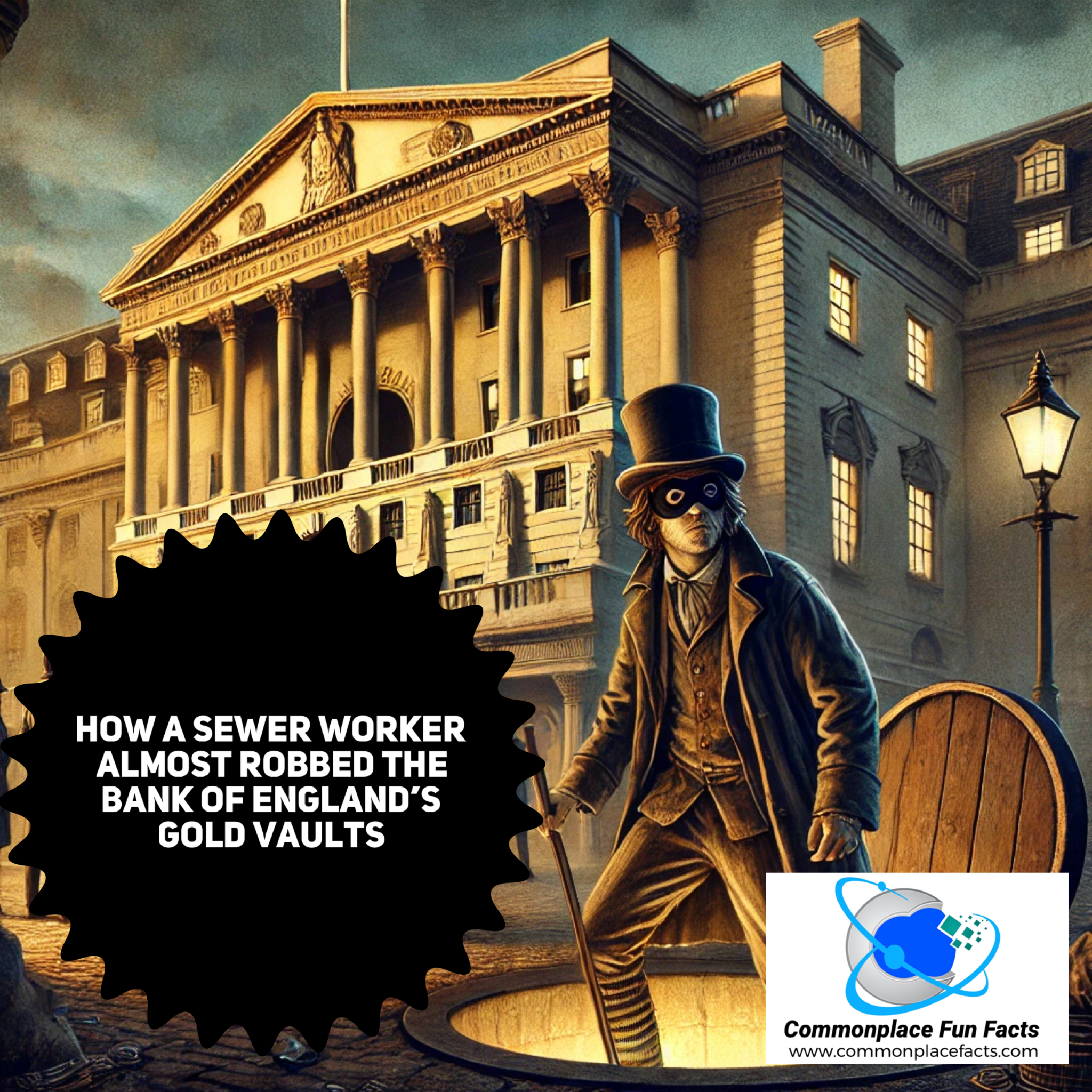

When it comes to safeguarding wealth, the Bank of England doesn’t mess around. As one of the oldest financial institutions in the world, this venerable establishment has been the United Kingdom’s guardian of monetary stability since 1694. Its fortress-like home on London’s Threadneedle Street—where it’s been securely nestled since 1734—is a 3.4-acre behemoth designed to keep its treasures well out of reach. But as one bizarre tale suggests, even the most secure vaults are only as strong as their weakest drainpipe.
A Golden Hoard Beneath Threadneedle Street
The Bank of England is no ordinary financial institution. For starters, it holds an eye-watering £100 billion in gold, second only to the New York Federal Reserve. This shiny stash is divided among eight subterranean vaults, which house 400,000 hefty gold bars, each weighing just over 12 kilograms. Collectively, they tip the scales at a jaw-dropping 5,134 tons.
These vaults aren’t just for looks—they’re strategically spread out. The massive weight of all of that gold would cause the building to sink into the ground if it was all centralized in one place.
To protect this treasure trove, the bank boasts 8-foot-thick walls, keys that are more than a foot long, and cutting-edge security measures, including voice recognition. With all this in place, you might assume it’s impenetrable. You’d be wrong—or, at least, a sewer worker in 1836 would beg to differ.
The Great Drainpipe Breach of 1836

According to legend, the Bank of England’s security faced its greatest challenge in the form of…a Victorian sewer worker heist. A long-circulating rumor tells the tale of this enterprising individual who stumbled upon a critical design flaw while carrying out repairs near Threadneedle Street. Beneath the bank’s gold reserves vault, he discovered an old drain that provided direct, unmonitored access to the vault itself.
The story goes that this anonymous worker decided to test the waters—not by pocketing a gold bar, but by writing a cheeky letter to the bank’s directors. It is reproduced in full from a Shorty Story column in London’s The Evening News (October, 1894), printed sixty years after the event.
Two Gentlemin off Bank England. Yow think yow is all safe hand your Bank is saef, but i knows bettor. i bin hinside the Bank thee last 2 nite hand you nose nuffin abowt it. But i um nott a theaf, so hif yeo will mett mee in the gret sqr room, werh arl the moneiys, at twelf 2 nite ile ixplain orl to yeow. let only I, her 2 cum down, and say nutfin 2 nobody.—Jon Smiff
Naturally, the directors laughed it off.
Then came a second letter, upping the ante. The mysterious correspondent offered to meet them inside their own vault at a time of their choosing. Intrigued, the directors agreed. That’s when things got interesting.
The Sewer Surprise
At the appointed time, the directors assembled inside the vault, likely feeling smug about their superior security measures. What they weren’t expecting was to hear a noise from beneath their feet—and certainly not to see a man emerge from the floorboards.

It was, of course, the sewer worker, who had used the drain to pop up in the middle of the vault, just as promised. The directors, aghast at this plumbing-powered breach, hastily took stock of the gold reserves. To their relief, not a single bar was missing. The sewer worker hadn’t stolen a thing.
Recognizing his honesty (and likely desperate to keep this embarrassment quiet), the bank rewarded him with £800—a sum equivalent to £80,000 today. Not bad for a man who literally rose from the muck to save the bank from itself.
The Bank of England Heist: Fact or Urban Legend?
The Bank of England officially lists this story on its website, but curiously, there are no records in its archives to confirm it. The identity of the sewer worker remains unknown, and the directors of the time may have been too mortified to document the incident.
There may be some truth to the story, however. According to the records of the bank’s architect, there may have been a germ of truth to it: “In May 1836, having had reason to apprehend danger from our sewers, it was discovered that an open and unobstructed sewer led directly from the gold vaults down to Dowgate.”
In the wake of this alarming revelation, the Bank of England went into full-on damage control. Officials began firing off letters to the Commissioners of Sewers and the Curator of the Soane Museum with one very specific demand: hand over all plans showing the locations of sewers near the Bank. Immediately. No exceptions.
This scramble wasn’t without reason. Sir John Soane, the architectural mastermind behind the Bank’s 1828 extension, had left behind a maze of subterranean secrets. The network of sewers and underground tunnels surrounding the Bank’s fortress-like walls was, apparently, either poorly mapped or improperly sealed off. And while Soane’s grand designs may have impressed above ground, it seems his underground planning left Bank officials feeling a bit… exposed.
Could all this anxiety have been triggered by a Victorian sewer worker heist in the midst of the kingdom’s gold reserves? That much remains undocumented in the official accounts, so we are left to speculate.
Regardless of its veracity, the story serves as a cautionary reminder, whether you are a homeowner or the CEO of one of the world’s most prestigious financial institutions: you can build your walls as thick as you like and design keys as big as baseball bats, but if you ignore the plumbing, you’re only one drainpipe away from disaster.
You may also enjoy…

Coffin Torpedoes: When 19th-Century Americans Booby-Trapped the Dead to Stop Grave Robbers
P.K. Clover’s 1878 coffin torpedo was designed to stop grave robbers with an explosive surprise buried alongside the deceased.

Trial by Combat Was Still Legal in England in 1818
In 1818, an English murder defendant demanded trial by combat—and the court ruled it was still legal. Discover the strange case of Ashford v. Thornton.

Rattlesnakes for Felons: Benjamin Franklin’s Plan to Repay Britain
Benjamin Franklin answered Britain’s convict shipments with “Rattlesnakes for Felons,” a satirical proposal to send rattlesnakes in return—and place them near Parliament.






Leave a Reply