

When King Charles III recently visited the White House, it marked another chapter in the long, occasionally awkward relationship between the British Crown and the presidential residence. These days, British monarchs arrive with motorcades, security details, carefully worded speeches, and plenty of friendly smiles.
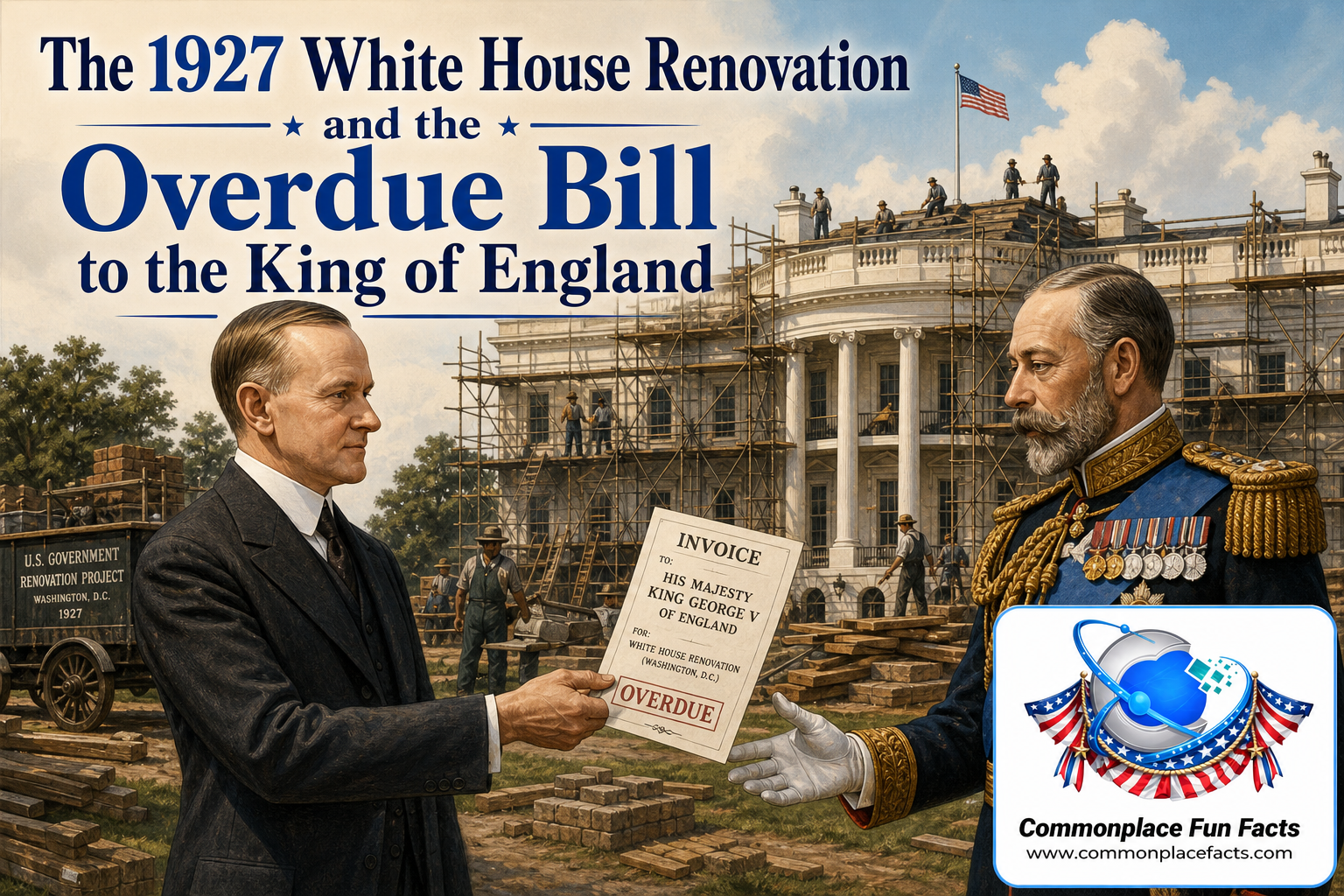
It wasn’t always that way. The royal family’s historical connection to the White House is not entirely limited to polite handshakes and state dinners. One of Charles’s royal predecessors, King George III, was on the throne when British troops marched into Washington, D.C., and burned the Executive Mansion during the War of 1812. More than a century later, another royal relative, King George V, was jokingly nominated by President Calvin Coolidge to receive the bill for fixing some of the damage.
Contents
The 1927 White House Renovation and Its Charred Discovery
Calvin Coolidge was not a man known for wasting words, money, or facial expressions. If Silent Cal could answer a question with one syllable, he considered the extra syllable an act of federal extravagance.

That made him exactly the sort of president you might expect to flinch at the words “major White House renovation.” Presidents enjoy many perks, but being responsible for correcting the structural defects of the nation’s most famous residence is not one of them. It is difficult to maintain an image of calm executive authority when someone is explaining that your roof may be operating on little more than patriotism and habit.
In 1927, Coolidge and his wife, Grace, had to move out of the White House for several months while extensive repairs and remodeling took place. The work focused on the upper floors and roof, where engineers and architects had discovered that the old wooden supports were no longer quite as inspiring as one might hope in a building occupied by the leader of the free world.
The White House had already been through quite a bit by that point. It had hosted presidents, diplomats, receptions, crises, and Theodore Roosevelt’s children, which may have been the most underrated stress test of all. His sons once brought their brother Archie’s pony, Algonquin, into the mansion and up the elevator to cheer him while he was sick in bed. This was not technically a cavalry raid through the Executive Mansion, but only because the pony had the good manners to use the elevator. Having such an animal in the residence did little to improve the building’s structural integrity.
The War of 1812: The Gift That Kept on Charring
The White House’s structural problems came with a dramatic backstory. During the War of 1812, British troops marched into Washington, D.C., and set fire to public buildings, including the White House.
The building was rebuilt after the fire, but traces of the damage remained. More than a century later, during the Coolidge-era renovation, the architect showed the president the condition of the rafters. Some of the damage dated back to the British burning of Washington in 1814.
There are few things in home maintenance more annoying than discovering that repairs are necessary because of something done long before you moved in. Most homeowners can blame the previous owner. Coolidge could blame the British Empire.
The architect explained that the old rafters needed to be replaced. Then came the question the budget-conscious president dreaded: should the replacements be wood, or should they spend more and install steel beams?
Wood was cheaper. Steel was stronger. Coolidge was famously frugal. This was the kind of presidential decision that combined architecture, accounting, and the faint possibility of being crushed during breakfast.
Silent Cal Delivers a Punchline

Coolidge considered the matter and approved the more durable option. The steel beams would cost more, but they would also keep the White House roof from continuing its slow campaign to become part of the second floor.
Then Coolidge reportedly gave the instruction that transformed a routine construction decision into a presidential anecdote:
“All right. Put in the steel beams and send the bill to the King of England.”
Coolidge’s reputation for silence can be misleading. He may not have spoken much, but when he did, he could pack a lot of dry gunpowder into a very small sentence.
It was economical. It was historically informed. It was petty in exactly the right dosage. Most importantly, it was the sort of joke that works best when delivered by a man whose resting expression was virtually identical to the one he wore when he was overcome with mirth.
Did King George V Ever Pay Up?
Sadly, there is no evidence that the bill was actually forwarded to King George V. This is unfortunate, because international diplomacy would be much more entertaining if nations settled century-old grievances by mailing itemized renovation invoices.
One imagines the British response:
“Dear Mr. President: We regret to inform you that the Crown does not currently process claims arising from the burning of enemy capitals during conflicts concluded more than one hundred years ago. Also, we believe your people started it in Canada. Warmest regards.”
History denies us the joy of such correspondence.
Still, the joke worked because the history behind it was real. The British did burn the White House in 1814. The structure was rebuilt. The roof and upper floors later required serious attention. By 1927, Coolidge had to approve repairs to a building still showing damage caused by an old enemy who was now a close friend.
In other words, the War of 1812 had somehow managed to generate a construction issue during the Jazz Age. That is impressive longevity for a war that most people have forgotten about.
The White House Gets a New Hat
The 1927 renovation was not merely a matter of swapping a few beams and hoping nobody noticed. The project involved major work on the roof and third floor. The old wooden supports were replaced with steel, and the upper level was remodeled into more usable space.

For a while, the White House looked less like the serene symbol of the American presidency and more like a very important building having dental surgery. Photographs from the period show the roof being removed and temporary coverings installed while workers handled the kind of repairs that make contractors say things like “structural integrity” while homeowners watch their bank balances evaporate.
Coolidge moved out during the work. For a president famous for thrift and restraint, this must have been particularly irritating. The man did not seek drama. He did not crave spectacle. He wanted order, economy, and enough time to prank his Secret Service agents.
Yet the work was necessary, and when completed, the White House was stronger and more functional. The renovation also left behind bits of historical salvage. Some of the old roof timbers removed during the project were later turned into souvenirs, including gavels and other keepsakes. Because nothing says “American history” quite like turning presidential roof beams into ceremonial objects for people who enjoy pounding tables with symbolism.
Coolidge’s repair project, however, was not the last time the White House had to be rescued from its own enthusiasm for collapsing. A generation later, Harry Truman discovered that the Executive Mansion was in such bad shape that engineers essentially had to gut the interior and rebuild it inside the original exterior walls. In other words, Truman did not merely redecorate. He presided over the presidential equivalent of taking an antique cabinet, discovering termites had unionized inside it, and rebuilding everything except the part tourists recognize. For more on that far more dramatic makeover, see our earlier article, “Harry Truman’s White House Renovation”.
Why the Story Still Works
The charm of the Coolidge anecdote is not just that it is funny. It is funny in a way that perfectly fits the man.

Coolidge’s humor was dry, understated, and usually delivered with the emotional wattage of a tax ledger. He did not need to wave his arms or announce that he had made a joke. He simply placed the joke on the table and allowed everyone else to discover it, like a small explosive disguised as a memo.
That is why “send the bill to the King of England” has endured. It gives us Coolidge in miniature: economical, historically aware, faintly mischievous, and absolutely unwilling to let a perfectly good international grievance go to waste.
It also reminds us that the White House is not merely a symbol. It is a building. More specifically, it is a home. It leaks, cracks, settles, ages, and occasionally requires presidents to become unwilling participants in home improvement projects. Behind the marble dignity and ceremonial grandeur lies the same basic truth that haunts every homeowner: sooner or later, someone is going to find a problem in the roof.
Coolidge handled the situation the only way a tight-fisted New Englander with a deadpan sense of humor could. He approved the steel beams, preserved the house, and assigned moral responsibility to the British monarchy.
The king never paid, of course.
But at least Coolidge got the last word, which for Silent Cal was practically a public works project all by itself.
You may also enjoy…

The War of 1812: The War That Started Late, Ended Late, and Somehow Still Arrived Early for Its Own Peace Treaty
The War of 1812 began just after Britain reversed a key grievance and ended with New Orleans fought after peace was signed. History’s timing was not its finest hour.

The Day Calvin Coolidge Put a Stop to John Quincy Adams’ Shine
When Calvin Coolidge found himself blinded by John Quincy Adams’ shiny bald head — in a portrait — he took matters into his own (sooty) hands. Discover this delightfully petty moment in presidential history.

When the British Burned the White House and Nature Fought Back: The War of 1812’s Weirdest Day
Discover the fiery tale of the day the British burned the White House, Dolley Madison’s heroism, British mockery, a mythic tornado, and the truth behind the White House name. A wild chapter in U.S. history!





Leave a Reply