
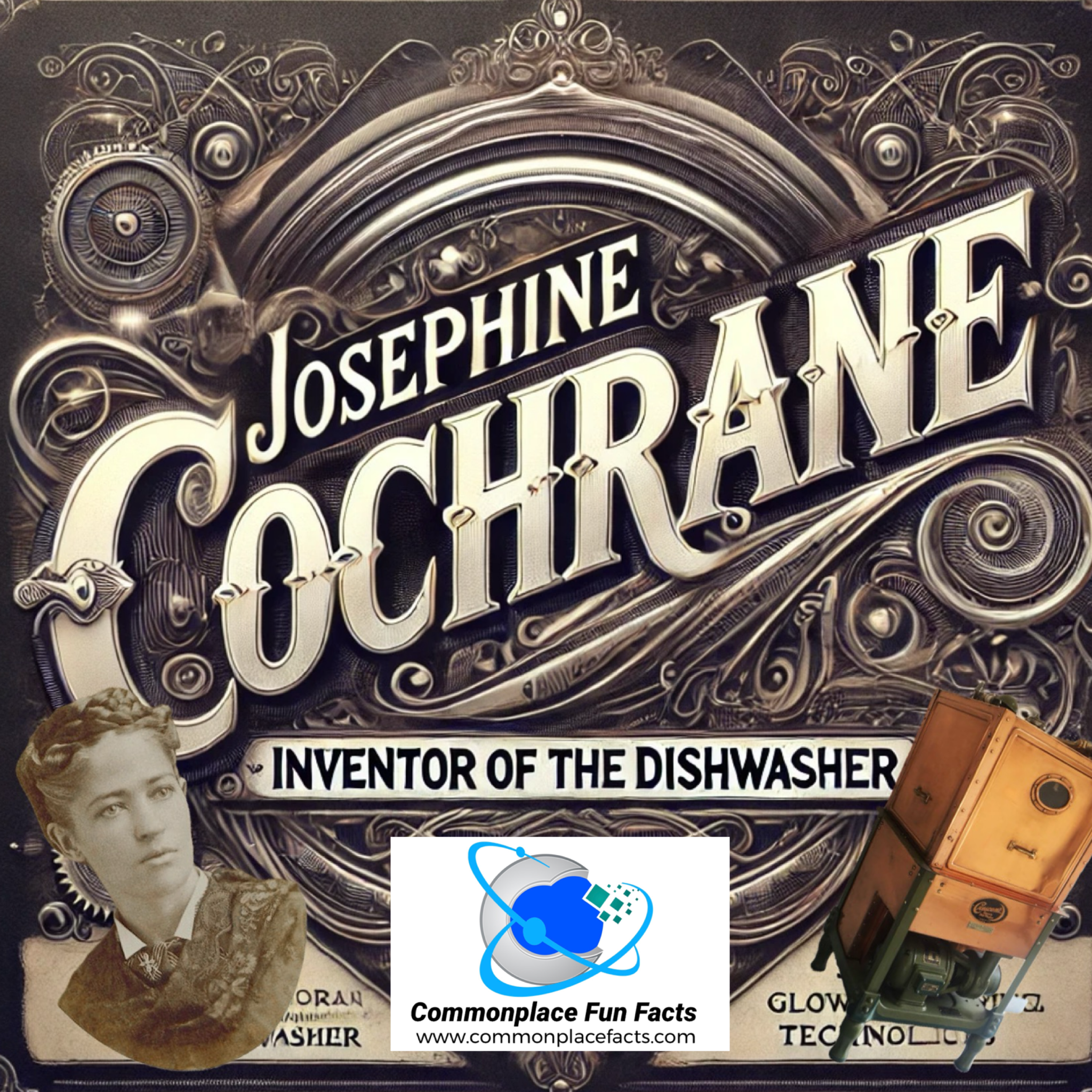

The 1893 Chicago World’s Fair was a dazzling showcase of human ingenuity, where innovation reigned supreme. From the world’s first Ferris wheel to electric lights and the iconic Cracker Jack candy, it was a celebration of ideas that would shape the future. Among the marvels on display in Machinery Hall was a machine so practical and yet so forward-thinking that it quietly transformed domestic life forever. It was there, thanks to the innovative brilliance of its inventor, Josephine Cochrane. That invention? The Garis-Cochran Dishwashing Machine.
Table of Contents
While inventions like the telegraph and phonograph drew crowds, and Eli Whitney’s century-old cotton gin inspired nostalgia, Josephine Cochrane’s dishwasher invention captured imaginations for its promise of freedom—from chipped heirloom china and endless hours at the sink. Capable of cleaning over 200 dishes in two minutes, it was a marvel of efficiency. Even more remarkable? It was the only invention at the fair designed by a woman. The machine earned the highest award for “mechanical construction, durability, and adaptation to its line of work,” solidifying its place in history—and Josephine’s.
But behind the gleaming plates and spotless glassware was a story of grit, determination, and a refusal to accept society’s limits.
Josephine Cochrane: Born to Innovate

Josephine Garis Cochran was born on March 8, 1839, in Ashtabula County, Ohio, into a family that practically had “inventor” etched into their DNA. Her grandfather, John Fitch, patented the first steamboat in the United States, while her father, John Garis, was a civil engineer. Surrounded by creativity and problem-solving, young Josephine absorbed the idea that no challenge was too big to tackle.
Unfortunately, opportunities for 19th-century women inventors to flex their creative muscles were as rare as a dishwasher in a Victorian kitchen. At 19, Josephine married William A. Cochran, a dry-goods businessman whose dreams of striking it rich in the California Gold Rush never quite panned out. Still, he eventually found success in Illinois, moving the family into a Shelbyville mansion, where Josephine embraced her role as a socialite.
Curiously, the woman who would become the dishwasher inventor was not motivated by a desire to have clean dishes. Her concern was about keeping the nice ones intact. Her servants didn’t seem to be as concerned about her priceless dishes as she was. After discovering chips and cracks in her beloved collection, she resolved to protect her china. There, amidst grand dinner parties and heirloom china, the inspiration for the dishwasher invention struck.
“If Nobody Else Is Going to Invent a Dishwasher, I’ll Do It Myself”
Josephine Cochrane was nothing if not determined. “If nobody else is going to invent a dishwashing machine, I’ll do it myself,” she declared. True to her word, she sketched out her design, envisioning a machine that used water pressure instead of scrubbers.

Tragedy struck in 1883 when her husband died, leaving her with two children, $1,500, and a mountain of debt. What had started as a pet project suddenly became a financial lifeline. Building her dishwasher invention wasn’t easy. Male mechanics, skeptical of her lack of formal training, insisted on trying their own methods first—only to fail and grudgingly follow her instructions. “I couldn’t get men to do the things I wanted in my way until they had tried and failed in their own,” she recalled.
By 1885, Josephine had filed her first patent, and with the help of mechanic George Butters, she built a prototype. Unlike earlier dishwashing machines, which required pouring boiling water over dishes, her design featured racks to hold dishes in place while pressurized water did the cleaning. In December 1886, she was granted U.S. Patent No. 355,139 for her “Dish Washing Machine.”
Crossing the Lobby—And the Line
If building the machine was tough, selling it was even tougher. Josephine initially wanted to sell directly to women, but as she noted, “When it comes to buying something for the kitchen that costs $75 or $100, a woman begins at once to figure out all the other things she could do with the money. She hates dishwashing—what woman does not?—but she has not learned to think of her time and comfort as worth money.”

Instead, the dishwasher inventor turned her focus to hotels and restaurants. In 1887, a wealthy friend introduced her to the manager of Chicago’s Palmer House (where, incidentally, the original brownie was introduced), one of the nation’s premier hotels. The manager was impressed with her pitch, and Josephine walked out with her first order.
Her next stop was the Sherman House hotel, but this time she lacked an introduction. Crossing the hotel lobby alone was an unthinkable act for a woman of her social class, but Josephine braved the judgmental stares. “I thought I should faint at every step,” she later said, “but I didn’t—and I got an $800 order as my reward.”
A Business Woman in a Man’s World
Though orders trickled in, Josephine struggled to secure the funding needed to expand her business. Investors often demanded that she relinquish control to male management, but Josephine refused. “I wish that women alone might form the stockholders,” lamented one supporter in 1889.

It was a lonely fight, but Josephine’s persistence paid off. By the time of the 1893 Chicago World’s Fair, her company, the Garis-Cochran Dishwashing Company, had nine machines in daily use at the fair’s restaurants. Orders poured in from across Illinois and beyond, including hospitals and colleges that valued the machine’s efficiency and sanitation.
By 1898, Josephine opened her own factory and expanded her reach as far as Alaska and Mexico. Still, her dream of bringing dishwashers into every home remained out of reach. Domestic models cost $350—more than most families could afford—and many homes lacked the plumbing to support them.
A Legacy That Endures: a Pioneer Among Women Inventors
Josephine never rested on her laurels. By the time she passed away in 1913 at the age of 74, she had turned her invention into a thriving business. In 1926, the company was acquired by Hobart Manufacturing, which began producing dishwashers under the KitchenAid brand. Today, it is part of the Whirlpool Corporation.

Though her machine didn’t become a household staple until the 1960s, Josephine’s ingenuity paved the way. In 2006, she was inducted into the National Inventors Hall of Fame, and in 2013—100 years after her death—the Romanian government issued a stamp commemorating her contributions to innovation.
“If I knew all I know today when I began to put the dishwasher on the market,” she once said, “I never would have had the courage to start. But then, I would have missed a very wonderful experience.”
And so, every time you load your dishwasher, take a moment to thank Josephine Cochrane—a woman who dared to dream of a world without chipped china. Her ingenuity, determination, and courage ushered in a world where dishpan hands can be a thing of the past.
You may also enjoy…

The Little Dwarf Who Advised a President: How the Julia Sand Letters to Chester A. Arthur Shaped a Presidency
Julia I. Sand, became an unexpected moral advisor to President Chester A. Arthur and helped shape his presidency. Through 23 bold letters, she criticized his past and urged him towards reform. Becoming one of the most unlikely of presidential advisors, Sand made a remarkable impact in a male-dominated political landscape.

Anne Lindbergh: The Surprising Unknown Life of an Aviation Legend
Anne Lindbergh was more than Charles’ wife — she was an aviator, best-selling author, and pioneer whose legacy deserves a flight plan of its own.

The Armless Wonder Who Rose Above Her Circumstances
By just about every standard of society, no one should have heard about Kathryn M.R. Smith (1882-1967). Horribly disfigured at the hands of an abusive alcoholic father, the girl who went by the name Kittie wasn’t necessarily lucky to even be alive. One of her neighbors was heard to say that she would be better…





Leave a Reply