
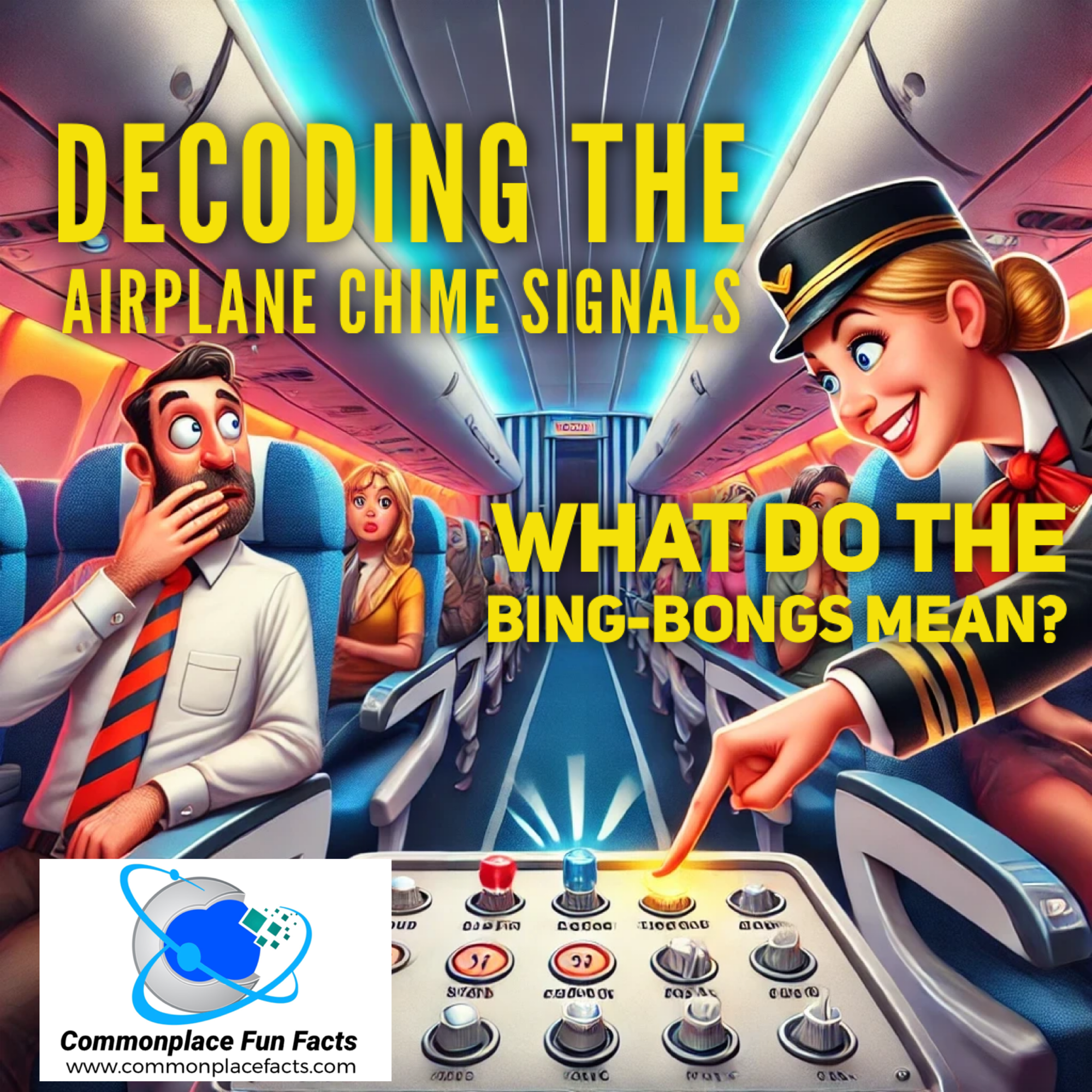

The Mystery of the Airplane Chime Signals
You rush to get the airport, wait impatiently to go through security, stand in line to board the plane, barely manage to get your suitcase into the overhead bin, and take your seat. You are exhausted. All you want to do is push your seat back and try to catch a nap.
That’s when you hear, “Bing-bong!” The sound of the airplane chime rouses you from the early stages of slumber. What does it mean?
Or perhaps you are half-way through the flight. The plane starts to shake. Surely, it’s just a wee bit of turbulance. Nothing to worry about, right? Then you hear, “Bing-bong!” Another airline chime. The flight attendants give each other a knowing look and begin a well-rehearsed choreograph of activity, all while assuring your fellow passengers, “Nothing to worry about. It’s all perfectly normal. Relax, and we’ll be on the ground shortly.”
What do airplane chimes mean? Is it all part of a conspiracy to rob you of sleep? Are they part of a secret communication system to let the crew know that it’s time to prepare for disaster? Are airplane chime signals nothing more than a cacophany of noise no more orchestrated than the ghastly music that booms from the car of that teenager who lives down the block?
Contents
Decoding the Secrets
To find out, we deployed the operatives of the Commonplace Fun Facts Elite Special Forces (otherwise known as unpaid interns who scour the internet while working in an environment that would make the laborers of child sweat shops feel envious) to unravel the mystery. The big three airlines—American, United, and Delta—all use these mysterious chimes, so we sought to discover whether there is any rhyme or reason to the signals. Surprisingly, either the security for their top secret codes is shockingly in need of upgrade or the chimes aren’t considered to be that big of a secret.
After sober consideration, we’ve made the editorial decision not to disclose everything we learned. We have two reasons for this:
- Chime codes vary by airline, plane model, and even specific flight crew. What’s true today might not be true tomorrow, so don’t spend a lot of time memorizing any of this. Nobody wants to confuse an emergency signal with an innocent one.
- Speaking of emergencies, airlines have special flight attendant signals to alert the crew to serious situations. We can neither confirm or deny that we know what that special chime is. As much as we love you, dear readers, we’re not keen on handing out information that could suddenly make the cabin as unruly as that weird party we attended during our freshman year of college. You know… that one where they never did figure out who put the dead opossum in the women’s bathroom. (Again, we can neither confirm or deny having such sensitive information.)
Having said that, here’s what we can tell you.
What the Airplane Chimes Mean By Airline
United Airlines
According to the fine folks at United Airlines, most of the time, the chimes are about communication, not catastrophe. A single chime? The cockpit crew is calling the first-class flight attendant. Two chimes? They’re chatting with the coach crew. Even during turbulence that makes you consider your life choices, that chime is more likely to mean “bring coffee to the cockpit” than “please be advised that one of the wings has fallen off and we will be returning to the planet’s surface a wee bit earlier than expected.”
Some United planes have lower-tone chimes for passenger calls and a pleasant “bing-bong” for crew-to-crew communication. So next time you hear that sound, it’s probably just your flight attendants plotting how to distribute the last chicken sandwich, not strategizing a mid-air evacuation.
American Airlines
American Airline’s airplane chime system is all about timing. They use chimes as flight attendant signals to let the crew know when to prepare for landing, when to buckle up, and when to check in with the cockpit crew. While American does have an emergency signal, it’s used so rarely that most passengers will never hear it. Depending on the emergency, they’ll never be able to tell anyone about it anyway.
Delta Airlines
Delta Airlines, always an overachiever, takes airplane chime signals to the next level. They have specific chimes for everything from turning off the “fasten seatbelt” sign (a double high-low chime) to informing flight attendants about the plane’s current altitude.

Flight attendants can also use distinct tones to identify who’s calling on multi-deck planes. This way, the crew knows whether it’s the cockpit, another attendant, or some joker in economy requesting a second bag of pretzels.
During emergencies, Delta’s system ensures that the flight crew can communicate privately with the cabin crew, sparing passengers the stress of overhearing something that sounds ominous but isn’t. Their flight attendant signals are all about briefing the crew because the goal is to solve problems, not spark a stampede to the nearest emergency exit.
The Sterile Cockpit Rule: When the Chimes Go Silent
One thing all airlines have in common is the “sterile cockpit” rule. During takeoff and landing—the most critical phases of flight—flight attendants are under strict orders not to disturb the pilots unless it’s an emergency.
In the old days, this period was marked by turning off the “no smoking” sign (back when smoking on planes was still a thing). Now, it’s simply an unspoken rule: leave the cockpit alone unless the plane is on fire—or you’ve run out of coffee.
Final Thoughts: Keep Calm and Chime On
So the next time you hear a airplane chimes mid-flight, relax. Odds are, it’s not a coded message about your impending doom. It’s probably just the flight attendants being reminded to fasten their seat belts—or the cockpit crew asking for their third Diet Coke of the day. (In that respect, the crew has a lot in common with the White House staff responsible for responding to POTUS pushing a certain button on his desk.)
And if you happen to be seated next to a fearful flyer who flinches at every “bing-bong,” just remember: your spilled beverage is a small price to pay for the knowledge whatever is going on, your flight crew is getting all the information they need to handle it.
You may also enjoy…

How to Steal an Airplane Without Breaking the Law
Ever wonder how to steal an airplane and still not break the law? One guy did it. Find out how in this intriguing article.

Meet the Astonishing Man Who Ate an Airplane
Explore the astonishing story of the man who ate an airplane: Michel Lotito, world record holder for the strangest diet.

What Did STENDEC Mean? The Enigmatic Last Message of Star Dust Flight CS-59
In August 2, 1947, the “Star Dust” airplane vanished in the Andes Mountains, with a cryptic last message, “STENDEC,” adding to the mystery. In 1998, the wreckage was found, but the meaning of “STENDEC” remains unsolved. Theories range from it being a mistake to an acronym, but its true significance remains a compelling aviation mystery.



Leave a Reply