

The First Computer Bug — Who Knew it Had Wings?
Even if you’ve never written a single line of computer code—unless you count the emails you sent to the I.T. Department, bemoaning the fact that you can’t get your computer to work—you’ve probably heard the term “computer bug.” It’s the go-to phrase when your phone freezes, your app crashes, or your email mysteriously sends itself into the void. Bugs, we’re told, are the little digital gremlins behind it all. But where did that word come from? Did software developers just get really into pest control metaphors? Was there a vote?
As it turns out, the answer involves a real bug. Like, wings-and-antennae kind of bug. A moth, to be precise. And this isn’t just some urban legend cooked up in a Silicon Valley basement—this story is logged, archived, and taped (literally) into history thanks to a brilliant woman named Grace Hopper and a giant machine that thought moths made great roommates.
Buckle up, dear reader. We’re about to squash some myths, trace a word through the dusty archives of engineering history, and meet the insect that earned itself a place in the Smithsonian—without even having Wi-Fi.
Contents
The Bug That Made History
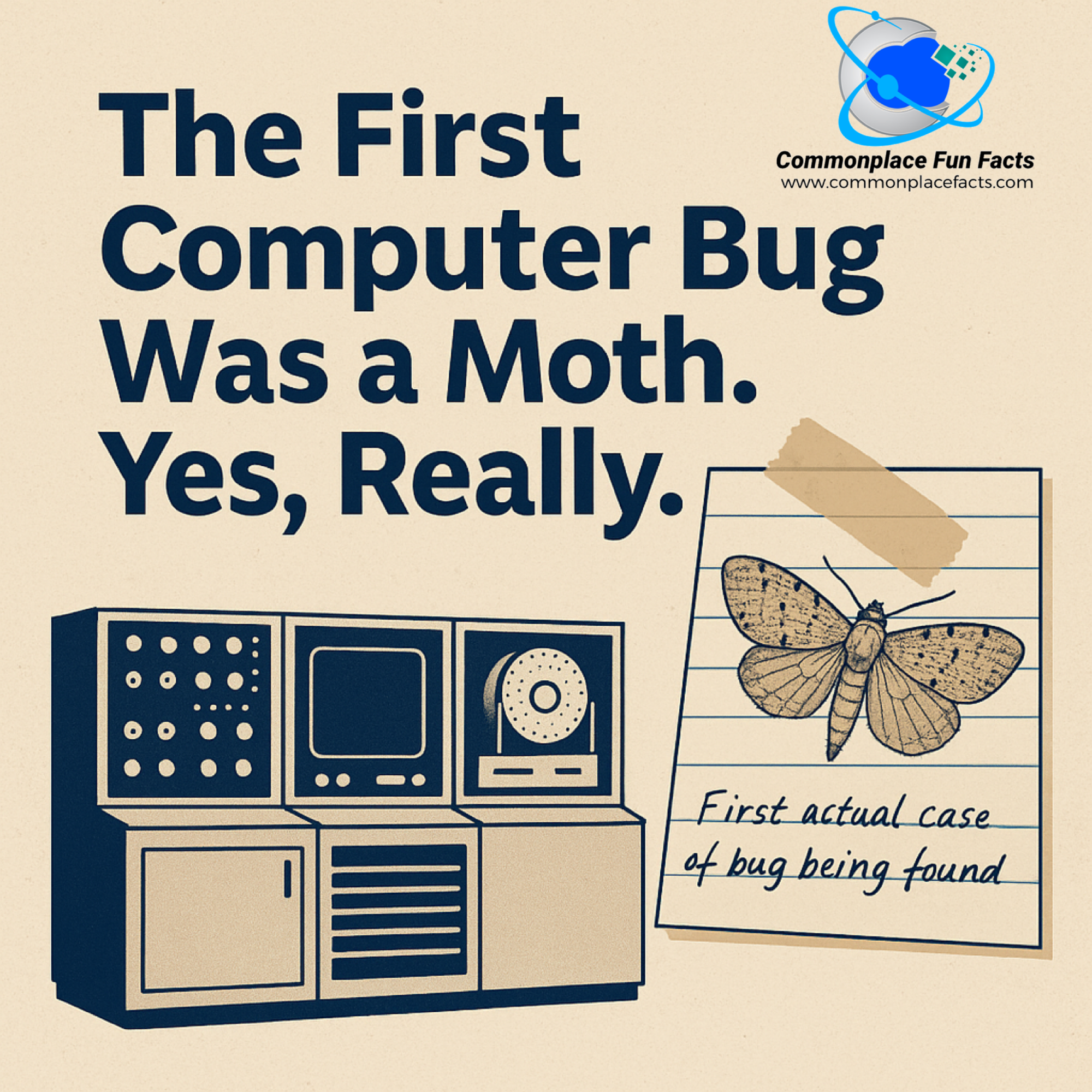
On September 9, 1947, Grace Hopper and her team were working on the Harvard Mark II—a computer that looked like a steampunk fever dream. That’s when they noticed something was wrong. Unlike most of us, who instinctively try turning it off and on again, they cracked open the machinery and found… a moth. An actual, literal moth had wedged itself inside a relay, presumably looking for a cozy place to nap. In so doing, this unassuming insect achieved immortality and accidentally invented an entire genre of tech folklore.

The team dutifully taped the crispy critter into their logbook with the note: “First actual case of bug being found.” And thus, history was made. The term “debugging” went from metaphorical to entomological faster than you can say, “The printer is out of toner again.”
Wait—Was This the First “Bug”?
As it turns out, no. That moth was just the first documented insect found causing a problem in a computer. The term “bug” had been kicking around for decades before Grace Hopper and her team ever busted out the Scotch tape.
In 1878, Thomas Edison casually threw the term around in a letter where he said:
You were partly correct. I did find a ‘bug’ in my apparatus… The insect appears to find conditions for its existence in all call apparatus of telephones.
Thomas Edison
It’s unclear if Edison meant an actual insect or was just indulging in some 19th-century sarcasm. Either way, the phrase stuck—like the frozen expression of a Zoom caller whose WiFi goes out in mid-meeting.
Monsters in the Machine
Linguistically speaking, the word “bug” goes back even further. The Middle English word bugge meant a monster or goblin. That’s right—software bugs are literally monsters under your bed, and the only defense is Ctrl+Alt+Delete.
Engineers in the early 20th century used “bugs” to refer to unexplained glitches in everything from telegraphs to airplane engines. They were gremlins—mysterious, misbehaving poltergeists haunting the gears of progress. And they were nobody’s favorite roommate.
So, Why Did Grace Hopper’s Moth Go Viral?
Simple: it was just too perfect. The term “bug” was already in circulation, but Hopper’s team literally found a bug inside a computer. The pun potential was irresistible. The Smithsonian even archived the logbook page, moth and all. It became the tech equivalent of finding a unicorn riding a segway—it was just that delightful.
From Bugs to Bohrbugs
Since then, the word “bug” has taken on a whole ecosystem of subtypes. We now have:
- Heisenbugs: disappear when you try to study them
- Bohrbugs: stable and reproducible (like your childhood trauma)
- Mandelbugs: so complex they defy explanation
- Schrödinbugs: appear to work until someone reads the code
The terminology might be whimsical, but the frustrations are real. And somewhere, that moth is laughing its tiny buggy head off from beyond the relay.
Who Was Grace Hopper?
If computers had a Mount Rushmore, Grace Hopper’s face would be carved right between Alan Turing and HAL 9000 (except hers would be the only one smiling). Known affectionately as “Amazing Grace,” Hopper was one of the most brilliant minds of the 20th century—and not just because she made moths famous.

Born in 1906, Hopper earned her Ph.D. in mathematics from Yale back when women in computing were about as common as extroverted and socially-adept IT programmers. During World War II, she joined the Navy Reserve and ended up working on the Harvard Mark I, a machine that looked like an unholy alliance between a filing cabinet and a factory floor. She didn’t just help operate it—she redefined how we communicate with machines.
Hopper believed computers should speak human—specifically, English. While the rest of the world was getting cozy with cryptic assembly code, she pioneered the development of COBOL, one of the earliest programming languages that used plain-ish English. If you’ve ever read something needlessly complex and asked, “Why can’t this just make sense?”—you’re riding on Hopper’s wavelength.
Her résumé reads like it was written by someone trying to one-up Einstein: first woman to receive the National Medal of Technology, recipient of the Presidential Medal of Freedom, Navy Rear Admiral, and—perhaps most cool—a destroyer class ship named in her honor. The USS Hopper sails the seas because of a woman who once fixed a computer by removing an insect.
But perhaps her greatest achievement was cultural. Hopper gave programmers more than tools—she gave them attitude. She once famously said, “It’s easier to ask forgiveness than it is to get permission,” which has since become the unofficial motto of every developer, hacker, and 3rd grader trying to microwave a fork.
Final Thoughts from the Debugging Department
You don’t need to be a computer programmer to appreciate the brilliance—and the comedy—of this story. A literal moth flies into a massive machine, causes chaos, gets logged as a “bug,” and ends up enshrined in tech history. It’s the kind of thing that sounds made up until you realize it’s too weird not to be true.
Grace Hopper didn’t invent the word “bug,” but she and her team gave it wings—and a punchline. Ever since, whenever our gadgets go haywire, we don’t just blame gremlins or ghosts. We say it’s a bug. And now, thanks to one ambitious moth and a few brilliant engineers with a sense of humor, that little word has crawled its way into everyday conversation.
So the next time your phone freezes, your app refuses to cooperate, or your smart speaker plays Nickelback instead of NPR, just smile knowingly. Somewhere out there, Grace Hopper is probably chuckling—and that moth is still taking all the credit.
And wouldn’t you much rather be remembered for naming the first computer bug than being the guy responsible for creating spam email?
You may also enjoy…

From Corporate Scandal to Chatbot Charm: How the Enron Email Corpus Taught Computers to Talk Back
Discover how the Enron Email Corpus, a trove of corporate emails from a historic scandal, became a cornerstone for AI development, spam filters, and modern tech innovation.

Toy Story 2: How One Line of Computer Code Nearly Killed the Pixar Hit Movie
Did you know a single mistake almost erased Toy Story 2 forever? Discover the incredible true story behind Pixar’s $100M recovery.

The Affair of the Sausages and the Origin of the Protestant Reformation
Sin, Suspicion, and The Affair of the Sausages Sausages. They may fill your mind with questions. What are they made of? How are they made? How will they affect my waistline or cholesterol levels? These are all legitimate questions, but have you ever wondered what effect a sausage may have on your immortal soul? Early…






Leave a Reply