
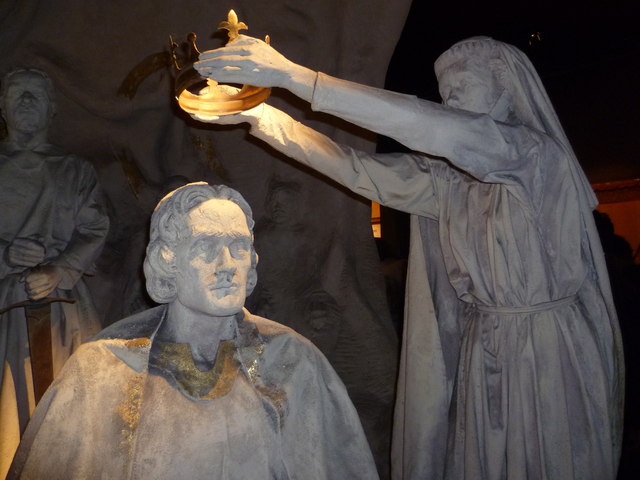

Robert the Bruce (1274 – 1329) was crowned King of Scots on March 25, 1306, by Bishop William de Lamberton at Scone, near Perth, Scotland.
By tradition, the Earl of Fife had the role of placing the monarch on the Stone of Destiny, the ancient stone upon which the Scottish kings have been crowned. Duncan, the Earl of Fife, opposed Bruce and supported the English in the struggle between the two nations. Duncan, in fact, resided in England at the time. In light of his absence, Duncan’s sister, Isabella MacDuff, Countess of Buchan, assumed the family’s role and right to participate in the ceremonies.
On March 27, 1306 — 48 hours after the first coronation — Isabella MacDuff, on behalf of the earldom of Fife, placed the crown on Robert the Bruce, Earl of Carrick, Lord of Annandale, King of Scots.

The Battle of Bannockburn: How Scotland Won With Mud, Pikes, and One Very Unfortunate Axe
Discover how Robert the Bruce used mud, pikes, and battlefield smarts to win the Battle of Bannockburn and humble Edward II.

The Freakish Fate of the Heart of Louis XIV
Was Louis XIV’s heart used for paint? Find out in this intriguing article about the Sun King.

How Did Scotland’s Imperial Plans Destroy Its Independence?
In 1314, King Robert the Bruce led Scotland to a heroic victory over the English at the Battle of Bannockburn. The unlikely trouncing of one of the world’s mightiest armies boldly proclaimed Scotland’s arrival on the scene as a powerful force of contention. Although the Scottish people would go on and play defining roles in…


Leave a Reply