
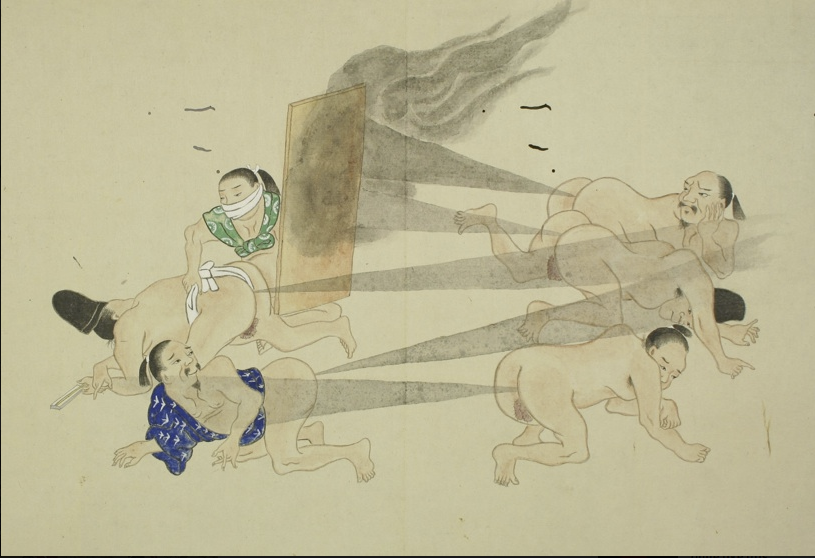

A Japanese scroll art created 200 years ago during the Edo period (1603-1868) is dedicated to gas warfare, but not the kind of gas traditionally used in combat.
The He-Gassen (literally “Fart Battle”) portrays multiple scenes where individuals direct their flatulence against their adversaries. Art historians believe the work was inspired by growing suspicion of foreign influence during that period.
Inasmuch as “kamikaze” literally means “divine wind,” one can’t help but note the fact that wind — divine or otherwise — has a long history of being used against foreign opposition.

How a Fart Started a Revolution
Possibly you have found yourself hastily vacating a room because of someone’s gaseous emissions. Maybe your plans to shop in a certain aisle of a store changed after catching a whiff of the unpleasant aroma another shopper left behind. Some have told dramatic stories of forsaking hopes of romance at the sound of a rude…

What Was the Deadliest Fart in History?
Find out about the deadliest fart in history — an incident that cost over 10,000 lives.

Stinky Communication Sounds Fishy
We all know that passing gas in public sends a message. Usually, that message is unwelcome. Among herring, however, communicating through flatulence may not be as fishy as it sounds. A study published in Biology Letters by researchers Ben Wilson, Robert S. Batty, and Lawrence M. Dill determined that herring send messages through bubble emissions from their…





Leave a Reply