


The smiley face is so much a part of our culture that it seems as if it has been around forever. It hasn’t. It was created in 1963 and flowed from the creativity of commercial artist Harvey Ball.
Ball was tasked with coming up with some kind of image to help boost sagging morale at the State Mutual Life Assurance Company of Worcester, Massachusetts. Ball labored over the assignment for less than ten minutes, and when he was done, the smiley face had been born. Listen to a BBC radio documentary, Smiley’s People, about the creation of the icon here.
Ball received $45 for his work (about $350 in 2015 adjusted-for-inflation value). He did not copyright or apply for a trademark for this seemingly simple design. Within 8 years more than 50 million smiley face buttons had been sold around the world.
Ball died on April 12, 2001, at the age of 79 — presumably with a smile on his face because of the happiness he added to the world.

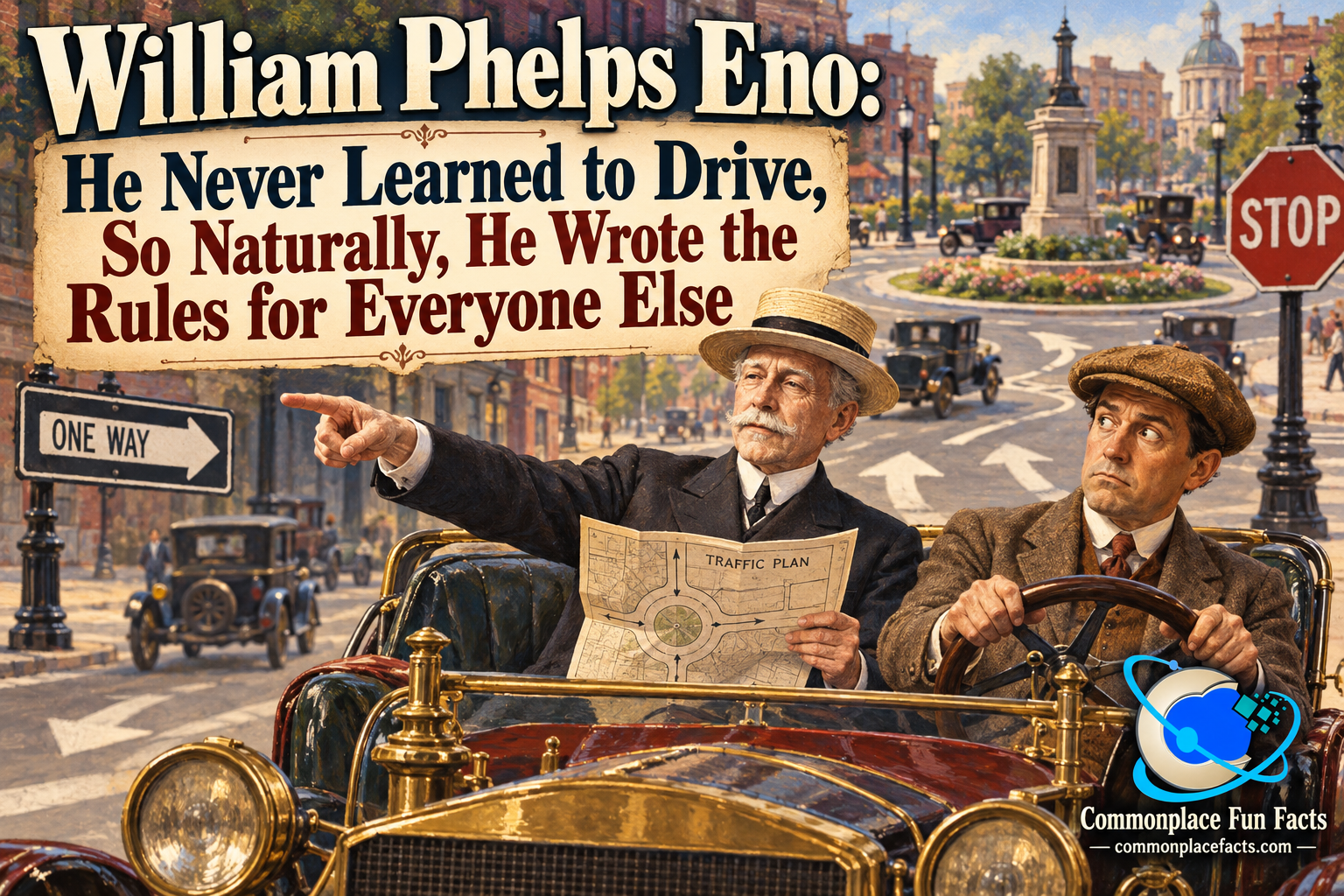
William Phelps Eno: He Never Learned to Drive, So Naturally, He Wrote the Rules for Everyone Else
William Phelps Eno helped create modern traffic rules, traffic circles, and one-way streets. Even so, the Father of Traffic Safety never learned to drive.

Mary Walton: The Woman Who Quieted New York’s Trains After Thomas Edison Couldn’t
When New York’s elevated trains became an unbearable neighborhood nuisance, boardinghouse owner Mary Walton fought back with sand, ingenuity, and a patent. She also developed an early approach to controlling industrial smoke. Thomas Edison had fame and laboratories. Walton had a basement, a mechanical mind, and very little patience for noisy trains.

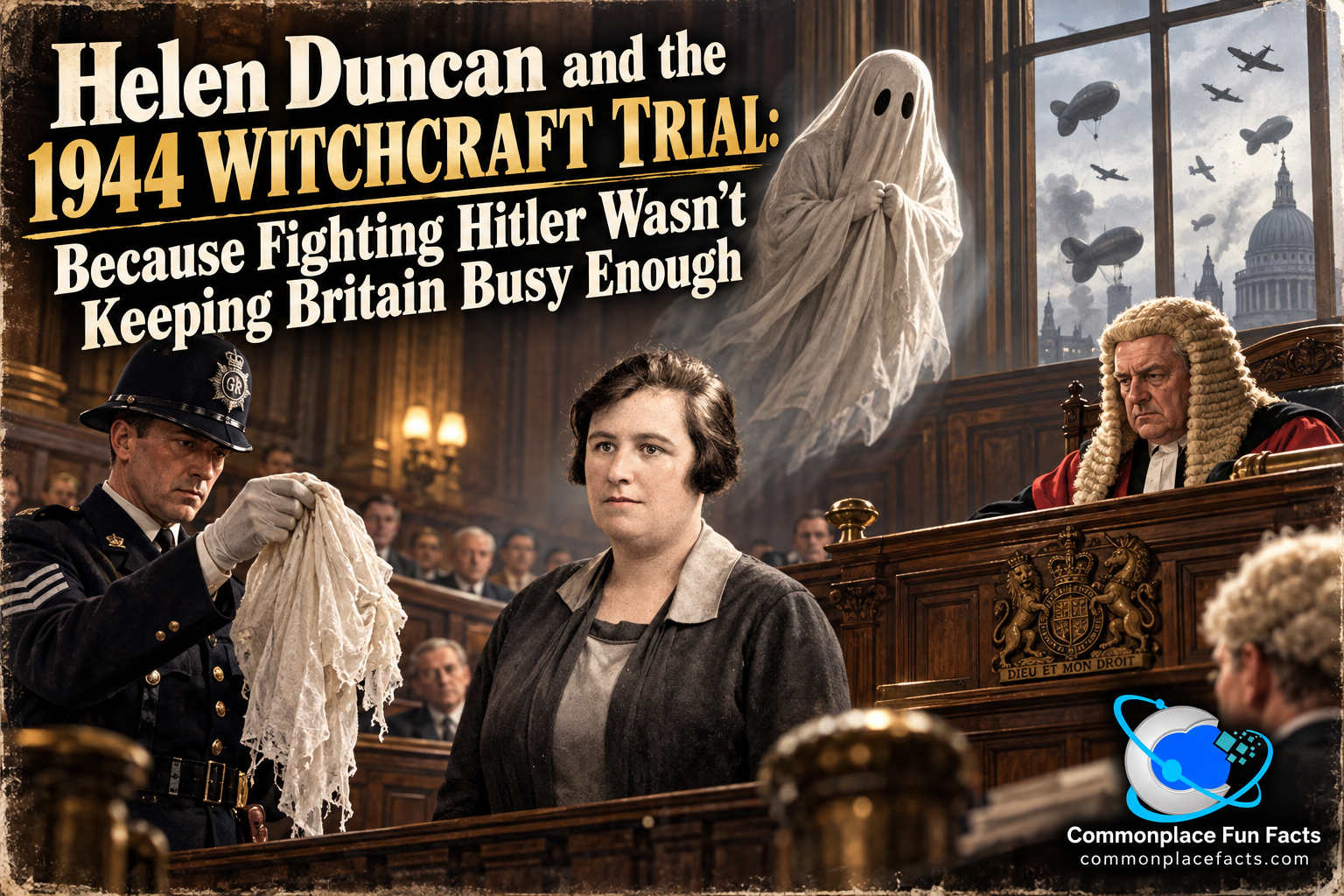
Helen Duncan and the 1944 Witchcraft Trial: Because Fighting Hitler Wasn’t Keeping Britain Busy Enough
In 1944, while Britain prepared to invade Nazi-occupied France, Helen Duncan went to prison under a witchcraft law dating from 1735. Her extraordinary case involved suspicious ectoplasm, a sunken battleship, an outraged Winston Churchill, and a legal system that apparently hadn’t finished with the eighteenth century.


Leave a Reply