

History records that Scots won their freedom at the Battle of Bannockburn on June 24, 1314. The battle raged for two days before the heavily outnumbered Scots defeated the professional military of England’s Edward II.
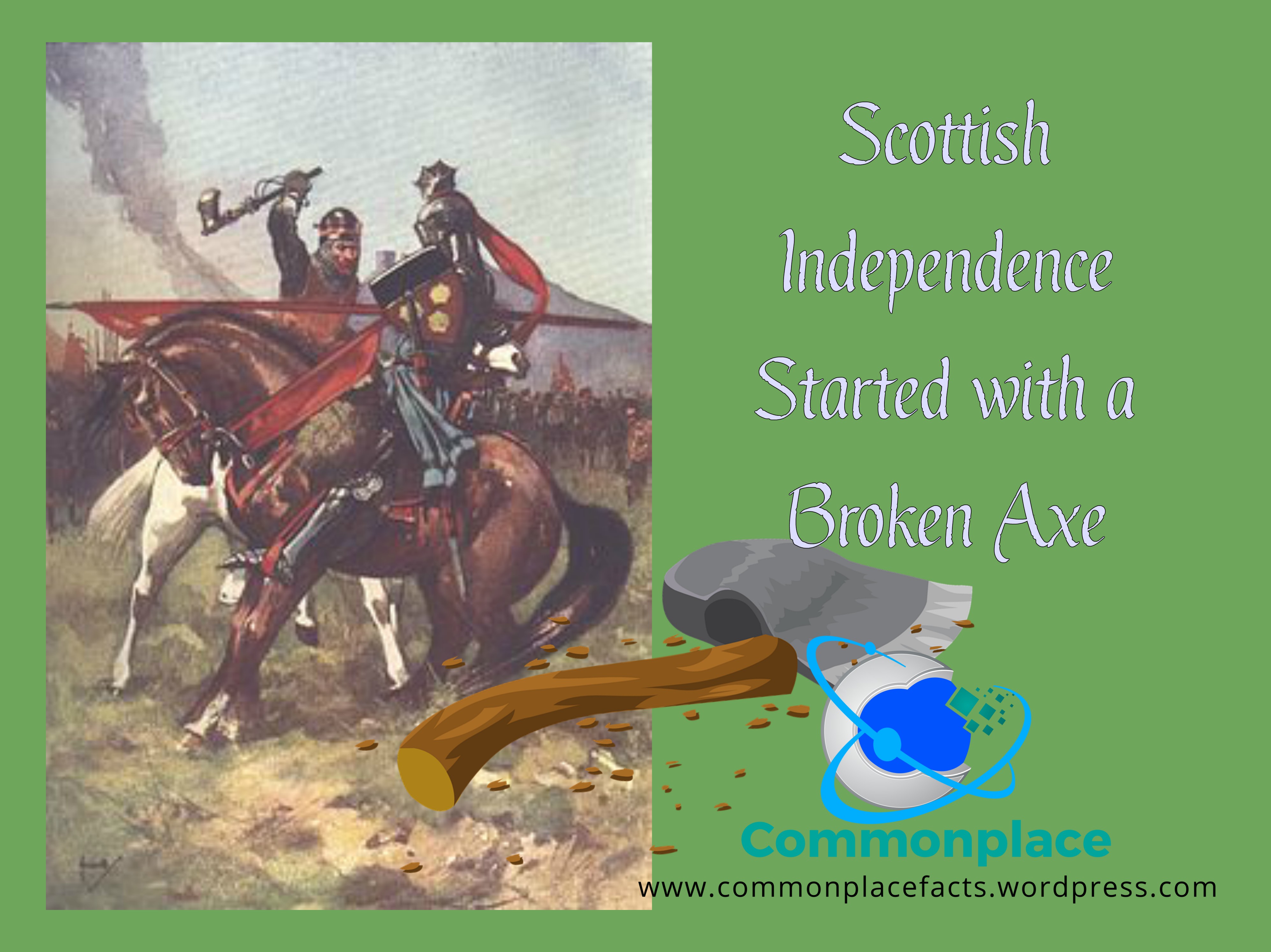
The battle could easily have been over before it started. On June 23, as the two armies caught sight of each other, an English knight, Sir Henry de Bohun, saw the Scottish king riding on a pony, armed only with a battle-axe. With visions of striking down the leader of his enemies, the knight rushed at the king to put an end to the rebellion.
It was, in miniature, a picture of the battle that was to come. The Scottish king on his small pony, unprepared for battle, should have stood little chance against the trained knight on his mighty battle horse, in full armor.
Horrified, witnesses watched at Bohun charged the king. The Bruce, watched calmly as the knight approached. At the very last moment, he turned his pony to the side. As Bohun rushed past, the king stood in his stirrups and brought his battle-axe down on the knight’s head. The helmet shattered under the mighty blow, and Bohun was dead before he hit the ground.
The king’s men gathered around him, and his top advisors scolded him for allowing himself to be placed in such danger. “Bethink you, Sire, the fate of all Scotland rests upon you,” they said.
The king had other concerns on his mind. “I have broken my good axe,” was all he said, “I have broken my good axe.”
You may also enjoy…

When Scottish Independence Hung By a Spider’s Web
The winter of 1306 found Scotland’s Robert the Bruce on the verge of giving up. Having just been crowned King of Scots on March 25 (and again on March 27) of that year, his fortunes had turned. Instead of sitting on a throne in a castle, he was hiding in a cave on the Island…

A King So Nice They Crowned Him Twice
Robert the Bruce (1274 – 1329) was crowned King of Scots on March 25, 1306, by Bishop William de Lamberton at Scone, near Perth, Scotland. By tradition, the Earl of Fife had the role of placing the monarch on the Stone of Destiny, the ancient stone upon which the Scottish kings have been crowned. Duncan,…

Vikings Beware! There Be Scots Here!
Vikings were feared throughout Northern Europe for more than 300 years. The mere mention of these fierce Norse warriors was enough to turn the most battle-hardened soldier weak at the knees. There was one place, though, where even the Vikings trembled and avoided when possible: Scotland. 800-year-old documents, written on yellowed calf vellum, have been…





Leave a Reply