
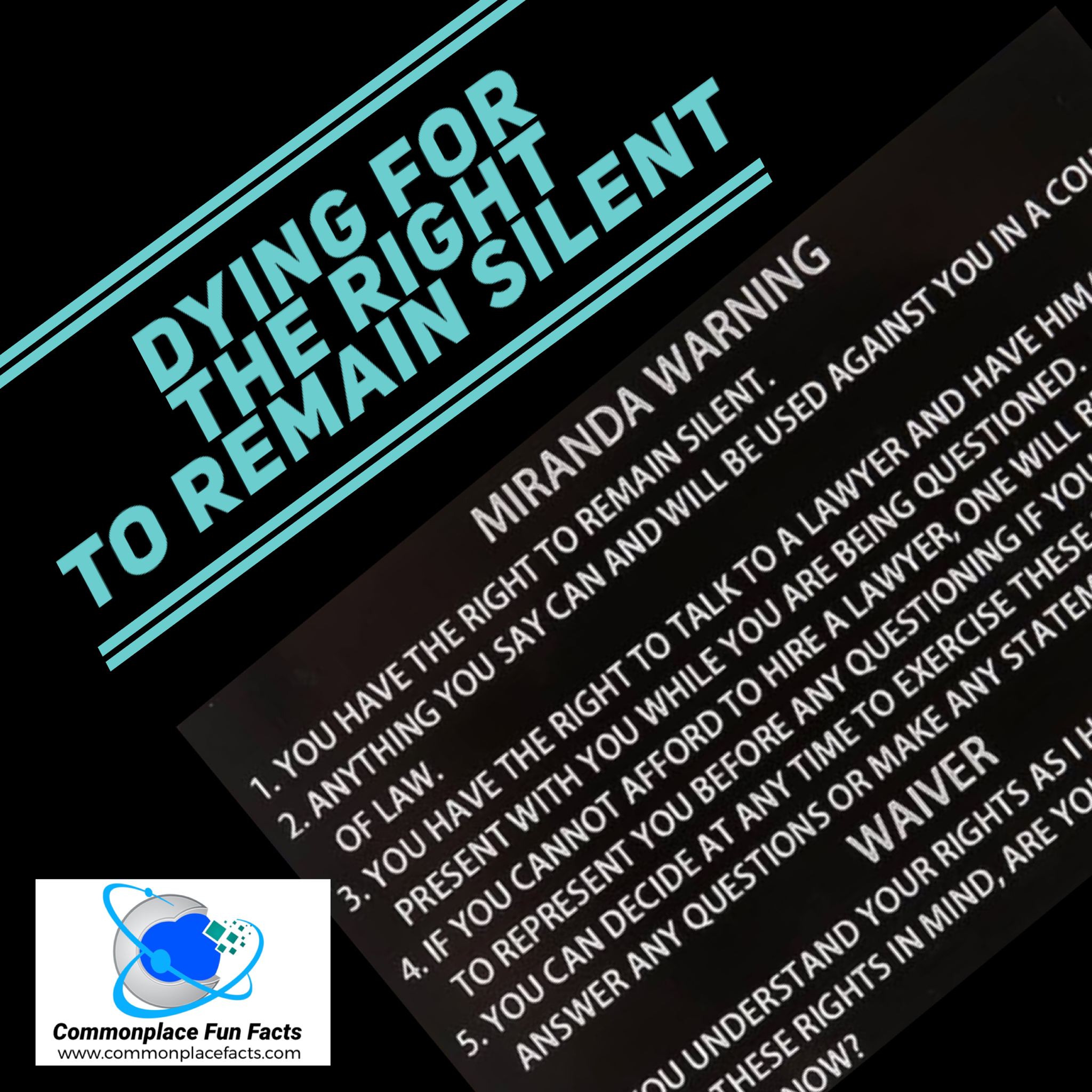

Ernesto Miranda and the Right to Remain Silent
If you think the primary objective of a criminal trial is the pursuit of the truth, think again.
It’s understandable if you make that mistake. After all, witnesses solemnly swear to tell the truth, the whole truth, and nothing but the truth. Anyone who tells a lie under oath can be prosecuted for perjury. Even so, getting to the truth is not the most important goal.
If we were interested in the truth above all else, there’s one easy way to get to it: put the defendant on the stand. The defendant knows better than anyone else whether he or she committed the crime. In the United States, if the defendant doesn’t want to testify, no one can force the issue. He or she has the right not to incriminate oneself.

If the defendant doesn’t want to testify in court, we could get closer to the truth by admitting the defendant’s out-of-court statements into evidence. Frequently, the guilty party will confess or make some kind of incriminating statement while in police custody. There are strict rules about that sort of thing, though. That’s because getting to the truth is not the primary reason for the trial.
Despite the common misconception, the supreme objective in every criminal trial is to uphold the defendant’s constitutional rights. There may only be one person on trial in a courtroom at any given time, but if that person’s rights are violated, it endangers the rights of everyone else.
That is why Ernesto nearly got away with the rape and kidnapping of Lois Ann Jameson. No one seriously believes he was innocent. He did, after all, confess to the crime. When his case was reviewed by the U.S. Supreme Court, however, the justices were not as concerned about his guilt as they were about his rights. The High Court concluded that the police should have informed Ernesto that he had the right to remain silent, the right to have an attorney present during interrogation, and the right to end the interrogation at any time. Those rights have become a benchmark of the U.S. criminal justice system because of the U.S. Supreme Court case of Ernesto Miranda v. Arizona, 384 U.S. 436 (1966).
Ernesto’s conviction was overturned. The state retried him, this time without the confession. He was convicted again and sentenced to 20-30 years in prison.
In 1972, Ernesto was paroled. By now, his name was famous, not because of the horrible crimes he committed, but because of the rights that were associated with it. Ernesto quickly capitalized upon that fame and made a meager living by selling autographed Miranda cards, each bearing a list of the famous rights.

Ernesto had a couple of those cards in his pocket on January 31, 1976. He was in a bar in Phoenix, Arizona, when he got into a fight with a couple of patrons. Ernesto bloodied his hands in the fight and went into the washroom to clean up.
As Ernesto washed up, his antagonists, Eseziquiel Moreno Perez and Fernando Zamora Rodriguez, plotted how to deal with him. According to an eyewitness account, Rodriguez gave Perez a knife and left the bar. Perez waited for Ernesto to emerge from the washroom. When he did, Perez lunged at the surprised Ernesto, stabbing him once in the chest and once in the abdomen. As Ernesto bled to death, Perez fled the scene.
Police officers spread out to search for the suspects. It wasn’t long before they located Rodriguez and took him into custody. They knew he was involved in Ernesto’s murder, but they needed him to provide some kind of incriminating evidence to show that he knew the knife would be used against Ernesto.
After less than 48 hours, the police reluctantly released Rodriguez. They were unable to hold him or charge him in connection with Ernesto’s murder. Rodriguez may have hated Ernesto, but because of the man he had helped kill, he also knew that he had the right to remain silent. Rodriguez exercised that right, and as a result, the authorities were unable to secure enough evidence to charge him with a crime.
Authorities did bring charges against Perez. Unfortunately, he didn’t stop running after fleeing the bar until he got to Mexico. He has never been found.
Ernesto Miranda will forever be remembered in connection with the cherished right to remain silent. His murder remains unpunished because of the same right.
You may also enjoy…

The High Court Grapples With “What Is Golf?”
“Either out of humility or out of self-respect (one or the other) the Court should decline to answer this incredibly difficult and incredibly silly question.”

Is the Tomato a Fruit or Vegetable? The Supreme Court Decides
Is the tomato a fruit or vegetable? The US Supreme Court finally answered that all-important question.

The First Hollywood Murder Trial and the Fictional Lawyer It Inspired
The scandal captured the headlines of newspapers around the world. The Los Angeles celebrity was accused of trying to kill his wife. The evidence against him was overwhelming. It seemed only a matter of time before he would trade his wealth and fame for a prison cell and disgrace. Every lawyer recommended that he take…



Leave a Reply